Call Today for a Case Evaluation

(281) 606-0800info@shellesimonlaw.com

Blog

What a congressional inquiry can do for a USCIS case

4 minute read

A congressional inquiry USCIS is a casework request to a Representative or Senator asking USCIS for information, a status update, an explanation, or consideration. The office cannot order USCIS to approve, accelerate, or decide the merits of your immigration case.

When a delay affects a green card case, our green card immigration lawyers can help you understand the history and available legal options. A congressional office is a communication channel, not a substitute for an appeal, a motion, legal advice, or a filing deadline.

Start with USCIS tools before casework

Applicant comparing USCIS Processing Times with a pending immigration case.

Before contacting a congressional office, check your USCIS case status and compare the case with USCIS Processing Times. These tools help you identify the current record and whether USCIS offers an inquiry option for the form and circumstance involved.

When the USCIS instructions support the next step, use this sequence:

  • Service request: a USCIS service request may be available when the case meets the agency’s criteria.
  • Expedite request: a USCIS expedite request requires an applicable criterion and supporting evidence. It does not guarantee faster processing or a decision.
  • Congressional casework: a congressional office may request information or consideration from USCIS after reviewing its own casework procedure.

A case that remains delayed may still require patience or a different documented step. Our discussion of green card delays explains why a communication channel does not itself resolve the underlying immigration process.

When a congressional inquiry USCIS may be appropriate

A congressional inquiry USCIS can ask an agency for information, status, an explanation, or consideration. It does not give the office authority to reverse an agency decision, approve a benefit, or change the merits of a pending case.

House casework guidance describes assistance with federal agencies and the limits of congressional involvement. The limits of a congressional inquiry USCIS should inform what you ask the office to do. Read the procedures of the office you choose and include prior USCIS communications if that office asks for them.

Finding the office that serves you

Congressional offices commonly assist constituents under their own policies. Use USA.gov’s elected officials directory to identify your House representative and senators, then verify the constituent-services instructions on the office’s official website before sharing personal information.

You may choose an office and follow its directions for that case. If you contacted another office or moved, disclose the relevant facts if the selected office asks, because residence and casework procedures can vary by office.

Privacy release and case information
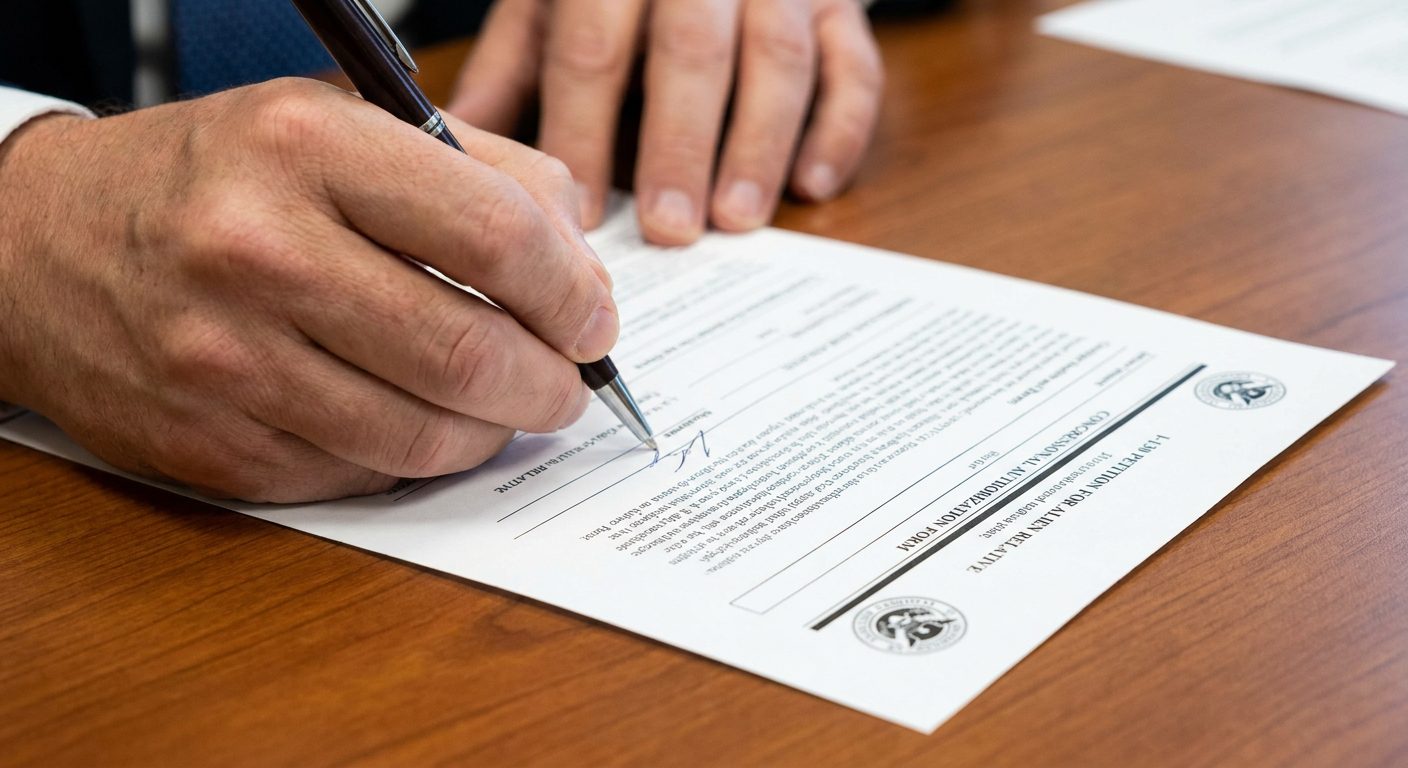
Applicant reviewing a congressional office privacy release for USCIS casework.

To send a congressional inquiry USCIS about a personal case, the office needs a signed privacy release from the person whose information is being requested. The office’s form and instructions control the required signature, case identifiers, documents, and any role for a petitioner, beneficiary, or power of attorney.

An office may ask for a receipt number, A-number, dates, a short case summary, or prior correspondence. Provide only the materials its official instructions request, and keep copies of what you submit for your records.

What to expect after casework

Case update notice reviewed after a congressional inquiry to USCIS.

USCIS may provide information, a status response, an explanation, or a request for additional material through the congressional office. The response and timing depend on the case and agency process, so casework does not guarantee a decision, an expedite result, or a particular outcome.

The DHS CIS Ombudsman case inquiry guidance describes a separate DHS case-assistance channel with its own criteria. Neither Ombudsman assistance nor congressional casework pauses an RFE, notice, appeal, or motion deadline.

Getting help with an immigration delay

If you are considering a congressional inquiry USCIS, we can help you review the case history, identify documents the office may request, and understand the legal options that remain separate from casework. Our team can explain how USCIS tools, a service request, expedite criteria, and congressional communication may fit your circumstances without promising an agency decision or a specific timetable.

Frequently asked questions about congressional inquiries

Can a congressional office decide my USCIS case?

No. Casework can seek information, status, an explanation, or consideration from USCIS, but the agency retains authority over the immigration benefit and the merits of the case.

What should I verify before sharing information with an office?

Confirm the office through an official government website and follow its constituent-services instructions. The office may explain its privacy release, documents, and communication procedure for the request.

May I contact more than one congressional office?

Office policies differ. Choose an office and follow its instructions, including any request to disclose contact with another congressional office about the same USCIS matter.

What if I move while the inquiry is pending?

Tell the office about an address change and review the constituent policy of the office that is handling the request. A representative’s and senator’s procedures can differ by office.

Can a spouse or lawyer complete the privacy release?

The privacy release instructions of the selected office control the signature and authorization requirements. Read those instructions carefully when a petitioner, beneficiary, spouse, or power of attorney is involved.

Can casework replace USCIS deadlines or formal remedies?

No. A congressional inquiry does not pause deadlines for notices, requests for evidence, appeals, or motions. Continue to follow every deadline and consider legal advice when a formal remedy may apply.

Can a green card holder petition for their parents

4 minute read

If you are asking can a green card holder petition parents, the answer is no while you are a lawful permanent resident. A U.S. citizen who is at least 21 years old may file Form I-130 for a parent, but the parent’s case still has separate requirements.

That distinction can feel frustrating when your family is waiting, but it helps prevent the wrong filing. Our family immigration attorneys can review your current status, the relatives you may petition now, and the steps that may become available if you later qualify for naturalization.

Who a lawful permanent resident may petition

Lawful permanent resident reviewing Form N-400 and a biometrics appointment notice before seeking citizenship.

For the question can a green card holder petition parents, LPR status is the deciding factor. Department of State family immigration guidance identifies a permanent resident’s spouse and unmarried sons or daughters as relatives who may be petitioned through the applicable family categories.

Spouses and unmarried children

An LPR may file for a spouse and unmarried children under the categories that apply to the family relationship. If your question concerns a spouse, the rules for whether you may sponsor a spouse as a green card holder are separate from the rule for parents.

Adult unmarried sons and daughters

An LPR may also petition an unmarried son or daughter who is 21 or older in the applicable preference category. Visa availability and category treatment can change under current law, so a family should review the case facts rather than assume a fixed wait or outcome.

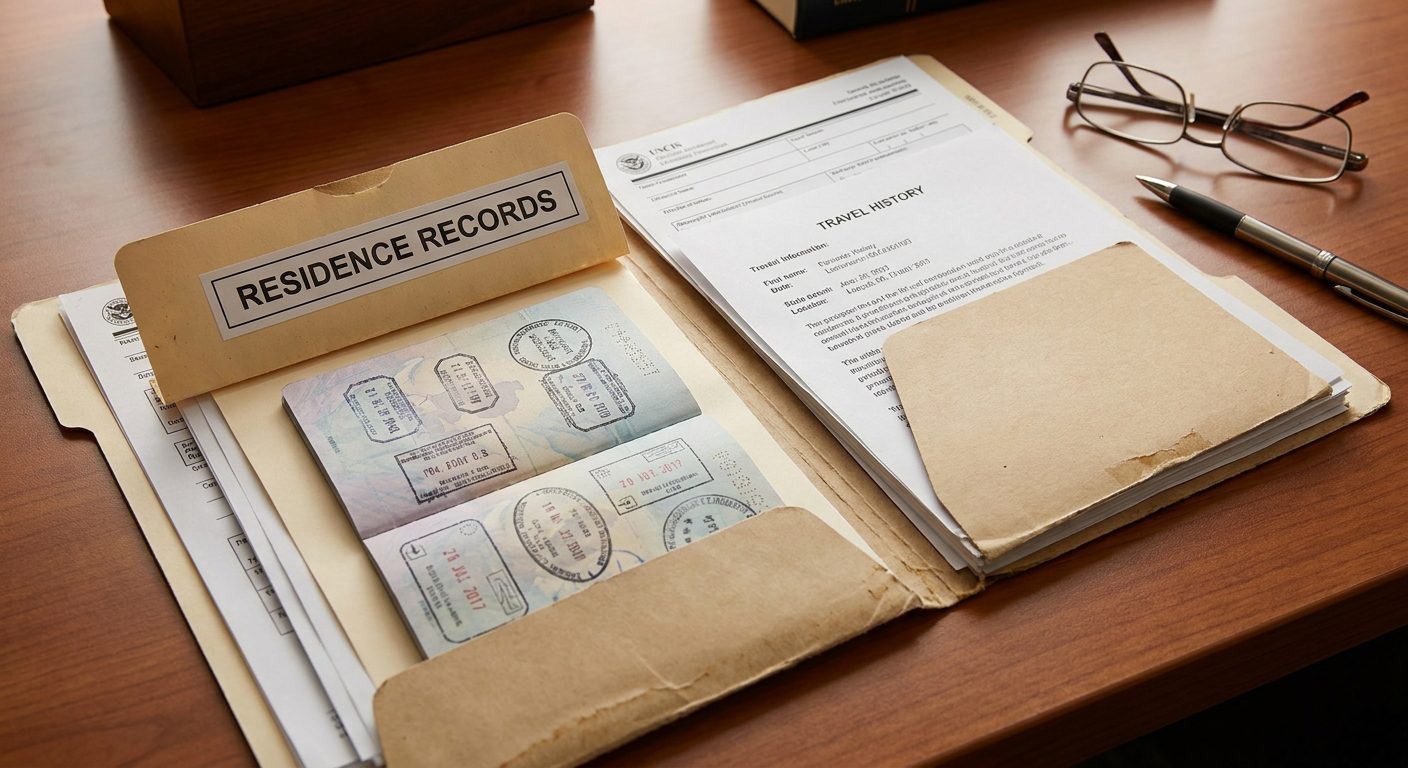
Residence records and travel history prepared for a naturalization eligibility review.

Can a green card holder petition parents after naturalization

Once the answer to can a green card holder petition parents changes because the child is a U.S. citizen aged 21 or older, a parent is an immediate relative. The Department of State glossary explains that immediate relative visas are not subject to an annual numerical limit.

That category does not remove the need for processing, documentation, eligibility, or admissibility. The distinction between family preference and immediate relative categories helps explain why a parent’s route differs from a permanent resident’s petition for a spouse or unmarried child.

Naturalization may be a possible next step

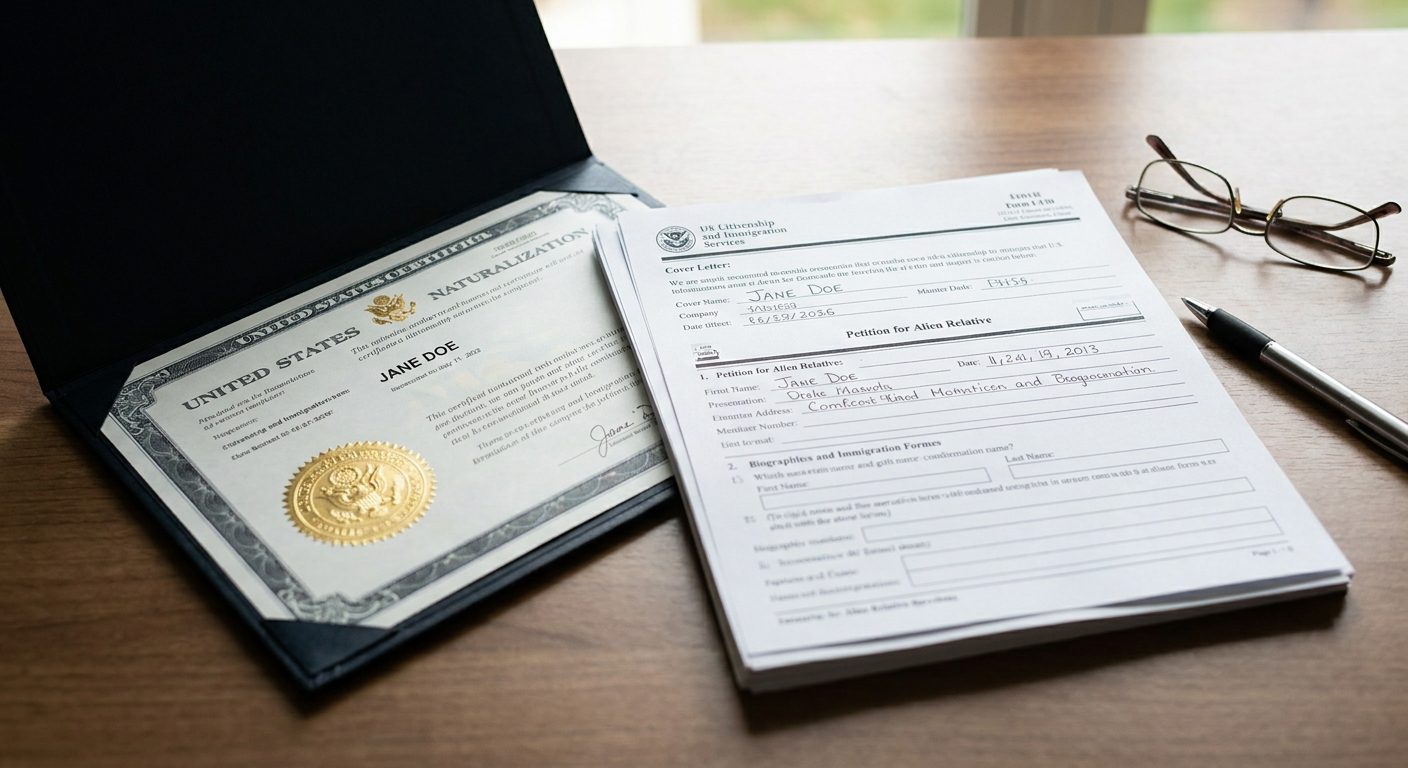
Certificate of Naturalization beside a separate Form I-130 petition for a parent.

For someone asking can a green card holder petition parents, naturalization may create a future path, but it is not automatic. USCIS instructions for Form N-400 describe requirements that can include continuous residence, physical presence, good moral character, and other conditions based on the eligibility route.

We can help you identify the records that matter to your history before you decide whether to apply. The question of how long naturalization takes has no single answer, so family planning should not rely on a fixed filing or processing timeline.

What happens after a parent petition

Each parent requires a separate Form I-130. Approval of that petition allows the case to continue through the applicable process, but it does not itself grant a visa or a green card.

Department of State guidance on submitting a petition describes the NVC stage after USCIS approval for consular cases. Depending on the facts, a case may proceed through NVC and a consulate or may require review of adjustment of status options inside the United States.

That is why the family-based green card process needs separate planning after I-130. Whether adjustment, a waiver, or another step is available depends on the individual’s history and the requirements that apply to that case.

Planning the right family filing

If you are asking can a green card holder petition parents, we can help you separate what your current status allows from the path that may be available later. Our team can review the family relationship, your naturalization history, and the documents needed to decide whether an I-130 or another next step is appropriate for your circumstances.

Frequently asked questions about parent sponsorship

Can I file one petition for both parents?

Each parent requires a separate Form I-130. A petition for one parent does not include the other parent, and each case must meet the requirements that apply to that individual.

Does becoming a citizen automatically give my parent a green card?

No. Citizenship and age 21 or older may allow a child to file an I-130 for a parent, but the parent still needs to complete the applicable process and meet the relevant requirements.

Do I need a certain income to sponsor my parents later?

An Affidavit of Support may be required in a family-based immigrant visa process, subject to the form instructions and any applicable exceptions. The financial requirements should be reviewed for the specific case.

What if my parent is already in the U.S. with me?

A parent already in the United States may need an individual review of the available process, admissibility, and any waiver question. A family relationship alone does not determine whether adjustment of status is available.

When may a citizen file for a parent?

A U.S. citizen who is at least 21 years old may file a separate I-130 for a parent. The petition begins the process but does not itself grant a visa or permanent residence.

Certificate of Naturalization vs. Certificate of Citizenship

4 minute read

Certificate of naturalization vs certificate of citizenship is a comparison of two documents that can evidence U.S. citizenship. The first follows naturalization, while the second can document citizenship acquired at birth or derived later when the legal requirements in effect at the time were met.

If you need to identify which document fits your history, our citizenship lawyers can help you review the route through which citizenship may have been obtained and the evidence that applies to your situation.

How a Certificate of Naturalization is issued

Naturalization is the usual route for a lawful permanent resident who applies with Form N-400, is approved, and completes the oath of allegiance when required. USCIS generally issues a Certificate of Naturalization after that process is completed.

Lawful permanent resident reviewing Form N-400 before naturalization and a Certificate of Naturalization.

Legal exceptions can affect the oath requirement, so the notice and instructions for the individual case matter. The naturalization process is different from documenting citizenship a person already acquired through a parent.

When a Certificate of Citizenship documents existing citizenship

The certificate of naturalization vs certificate of citizenship distinction begins with the basis of citizenship. A Certificate of Citizenship can document citizenship acquired at birth or derived after birth when the legal requirements that applied at the relevant time were met.

Acquisition and derivation

USCIS instructions for Form N-600 explain that the form requests a Certificate of Citizenship as evidence of citizenship already acquired or derived. It does not grant citizenship.

The rules can depend on the law, date, age, residence, and legal and physical custody that apply to the individual history. A parent naturalizing does not create a universal result for every child or for cases governed by earlier law.

Children residing outside the United States

Form N-600K is a different path that may be relevant for certain children who live outside the United States. Its eligibility and filing rules differ from Form N-600, so the individual facts and current instructions matter.

The certificate of naturalization vs certificate of citizenship comparison therefore depends on how citizenship arose, not only on the applicant’s current age or the document they hope to receive.

How certificates and passports serve as evidence

In a certificate of naturalization vs certificate of citizenship comparison, both documents can be evidence of U.S. citizenship. A valid U.S. passport can also be primary evidence for passport purposes, but the document required can depend on the agency and transaction involved.

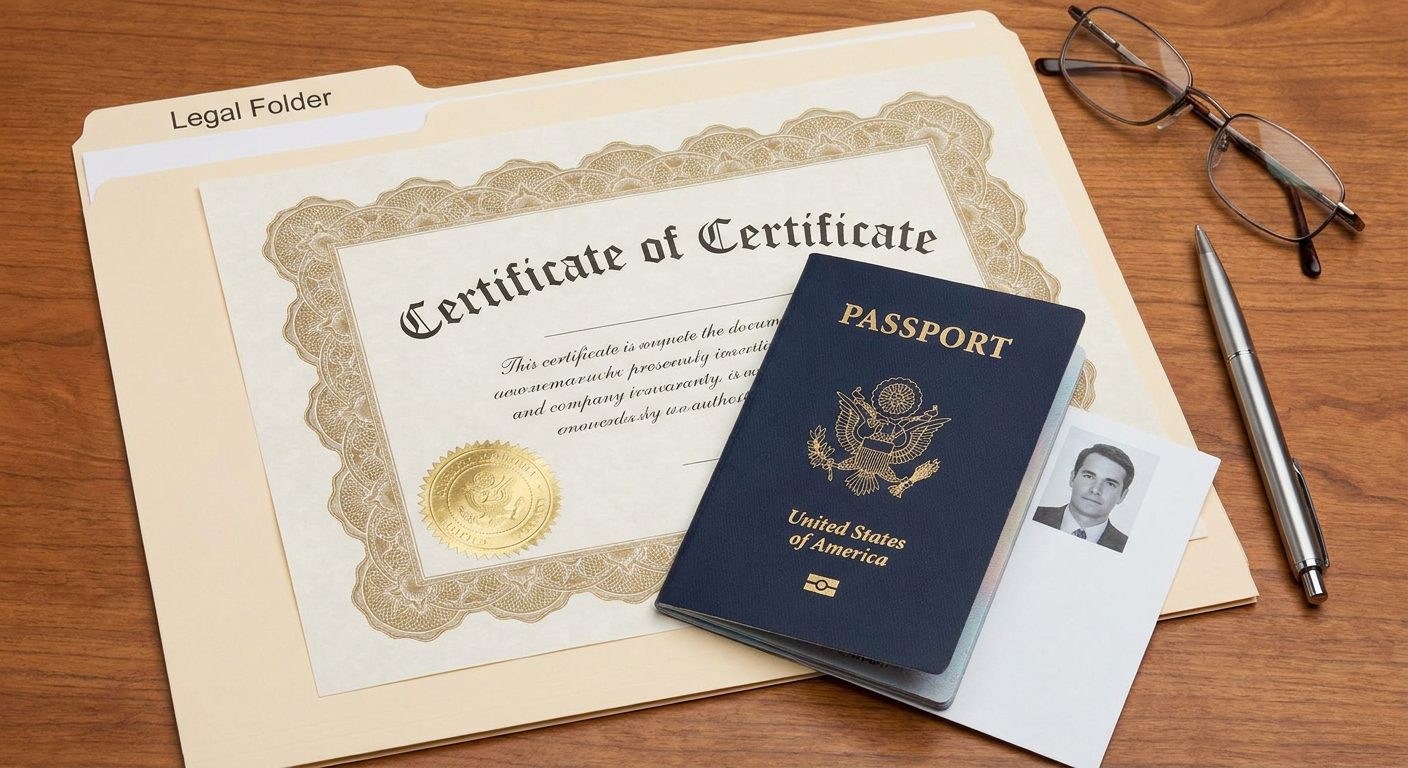
Citizenship certificate beside a U.S. passport application as evidence for a passport request.

State Department citizenship evidence guidance lists a valid U.S. passport, Certificate of Naturalization, and Certificate of Citizenship for the circumstances it covers. These documents should not be treated as interchangeable for every separate benefit or agency process.

Replacing or correcting a certificate

Preparing Form N-565 to replace a lost or damaged citizenship certificate.

Form N-565 can be used to replace a Certificate of Naturalization or Certificate of Citizenship that was lost, stolen, destroyed, or damaged. It can also apply to certain corrections, depending on the reason for the request and the instructions for the form.

For a certificate of naturalization vs certificate of citizenship question involving a missing document, do not assume you need to begin naturalization or file N-600 again. The page on how to replace a lost naturalization certificate explains the replacement topic in more detail.

USCIS instructions for Form N-565 describe replacement and correction situations. They do not support a universal filing choice, a fixed processing time, or a fee statement in this comparison.

Getting help choosing the right evidence

If you are comparing a certificate of naturalization vs certificate of citizenship, we can review the citizenship history and documents with you. Our team helps clients distinguish naturalization from citizenship acquired or derived through a parent, identify whether N-600, N-600K, or N-565 may fit the facts, and prepare the next step around the correct evidence.

Frequently asked questions about citizenship certificates

Do I need a Certificate of Citizenship if I already have a U.S. passport?

A valid U.S. passport can be evidence of citizenship for passport purposes. Whether you also need a certificate depends on the agency, transaction, and citizenship history involved.

Can I apply for a Certificate of Citizenship if I am now an adult?

An adult may seek a certificate through Form N-600 if citizenship was acquired or derived before age 18 under the law that applied at that time. The underlying citizenship history must be reviewed carefully.

What if I am unsure whether I was already a citizen?

Identify the possible basis for citizenship before choosing a form. A person may need to review birth, parent, residence, custody, and immigration records to determine whether citizenship was acquired, derived, or still requires naturalization.

Does a child born abroad to U.S. citizens receive a certificate automatically?

Citizenship at birth depends on the law and facts that apply to the parents and child. A certificate or other evidence may be available through the appropriate process, but no single document is automatic in every case.

Which form may apply to a child living outside the United States?

Form N-600K may be relevant for certain children residing outside the United States. Its requirements are separate from Form N-600, and eligibility depends on the child, parent, residence, and applicable law.

Can you get a green card if you have a DUI

4 minute read

A green card with DUI history may still be possible, but the immigration analysis depends on the statute, the record, and the applicant’s stage in the process. A simple DUI is not inherently a crime involving moral turpitude, although related charges or facts may require separate review.

Before you decide what a DUI means for a pending application or a future filing, our green card lawyers can help identify the immigration question that applies to your circumstances and records.

Green card with a DUI and adjustment eligibility

For an applicant seeking adjustment of status, the question is whether the filing is eligible and whether a ground of inadmissibility applies. Form I-485 is the adjustment application, but a green card with DUI history cannot be evaluated from the offense label alone.

Matter of Lopez-Meza recognizes that a simple DUI is not inherently a crime involving moral turpitude. The statute of conviction, its elements, and the relevant record must be reviewed before drawing an immigration conclusion.

Injuries, substances, a minor passenger, or a restricted license can be associated with other charges or different legal issues. They do not create a universal shortcut to inadmissibility, because the specific statute and case record remain important.

Why the immigration stage matters

A green card with DUI case can raise different questions depending on where the person is in the immigration process:

  • Adjustment applicant: USCIS evaluates the Form I-485 filing and any applicable ground of inadmissibility.
  • Lawful permanent resident: A person already admitted as a resident has a different immigration posture from an adjustment applicant.
  • Naturalization applicant: Good moral character is a separate requirement for citizenship, not an automatic rule for a green card application.

Keeping these questions separate avoids treating one DUI as an automatic denial, removal outcome, or citizenship decision. The facts, the timing, and the benefit sought all affect the analysis.

Medical exam considerations

Civil surgeon discussing Form I-693 medical exam requirements with an immigration applicant.

The immigration medical examination uses Form I-693 and is completed by a civil surgeon. A green card with DUI history does not establish an automatic referral or a fixed medical outcome.

CDC technical instructions for civil surgeons address a mental or substance-related disorder associated with harmful behavior. They do not support treating alcohol use alone or an unverified DUI count as a universal medical conclusion.

Good moral character and naturalization

Documents organized for an immigration review of good moral character during naturalization.

For naturalization, good moral character is evaluated during the statutory period that applies to the person. This is separate from a green card with DUI analysis. USCIS policy guidance describes a rebuttable presumption for two or more DUI convictions during that period.

That presumption is not a rule of admissibility for Form I-485 and does not arise from an arrest alone. Rehabilitation after the fact does not, by itself, establish good moral character for the statutory period. Our naturalization and citizenship attorneys address this separate citizenship question when it is relevant.

Records and conditional waiver analysis

The Form I-485 instructions require certified police and court records for arrests, charges, or convictions in the circumstances they identify. This can include records that were dismissed, sealed, vacated, or expunged. An arrest is not, by itself, a finding of guilt.

If a ground of inadmissibility is identified, immigration waivers may be available only when the specific ground and its requirements allow one. A waiver is not automatic for a DUI or for every charge connected to an arrest.

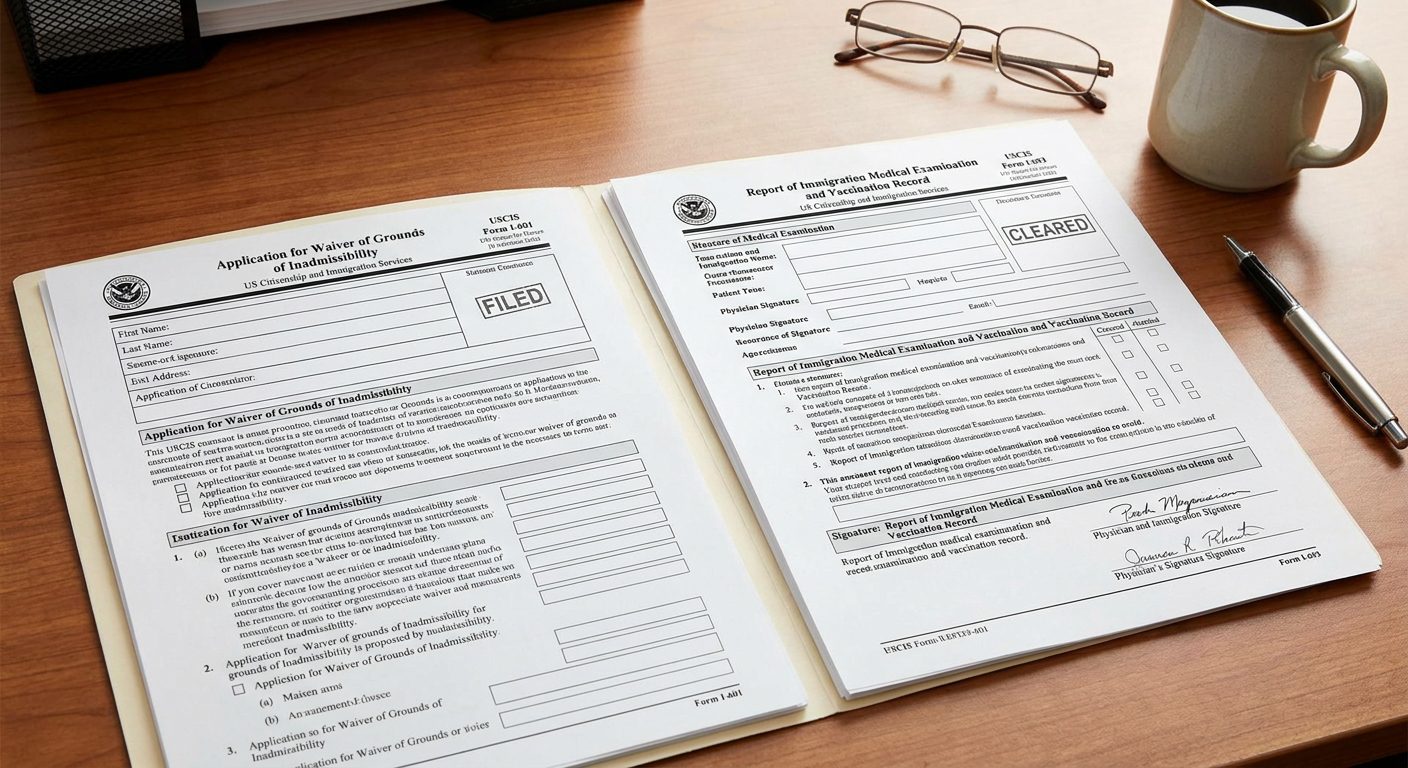
Immigration case documents about a possible waiver and medical clearance, without a guaranteed outcome.

Travel while a criminal or immigration matter is pending can have case-specific consequences. Review the facts and the relevant immigration documents before making travel plans rather than assuming a standard outcome.

Getting help with a DUI-related immigration question

If you have a green card with DUI concern, a pending Form I-485, or questions about records USCIS may request, we can review the immigration issues with you. Our team helps clients organize the documents for the filing and identify whether an individual analysis is needed before the next step.

Frequently asked questions about green cards and DUIs

What happens if I get a DUI while my green card application is pending?

The effect depends on the filing, the charge, and the facts of the case. Review the Form I-485 disclosure instructions, keep certified records, and obtain advice based on the individual circumstances before deciding what action is required.

Does a dismissed DUI charge still need to be reported to USCIS?

Form I-485 instructions can require certified police and court records for arrests, charges, or convictions, including matters that were dismissed, sealed, vacated, or expunged. An arrest alone is not a finding of guilt.

Can I travel outside the U.S. while a DUI case is pending?

Travel can have consequences that depend on the charge, immigration stage, and travel documents. Review the individual circumstances before making plans instead of assuming that every pending DUI produces the same travel result.

Will a reckless driving charge affect my green card the same way as a DUI?

Not necessarily. Immigration consequences depend on the statute of conviction, its elements, and the relevant record. A different charge should not be assumed to have the same immigration effect as a DUI.

How long should I wait after a DUI before applying for a green card?

There is no single waiting rule stated here. The appropriate timing depends on the immigration benefit, the record, any pending court matter, and the facts that USCIS must evaluate in the individual application.

What Form I-797 notice of action means and what to do with it

4 minute read

An i-797 notice of action is a USCIS notice that may acknowledge a filing, request information, communicate an update, or give case-specific instructions. Its effect depends on the notice type and underlying benefit, so it should not be treated as a universal approval or travel document.

If you are starting a family immigration process with family based immigration attorneys, identifying the notice type and reading every instruction can help you decide what to keep, what to track, and whether USCIS expects a response.

Identifying your I-797 notice of action

Start with the notice type, the underlying filing, and the instructions on the page. Similar-looking notices can serve different purposes, so the suffix alone does not tell you that a case was approved, that status changed, or that travel is allowed.

Read each I-797 notice of action with the filing it identifies. The notice type, dates, classification, and instructions provide the context needed to understand what USCIS is communicating in that case.

Reviewing an I-797E request for evidence notice for a pending immigration petition.

Administrative notices and I-797C

USCIS explains that Form I-797C can communicate a receipt, rejection, transfer, reopening, or appointment. It does not grant an immigration status or benefit by itself, so read the notice with the filing and instructions it identifies.

Approval notices

An I-797 notice of action such as an I-797A or I-797B may accompany an approval in a particular case, but the effect depends on the approved benefit, classification, dates, and instructions. An attached I-94 can be part of a specific notice rather than every approval notice.

Form I-797A approval notice showing an attached I-94 record for a specific case.

Requests for evidence and I-797E

An I-797E asks for evidence or information related to the filing. The notice itself identifies what USCIS requests and the deadline that applies. If you need to understand how to respond to a USCIS request for evidence, keep the request and its instructions together.

Other I-797 variants can have different functions. Do not assume that an I-797D or I-797F has the same effect as another notice, or that it independently authorizes boarding, travel, or reentry.

Reading an I-797 notice of action

A receipt number has 13 characters, usually three letters followed by 10 numbers. You can use USCIS Case Status Online to track the filing and check your USCIS case status using the number shown on the notice.

A priority date may appear in some immigration categories, but it does not appear on every notice or create the same queue in every case. A green card backlog and the Visa Bulletin require separate analysis.

The Notice Date identifies the date of that notice. Read it alongside the filing type, receipt number, and any deadline printed in the document rather than assuming it establishes a filing date or priority date.

USCIS I-797 notices organized with receipt numbers and notice dates for case records.

What to do after an I-797 notice of action arrives

Read the notice promptly and preserve the original with a copy of the underlying filing. A notice may be informational, may request a response, or may set an appointment, so the action you take should follow the instructions and deadline on that specific document.

  1. Identify the notice type: compare it with the filing and the case information shown on the page.
  2. Review every instruction: note any response request, appointment, address, or deadline that applies to your case.
  3. Keep your records together: save the original notice and copies of documents you submit or receive from USCIS.

An I-797C is not a travel document. Whether travel affects a pending matter depends on the benefit, current status, and instructions for the individual case, so review those details before making travel plans.

When a notice is missing or has an error

If Case Status Online shows that USCIS issued a notice but you did not receive it, use the USCIS non-delivery of notice tool after checking the status. Do not rely on a universal number of days from the Notice Date because the appropriate timing depends on the request and case record.

For a biometrics appointment or interview, follow the address, deadline, and contact instructions on the notice. If an emergency affects your ability to attend, use the contact method USCIS identifies for that appointment instead of assuming the same consequence applies to every missed date.

For an approved petition or application, Form I-824 may be used to request additional action when USCIS permits it. It is not a universal replacement for every lost, pending, denied, revoked, or terminated notice, and it does not replace the procedure for correcting an error.

Getting help with a notice

If your I-797 notice contains instructions you do not understand, a priority date that seems inconsistent, or an I-797E request for evidence, we can review the notice with you. Our team helps families identify the information USCIS is requesting, organize a response around the specific notice, and understand which next step fits their case.

Frequently asked questions about Form I-797 notices

What should I do if I lost my original I-797 approval notice?

Keep a copy of the notice and review the instructions for your approved filing. Form I-824 may be available for additional action on some approved matters, but it is not used for every lost notice or for a case that is still pending, denied, revoked, or terminated.

Can I use my I-797C receipt notice to travel outside the United States?

An I-797C is not a travel document. The effect of travel depends on the benefit, your current status, and the instructions for your individual case, so review those details before leaving the United States.

What if I have not received a receipt notice?

Check the status of the filing first. If USCIS shows that it issued a notice that did not arrive, follow the agency’s non-delivery process for that case instead of assuming a standard mail timeline.

Why does my I-797 notice show a different date than when I filed?

The Notice Date identifies that notice. A priority date may be relevant in some immigration categories, but its meaning depends on the filing and does not appear or operate the same way on every I-797 notice.

What is the difference between an I-797 and an I-797F notice?

I-797 notices can serve different functions. Read the specific notice and any related USCIS instructions rather than assuming an I-797F has the same effect as another I-797 notice or provides travel authorization.

Does receiving a receipt notice mean I have lawful status?

No. A receipt notice may confirm that USCIS received a filing, but it does not grant an immigration status or benefit by itself. The effect of a pending filing depends on the benefit and the facts of the individual case.

What the I-551 ADIT stamp is and how to get one

4 minute read

When your green card is unavailable, an i-551 stamp may provide temporary evidence of permanent resident status. USCIS reviews your circumstances, including the documents already available to you, and decides whether temporary documentation is needed and what form of evidence, if any, it can issue.

That distinction matters if you need proof for work, travel, or another urgent purpose. Our green card attorneys can help you understand which records to gather before you contact USCIS.

When an I-551 stamp may provide temporary evidence

An I-551 stamp is also called an ADIT stamp. USCIS may issue temporary evidence of lawful permanent resident status in a passport or on a Form I-94 with a photograph when the agency determines that documentation is needed.

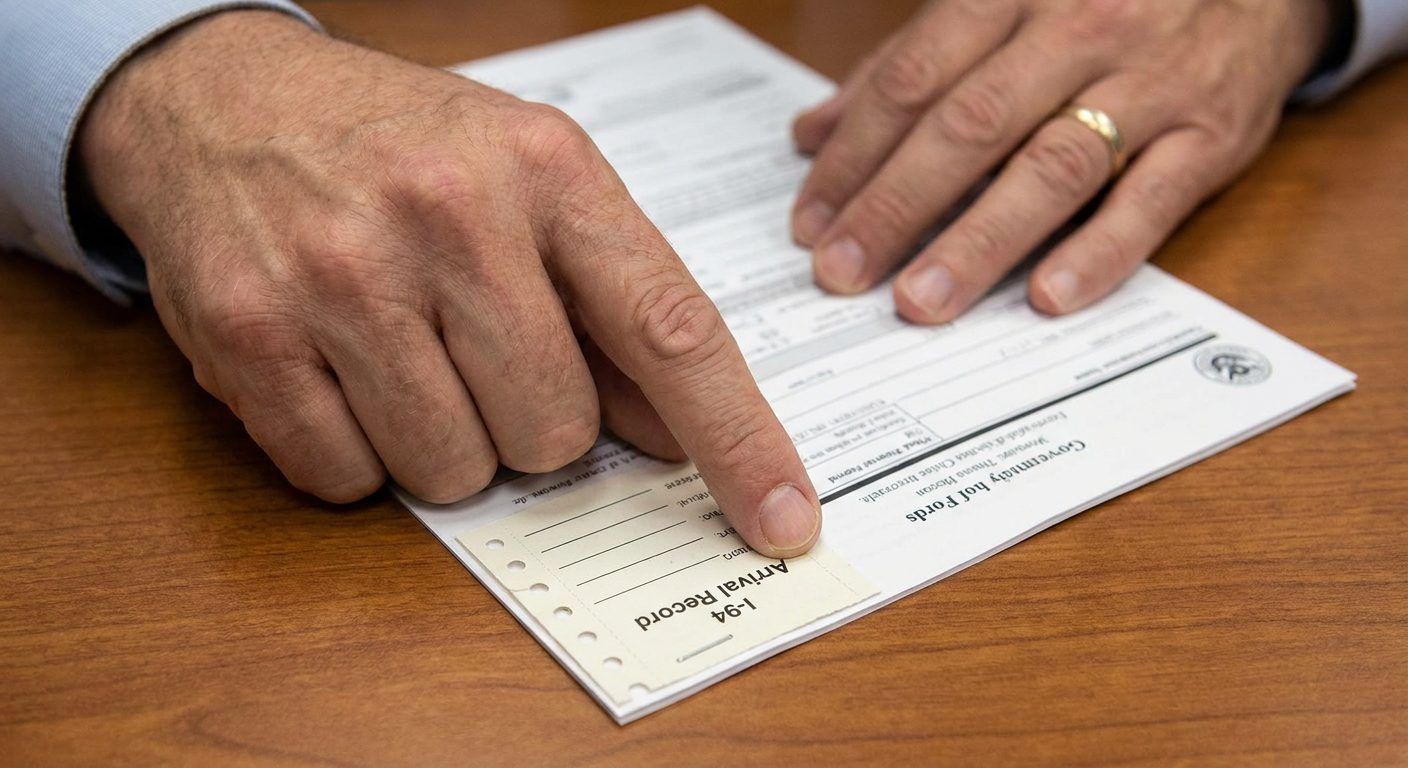
USCIS mailer containing temporary I-551 stamp documentation for a permanent resident.

It is not a visa, and it does not approve or replace an application to adjust status through Form I-485. USCIS can review a request through its Contact Center and determine the appropriate next step.

When you may need temporary proof of status

Not everyone with a pending application needs an ADIT stamp. For example, an I-90 receipt notice presented with an expired green card can extend evidence of status for 36 months from the card’s printed expiration date.

That receipt can be enough while you are renewing your green card. If your card was lost, stolen, damaged, or otherwise unavailable, USCIS may assess whether temporary evidence is needed after you file Form I-90.

  • Naturalization applicants: An N-400 receipt may extend an expired green card for 24 months. If the card is lost, USCIS says an I-90 filing is generally still needed.
  • Urgent documentation needs: Work, travel, or another immediate need may explain why you request help, but USCIS decides whether to issue temporary evidence.

These examples do not create an automatic right to a stamp. The relevant question is whether your current documents already prove status or whether USCIS needs to issue temporary evidence for your situation.

How to request an I-551 stamp

Start with the USCIS Contact Center rather than assuming you must choose between mail delivery and an emergency appointment. USCIS can verify your identity and address, then decide whether a field office appointment or mailed documentation is appropriate.

  1. Contact USCIS: Explain why you need evidence of permanent resident status and provide the case information requested.
  2. Complete verification: USCIS may verify your identity and address before deciding how to handle the request.
  3. Follow the agency’s direction: USCIS may schedule an appointment if needed or have a field office issue and mail a Form I-94 with an ADIT stamp and photograph when appropriate.

If you have a pending filing, keep its receipt number available and check your USCIS case status before following up. That step can help you provide USCIS with current case information without turning this article into a case-status guide.

Documentation may still take time to process or arrive. If you are facing green card delays, temporary evidence may address a documentation gap in some cases, but it does not guarantee a decision on the underlying application.

Using temporary documentation for employment and travel

The document’s format and intended use affect the rules that apply. Review the evidence USCIS issued and its expiration date before relying on it for employment or travel.

Employment eligibility verification

For Form I-9, the document type matters. An unexpired foreign passport with a temporary I-551 stamp is a List A document. A Form I-94 with an ADIT stamp and photograph is an acceptable receipt for Form I-551, subject to the Form I-9 rules and the document’s expiration date.

Form I-9 employment verification with temporary I-551 stamp documentation.

The USCIS I-9 Central guidance on temporary I-551 stamps describes these categories. Because the supporting document matters, do not assume that every stamp or notation has the same I-9 effect.

International travel requirements

Permanent resident reviewing temporary I-551 stamp documentation before international travel.

Temporary evidence can be relevant to international travel, but it does not remove other requirements. Check the airline’s rules and the destination country’s entry requirements before leaving the United States.

CBP advises lawful permanent residents not to travel with an expired green card if they cannot obtain a temporary I-551 stamp. Airlines may apply their own document requirements, so a stamp should not be presented as a guarantee of boarding or reentry.

What if you do not have a valid passport

If you do not have a valid passport, USCIS may issue a Form I-94 with a photograph and an ADIT stamp when temporary documentation is appropriate. The agency reviews the request and determines the documentation it can provide.

A Form I-94 version may not meet every travel need, especially where an airline or destination has separate requirements. Confirm those requirements before making travel plans, and keep copies of your USCIS notices and request information.

Getting help with a documentation gap

If you are unsure whether your receipt notice is enough, whether a lost card requires Form I-90, or how to prepare a request to USCIS, we can review the facts with you. Our team helps permanent residents identify the documents that support their current status and prepare for the next appropriate step.

Frequently asked questions about I-551 stamps

How long is a temporary ADIT stamp valid for?

Check the expiration date printed on the document USCIS issued. USCIS may decide what temporary evidence is appropriate for the request, so you should not assume that every stamp has the same validity period.

What happens if USCIS determines a stamp is not necessary?

USCIS may determine that an existing receipt notice and expired green card already provide the evidence you need. Follow the agency’s instructions and keep the documents that apply to your case together.

Can an I-551 stamp be used for a driver’s license?

Driver’s license requirements are set by the state agency handling your application. Check that agency’s current document list before visiting, because the documents it accepts and any additional requirements can vary by state.

What should I do if my green card is lost?

USCIS generally directs permanent residents with a lost green card to file Form I-90. If you also need evidence of status, explain your circumstances to USCIS and follow its directions about any temporary documentation.

What if I do not have a valid passport?

USCIS may consider other temporary documentation, including a Form I-94 with a photograph and ADIT stamp, when appropriate. The agency decides what it can issue after reviewing the request and available records.

What if my temporary documentation does not arrive?

Keep your request information and contact USCIS for instructions if you need to follow up. Do not assume a delivery date or a tracking method unless USCIS provides one for your request.