
Call Today for a Case Evaluation

(281) 606-0800info@shellesimonlaw.com

Blog

Can a green card holder sponsor a spouse, F2A wait times

Yes, a green card holder can sponsor a spouse through the F2A family preference category. Filing the petition starts a case based on your marriage; it does not mean your spouse can receive permanent residence immediately.

Your spouse's location, entry history, and immigration status help determine the route that follows. A couple living together in the United States may face different filing questions from a couple living apart, even though both begin with the same family relationship.

What a permanent resident needs to sponsor a spouse

The petitioner must be a lawful permanent resident, and the marriage must be legally valid and genuine. If either spouse was previously married, the record must show that each earlier marriage legally ended. Proof of the petitioner's status and proof of the marriage serve different purposes.

Form I-130 asks USCIS to recognize that qualifying relationship. The later immigrant visa or adjustment application has its own requirements, including admissibility and financial sponsorship when required. An approved petition alone does not make the beneficiary a permanent resident.

What evidence shows a genuine marriage?

A marriage certificate establishes the legal marriage. Supporting records help show that the couple entered it in good faith. Choose evidence that reflects your actual relationship, including circumstances such as a recent marriage or time spent living in different countries.
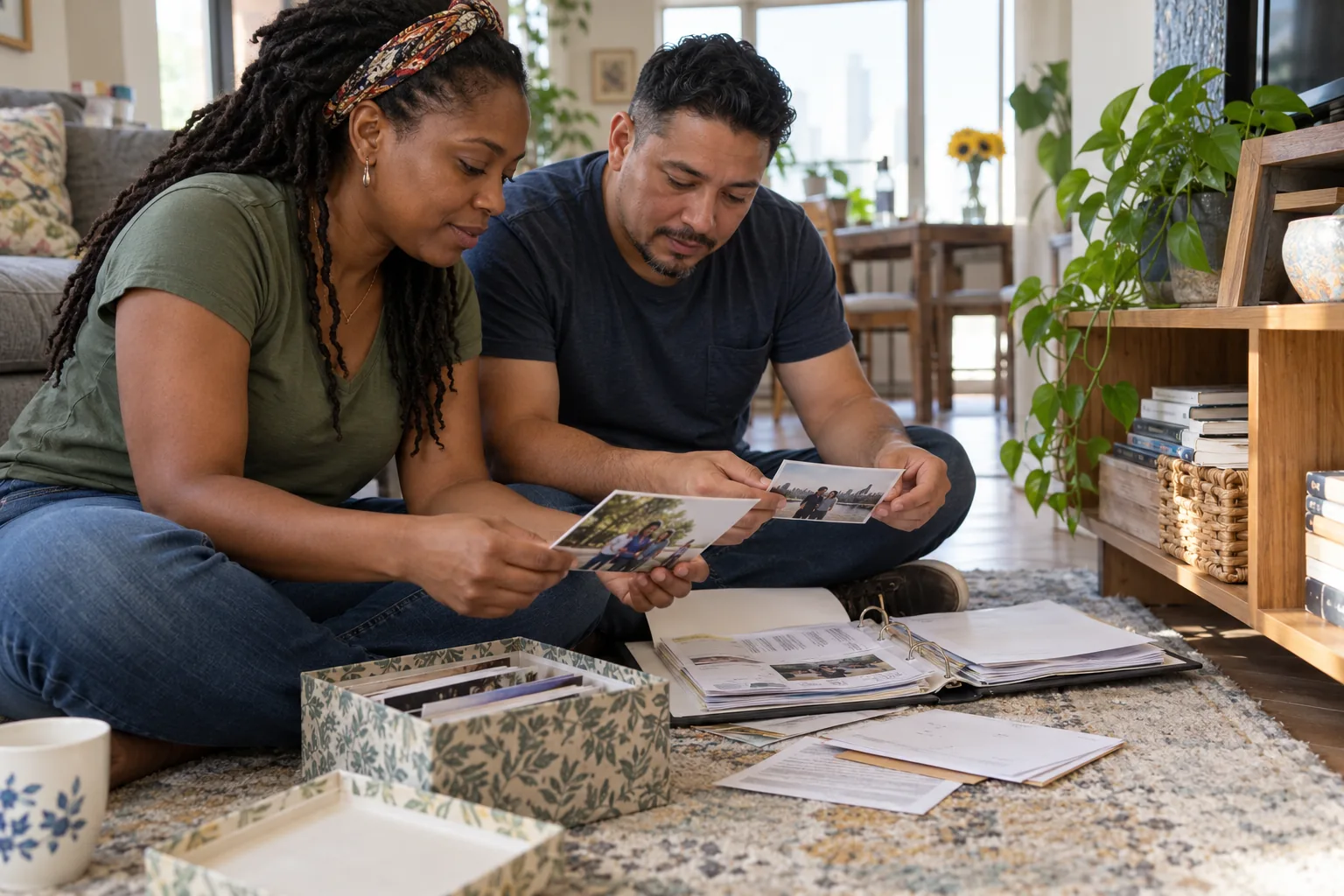
Couple choosing family photographs and ordinary household correspondence for their records

Different couples have different records. Examples worth reviewing include:

  • Shared household records: a lease, property records, insurance, or accounts showing how you manage your life together
  • Relationship history: photographs, travel records, correspondence, and birth certificates for children, when applicable
  • Firsthand knowledge: statements from people who know the marriage and can explain what they have observed

You do not need every example, and photographs do not have to span years when the marriage is new. Explain gaps or differences honestly. More documents do not guarantee approval, and evidence should never describe a shared arrangement that does not exist.

How the sponsorship stages fit together

It helps to separate the relationship petition from the later application for residence. Preparation can overlap, but the point at which your spouse may submit an application depends on the applicable rules:

  1. Prepare the family petition: complete Form I-130 and the spousal supplement, Form I-130A, with evidence of status and the marriage. The I-130 filing checklist covers that package in more detail.
  2. Check the route and visa availability: identify whether your spouse will seek an immigrant visa abroad or qualifies to apply for adjustment in the United States. F2A availability matters to both routes.
  3. Prepare the residence stage: follow the applicable visa or adjustment instructions for civil records, financial sponsorship, medical evidence, and any interview or other requirements.

For a spouse abroad, the process generally continues through the National Visa Center and a U.S. consulate after petition approval. Follow the NVC's instructions about submitting documents and the next stage rather than assuming an approved I-130 means an interview is ready.

For a spouse in the United States, adjustment of status after marriage requires a separate eligibility review. Admission or parole, visa availability, status violations, unauthorized employment, and applicable exceptions can matter. F2A spouses do not automatically receive the adjustment exceptions available to immediate relatives of U.S. citizens.

Whether Form I-485 can be filed with the petition or later must be assessed for that case. Living in the United States, having an approved I-130, or seeing an open filing chart does not by itself establish eligibility to adjust.

What the F2A category means for your case

Spouses of permanent residents fall within a category subject to numerical limits. Spouses of U.S. citizens are immediate relatives, a different classification. The comparison of family preference and immediate relative categories explains that distinction beyond this particular spouse petition.

The Department of State publishes two charts in its Visa Bulletin. They answer different questions, as the F2A entries in the November 2026 Visa Bulletin illustrate:

If columns extend beyond the view, swipe the table horizontally or focus it and use the arrow keys.

ChartF2A entry for November 2026What it means
Final Action DatesOctober 22, 2026 for all chargeability areas except Mexico; April 22, 2026 for MexicoA visa number can be issued only when the priority date is earlier than the applicable cutoff and the other requirements are met
Dates for FilingCurrent in all five columnsThis filing designation does not remove the separate cutoff for final action

A date in the Final Action chart means the category is oversubscribed. “Current” in the filing chart does not turn that date into “Current” for final approval. Compare your priority date with the correct column, and check the bulletin again for the month in which action is needed.

Adjustment applicants must also check which Visa Bulletin chart USCIS allows for adjustment filings that month. The Department of State's filing chart alone does not establish that an I-485 may be filed.

Why there is no single F2A waiting time

Your case involves several sources of waiting: USCIS adjudication of the petition, availability of a visa number, and processing of the visa or adjustment application. A cutoff date is not a prediction of how many months a new petition will take.

For the petition stage, checking I-130 processing estimates is a different task from reading the Visa Bulletin. A quoted petition estimate does not measure the entire F2A process, and the bulletin cannot predict when USCIS will finish reviewing your evidence.

Those stages can affect different couples differently. Avoid treating a timeline quoted for a citizen's spouse as a complete forecast for an F2A case, or assuming that being close to a cutoff eliminates every remaining wait.

If the resident petitioner becomes a U.S. citizen, the spouse's classification can change to immediate relative. Make sure the agency handling the case has the relevant evidence. The change removes the F2A numerical restriction for the spouse, but other eligibility requirements and processing still remain.

When financial sponsorship enters the process

Financial sponsorship generally belongs to the immigrant visa or adjustment stage, rather than being an income rule for Form I-130 itself. Form I-864 is usually required in a family case unless an exemption applies. It creates a support obligation and does not guarantee that every admissibility requirement is satisfied.

The general income standard is 125% of the federal poverty guideline for the applicable household size. A sponsor on active duty in the U.S. Armed Forces, other than for training, uses 100% when sponsoring their spouse or child. That exception does not cover every person with a military connection.

Person comparing household notes and expenses with a calculator at home

Assessing household size and income early can reveal a problem worth planning for. Qualifying assets or a qualified joint sponsor may help, subject to their own requirements. A joint sponsor signs a separate affidavit; the petitioner still has to submit their own when required.

The financial sponsorship requirements for Form I-864 explain those obligations and alternatives. Use the evidence and guidelines applicable to the residence filing or a later request, rather than assuming an old income calculation will settle the issue throughout the case.

What to do while the petition is pending

Keep the record organized around the stage your case has actually reached. Useful tasks include:

  • Preserve relationship evidence: keep records of your shared life as it develops, without assuming you must send unsolicited updates at fixed intervals
  • Read every notice: follow the instructions and deadline in a request for evidence; a late or missing response can have consequences beyond an added delay
  • Track the right case: keep receipt numbers and notices together, and use online status information alongside the actual correspondence
  • Review material changes: changes in income, household circumstances, or the petitioner's status may affect the next filing or evidence requested

A death during the process raises a separate question about whether a family petition can continue after the petitioner dies. That review depends on the surviving beneficiary and the case stage; it should not be treated as an ordinary delay.

When location, status history, and the filing stage point in different directions, our family immigration attorneys can assess how those facts affect the spouse petition and the available next step.

Questions about F2A sponsorship between spouses

What is the F2A category and how does it affect sponsoring a spouse?

F2A includes spouses of lawful permanent residents and is subject to numerical limits. An open Dates for Filing chart does not mean a visa is available for final approval. Check the applicable Final Action cutoff and, for adjustment filings, the chart USCIS permits for that month.

What steps should I take first if I want to sponsor my spouse for a green card?

Confirm the qualifying marriage and the petitioner's permanent resident status, then prepare Forms I-130 and I-130A with supporting evidence. Review your spouse's immigration history and the visa or adjustment route early. Plan for financial sponsorship without assuming I-864 must always be filed immediately after the petition.

How can I prove my marriage is bona fide?

Use genuine records of the relationship, such as shared housing or finances, insurance, photographs, travel, correspondence, or records involving your children. Statements from people with firsthand knowledge can supplement that evidence. Explain circumstances that limit joint records; no single collection of documents guarantees approval.

What happens if I do not meet the income threshold to sponsor my spouse?

Review the correct household size, applicable guideline, and qualifying income first. Assets or a qualified joint sponsor may provide an alternative if the requirements are met. The petitioner generally still files an affidavit, and a joint sponsor files separately. Financial sponsorship does not resolve every possible admissibility problem.

What are the typical stages after I-130 is approved?

For consular processing, follow NVC instructions for documents and financial sponsorship, with visa availability and consular processing still relevant. For adjustment, the spouse must qualify for that route and meet the applicable filing and approval requirements. Petition approval alone does not guarantee residence or an immediate final decision.

Discuss your spouse's case with our team when a filing date, visa cutoff, or immigration-history issue leaves the next step unclear.

Immigrant victims of domestic violence protections overview

If you are seeking safety and a clear path through complex immigration rules, you may be thinking about options for immigrant victims of domestic violence. Understanding how VAWA, U visas, and related protections work can help you plan the next step with confidence. This guide explains what protections exist, how to pursue them, and what changes in enforcement could mean for your case.

Together, we will walk through your options and what to expect, so you can make informed choices with care and planning. To learn more about how we can help through our immigration services, reach out for a confidential consultation that respects your safety and goals.

Attorney advising immigrant victims of domestic violence in office

What protections exist for immigrant victims of domestic violence under VAWA and U visas?

Immigrant victims of domestic violence can explore two well-established relief routes: VAWA self-petitions and U visas. These options acknowledge that status can be used as a tool of coercive control, and they aim to separate safety from fear of removal.

VAWA self-petitions are designed for abuse survivors connected to a qualifying U.S. citizen or LPR family member. You may seek lawful permanent residency based on abuse, domestic violence, or related harms, even if the abuser does not cooperate. This path often includes work authorization and potential pathways to a green card.

U visas offer nonimmigrant status to crime victims who assist law enforcement in investigating or prosecuting crimes, including domestic violence. The U visa provides a temporary status with an eventual path to possible adjustment, balancing safety with immigration outcomes.

VAWA self-petitions: eligibility and process

Eligibility hinges on proof of abuse, a qualifying relationship, and good moral character. If you pursue a VAWA self-petition, you may then obtain work authorization while the petition is processed, with the potential to transition to permanent residency.

The process requires careful documentation of the relationship and the abuse, along with evidence of the good-faith nature of the marriage or relationship. An experienced attorney can help assemble medical records, protective orders, and corroborating testimony to strengthen your case.

U visas: eligibility and path to green card

U visas require substantial cooperation with law enforcement and a demonstration that you suffered a qualifying crime. Victims who qualify can obtain temporary nonimmigrant status with a potential route to permanent residency under appropriate statutory provisions.

Because eligibility criteria are nuanced, seek guidance on gathering supporting evidence, including police reports, medical documentation, and credible statements. If you want to review policy context, you can explore the framework in H.R.30 on Congress.gov for additional protections.

How have enforcement changes affected reporting and protections for immigrant victims of domestic violence?

Enforcement changes have heightened fear among survivors and the broader community. When protections in sensitive locations are rolled back, many victims worry that seeking help at shelters, clinics, or courts could expose them to immigration enforcement. This fear can deter reporting and impede access to safety orders or protective measures.

Legislation and policy shifts can complicate relief options, especially where asylum standards are tightened or where confidentiality protections are tested by enforcement priorities. These dynamics can affect immigrant victims of domestic violence seeking shelter from abuse, protection orders, or legal relief.

In some contexts, statutes and policies favor detention or punitive approaches that may silence survivors or deter them from pursuing non-criminal remedies. As a result, survivors may face prolonged abuse and limited access to U visa or VAWA relief, compounding harm in communities that already face barriers to care.

Victims often rely on advocacy organizations and trusted counsel to navigate risks and identify safe, lawful options. While these conditions vary by jurisdiction, the core aim remains: protect survivors and preserve pathways to safety and status. For a broader policy view, review the existing framework in Congress.

Survivor submitting protective orders, immigrant victims of domestic violence in process

What steps should you take next with professional guidance?

If you are an immigrant victims of domestic violence seeking relief, start with a confidential consultation to map a practical plan. A seasoned immigration attorney can assess whether VAWA self-petition, U visa, or other relief fits your circumstances.

Begin by gathering essential documentation: abuse records, proof of relationship, financial links, and any protective orders or medical records. This helps establish credibility, relationship context, and your intent to pursue relief in good faith.

Next, discuss safety and confidentiality with your attorney. Protecting your information is critical when confidentiality protections may be tested by enforcement trends. You will also learn about processing timelines, potential interviews, and the likelihood of success in your unique situation.

What should you discuss in your initial meeting?

During your confidential meeting, ask about eligibility for VAWA self-petitions and U visas, as well as any applicable waivers or alternatives. Clarify evidentiary requirements and expected timelines, and lay out a realistic plan for safety, status, and future residency.

Ask about how confidentiality is protected in practice, including steps to minimize disclosure of personal information during enforcement actions. Your attorney should outline a strategy that aligns with your safety needs and long-term immigration goals.

Finally, consider the role of ongoing support services, such as counseling, housing referrals, and legal aid networks, to sustain your well-being while pursuing relief. We are committed to guiding you through each step with care and respect for your circumstances.

For a tailored plan, contact our Houston firm for a confidential evaluation. Our team can coordinate among VAWA, U visa, and other protective avenues to fit your unique needs while prioritizing safety and stability.

Informed action now can reduce risk and open a path to safety and lawful status. If you are evaluating options, you deserve clear answers, compassionate guidance, and steady support from a trusted attorney who understands the immigration system and the realities of domestic violence.

We invite you to reach out for a confidential case review and to discuss how these protections may apply to your situation. Your safety and future matter, and you deserve a clear plan that protects both.

To explore the latest legislative framework and protections, you may review the framework described in H.R.30 on Congress.gov for a context of proposed improvements.

Remember, you do not have to navigate these options alone. Our team is here to help translate complex legal language into concrete steps toward safety and status.

Frequently asked questions for immigrant victims of domestic violence

What is the difference between a VAWA self-petition and a U visa for immigrant victims of domestic violence?

VAWA self-petition and U visa are two protections designed to help survivors stay safe and obtain status. A VAWA self-petition lets an abuse survivor with a qualifying family relationship to a U.S. citizen or permanent resident seek lawful permanent residency, even without the abuser’s cooperation. A U visa provides temporary nonimmigrant status for victims who assist law enforcement, with a potential path to permanent residency later.

What evidence do I need to start a VAWA self-petition?

To start a VAWA self-petition, you must show abuse and a qualifying relationship, plus good moral character. Gather medical records, police reports, protective orders, photos, messages, and testimony that demonstrate the abuse and the genuineness of your relationship. Documentation linking you to a qualifying relative is essential, as is evidence you entered the relationship in good faith and that you face an ongoing risk without relief.

What should I expect during the U visa process?

Expect a careful evaluation of your qualifying crime and your cooperation with law enforcement. After you file, you may need to provide crime details, police reports, medical records, and credible affidavits. The process includes security checks and possible interviews, with potential renewal periods. Processing timelines vary by jurisdiction, and you should discuss timelines and waivers with your attorney to plan for safety and status.

How do enforcement changes affect reporting and protections?

Enforcement shifts can raise fears about seeking help from shelters, clinics, or courts, even when you need safety. Confidentiality rules may be tested, and some policies may prioritize short-term detention or enforcement actions. This can deter reporting or pursuing VAWA or U visa relief. Stay connected with trusted advocates and lawyers who understand both safety needs and the evolving policy landscape to protect your options.

What should I do in my first consultation to get a practical plan?

In your first confidential meeting, ask about eligibility for VAWA and U visas, potential waivers, and other relief options. Bring documentation: abuse records, relationship proof, financial ties, and any protective orders. Discuss safety, confidentiality, timelines, and realistic steps. A compassionate attorney will translate legal language into a concrete plan, outlining short-term safety measures, filing steps, and how your status could progress toward stability.

How do I bring my spouse to the United States

If you’re asking how do I bring my spouse to the United States, you’re not alone. The path hinges on who sponsors you: a U.S. citizen or a permanent resident. We understand this process can feel overwhelming, and we’re here to guide you with clarity, compassion, and practical steps tailored to your situation. Our team at Shelle-Ann Simon in Houston helps couples navigate every form, interview, and deadline with patient, personalized support.

As your partners in this journey, we commit to walking you through each stage—from gathering documents to finalizing your green card. If you’d like direct help from a family based immigration attorney, we’re ready to listen, explain your options, and tailor a plan that fits your family’s timeline and goals.

Officer and client meeting; how do I bring my spouse to the United States

How long does it take for a spouse green card when the sponsor is a U.S. citizen?

For spouses of U.S. citizens, the path is generally the fastest because they’re categorized as immediate relatives, avoiding annual visa caps. When you file I-130 and I-485 concurrently in the United States, many cases move more quickly. In practical terms, the total timeline often ranges from about 9 to 20 months, depending on the service center and case specifics. The official visa bulletin helps determine when a visa number is available for consular processing, and you can review current movements through this trusted source. visa bulletin tracks this progress month to month.

To maximize speed, submit a well-organized package with robust evidence of a bona fide marriage. If you’re in the U.S., you may pursue concurrent I-130 and I-485 filing, which can streamline work authorization and status adjustments. RFEs (Requests for Evidence) can extend timelines, so accuracy at submission is crucial to avoid delays.

What does concurrent filing mean for your case?

Concurrent filing means submitting I-130 and I-485 at the same time when you’re eligible, typically for immediate relatives in the U.S. This approach can shorten the overall timeline and allow interim benefits, such as work authorization. It requires careful planning, including medical clearance and clear proof of a legitimate marriage. If you plan to pursue this route, you’ll want to ensure your documents are complete and well organized to minimize requests for evidence.

How does a permanent resident sponsor affect your timeline?

When the sponsor is a permanent resident, your case falls under the F2A category, which is subject to annual visa caps and backlogs. Even after the I-130 is approved, you often wait for visa numbers to become available before advancing to adjustment of status or consular processing. As a result, many couples experience longer total timelines, with backlogs varying by country of origin and current visa demand. The visa bulletin provides a real-time sense of where your priority date stands in relation to current availability. visa bulletin reflects these shifts and helps families plan ahead.

In practice, the overall timeline for permanent resident sponsorship can extend into multiple years, as applicants contend with both I-130 processing and subsequent visa availability. I-130 processing itself may take longer in certain centers, and the subsequent steps depend on when a visa number becomes available for the F2A category. Staying informed about the monthly visa bulletin is essential to managing expectations and planning interviews and filings accordingly.

Action: couple submitting forms; how do I bring my spouse to the United States

What steps can you take today to prepare for a long-term timeline?

Start by gathering evidence of a bona fide marriage, including joint financial records, shared housing, and communications. A well-documented case reduces RFEs and accelerates processing. Maintain eligibility by keeping lawful status or pursuing appropriate status adjustments if you’re inside the United States. Regularly review the visa bulletin to anticipate when your priority date may become current and coordinate your filings with that timeline. visa bulletin is the most reliable resource for these estimates.

Family receiving green card; how do I bring my spouse to the United States

What steps can you take to speed up the process?

Prioritize completeness: ensure every form is accurate and all required documents are included. Double-check translations, dates, and signatures before submission to limit RFEs. If you’re in the U.S., consider filing I-485 concurrently with I-130 when eligible, and prepare for the medical exam under Form I-693 to avoid administrative delays. Consulting with a seasoned immigration professional can help you identify potential gaps and assemble a stronger case from day one.

Regardless of your path, planning ahead and staying organized will reduce stress and confusion. We’re here to help you map your specific steps, estimate timelines, and prepare for interviews or consulates. Your family’s future is worth a thoughtful, proactive approach—let’s start with a clear plan and steady guidance.

how do I bring my spouse to the United States — FAQ

What documents prove a genuine marriage for a spouse visa?

To show your marriage is real, gather joint financial records, shared housing, and daily communications as evidence. This can include joint bank accounts, mortgage or lease agreements, utility bills in both names, insurance policies, photos together, travel itineraries, and affidavits from friends or family. Keep translations and organizing notes tidy. Strong, consistent documentation reduces requests for evidence and speeds up review.

If my spouse is a U.S. citizen, how can I shorten the timeline?

When the sponsor is a U.S. citizen, spouses are classified as immediate relatives, often shortening wait times. You can speed things by filing I-130 and I-485 concurrently while you’re in the United States, and by submitting a complete package with robust evidence. Be prepared for possible RFEs; accuracy helps avoid delays. Monitor the visa bulletin for current movements and maintain status throughout the process.

What happens if the sponsor is a permanent resident?

When the sponsor is a permanent resident, your case usually falls under the F2A category and faces visa-number backlogs. Even after I-130 approval, you may wait for a current visa number before adjusting status or pursuing consular processing. Backlogs vary by country and demand. Regularly check the visa bulletin to track your priority date and plan interviews, filings, and travel accordingly.

What is concurrent filing and is it right for me?

Concurrent filing means submitting I-130 and I-485 at the same time if you’re eligible, usually for immediate relatives in the U.S. It can shorten overall timelines and provide interim benefits like work authorization. It requires careful preparation, including medical clearance and solid proof of a bona fide marriage. If you’re considering this path, ensure your documents are complete to minimize RFEs and avoid delays.

How can I prepare for possible RFEs and minimize delays?

RFEs happen when the government needs more information. To reduce them, file complete forms, double-check translations, dates, and signatures, and include all required documents from the start. If you’re in the U.S., consider filing I-485 with I-130 when eligible, and schedule the medical exam (I-693) early to avoid later bottlenecks. Working with an experienced immigration attorney can help identify gaps and strengthen your case.

T visa waiver of inadmissibility explained clearly

Estimated reading time: 9 minutes

Trafficking survivors seeking safety often face immigration hurdles that reflect the coercive circumstances they endured. A T visa waiver of inadmissibility can forgive certain immigration violations linked to exploitation, helping survivors stay in the United States and rebuild their lives.

We are here to guide you through the process with clarity and compassion—assessing eligibility, gathering evidence, and filing the waiver application. If you or a loved one needs help, contact us for a confidential consultation with a T visa lawyer.

T visa waiver of inadmissibility discussion

What is a T visa waiver of inadmissibility and why does it matter?

The T visa provides nonimmigrant status to trafficking victims who cooperate with law enforcement and would face extreme hardship if removed. A waiver of inadmissibility lets the survivor address specific grounds—criminal history tied to exploitation, unlawful presence, or health-related issues—that are connected to trafficking.

There are two waivers: INA § 212(d)(13) (trafficking-specific) and INA § 212(d)(3) (general nonimmigrant). The trafficking-specific waiver is prioritized in many cases, and USCIS follows 8 CFR § 212.16, applying a trauma-informed approach and evaluating whether evidence demonstrates the connection to trafficking.

To illustrate practical options, you may seek advance permission to enter as a nonimmigrant while the waiver is adjudicated, which can support work authorization and protections during processing.

How does USCIS review a T visa waiver of inadmissibility?

USCIS uses a sequential analysis: first assess eligibility for the trafficking-focused T waiver under INA § 212(d)(13). If not eligible, the agency considers the general INA § 212(d)(3) waiver, weighing harms to society against humanitarian factors and the survivor’s need for protection.

The process recognizes trauma’s effect on credibility and relies on a trauma-informed processing approach, often accepting any credible evidence that supports the trafficking link or national-interest considerations.

Advocates encourage thorough preparation and early identification of the strongest grounds. For survivors, the 2024 rule introduced bona fide determinations and interim work authorization, reducing barriers during adjudication. For practical entry considerations, discuss with your attorney the possibility of advance permission to enter as a nonimmigrant while the waiver is processed.

Hand places documents for T visa waiver of inadmissibility

What evidence strengthens a T visa waiver of inadmissibility?

To strengthen the T visa waiver of inadmissibility, gather documents that clearly tie your trafficking experience to the grounds you seek to forgive. Key materials include detailed affidavits and personal statements, corroborating medical or mental health records, letters from service providers, and any police or government cooperation records.

Explain how the violations occurred under coercive circumstances and how the evidence demonstrates the nexus to trafficking and the national interest. Because the process uses a trauma-informed framework, describe the context and impact of exploitation rather than focusing only on the outcome of the violations. If needed, your team can help organize affidavits, medical notes, and letters from advocates to strengthen the record.

Throughout, consider options such as advance permission to enter as a nonimmigrant when appropriate, to ensure you have protections and a plan during adjudication.

Ultimately, a well-supported T visa waiver of inadmissibility can provide safety, stability, and a path forward for survivors and their families. With skilled guidance, you can present a compelling case that links your experiences to trafficking, addresses admissibility barriers, and opens doors to work and eventual lawful status. If you’d like to evaluate eligibility, reach out to our team for a compassionate, thorough review.

Frequently asked questions about the T visa waiver of inadmissibility

What is a T visa waiver of inadmissibility and why is it important?

A T visa waiver of inadmissibility forgives specific immigration violations tied to trafficking, allowing survivors to remain in the United States and rebuild their lives. It addresses grounds such as criminal history connected to exploitation, unlawful presence, or health issues linked to trafficking. There are two waivers—INA § 212(d)(13) for trafficking cases and INA § 212(d)(3) for general nonimmigrant relief. A trauma‑informed approach guides evaluation and decision-making.

How does USCIS review a T visa waiver of inadmissibility?

USCIS reviews T visa waivers in two steps. First, it assesses eligibility for the trafficking‑focused waiver under INA § 212(d)(13). If not eligible, it considers the general INA § 212(d)(3) waiver, weighing harms to society against humanitarian need and the survivor’s protection interests. The process recognizes trauma and often accepts credible evidence linking the trafficking experience to admissibility grounds and national-interest considerations.

What evidence strengthens a T visa waiver of inadmissibility?

To strengthen a T visa waiver, gather documents that clearly tie your trafficking experience to the grounds you seek to forgive. Key materials include detailed affidavits and personal statements, medical or mental health records, letters from service providers, and any police or government cooperation records. Explain how coercive circumstances caused the violations and how evidence shows the trafficking nexus, using a trauma‑informed narrative throughout the file.

Can I seek advance permission to enter as a nonimmigrant while the waiver is processed?

Yes. You may seek advance permission to enter as a nonimmigrant while your waiver is processed, which can support work authorization and protective status during adjudication. Consult your attorney to determine eligibility and the required evidence. Approval is not guaranteed, but it can provide safety and stability while proceedings continue, and helps you coordinate with employers and service providers during processing.

How can a compassionate legal team help me evaluate eligibility and prepare my T visa waiver case?

Engaging a compassionate legal team helps you evaluate eligibility and prepare a strong, trauma‑informed record. They guide you through eligibility assessment, identify strongest grounds, help gather affidavits, medical notes, and letters from advocates, and ensure all evidence ties your experience to trafficking and national interests. They also explain options like advance permission and coordinate with agencies to reduce delays, so you know your path forward.

Can a VAWA applicant be deported and protected?

When you’re facing questions about how the system treats a domestic violence survivor, the central worry is real: can a VAWA applicant be deported while a petition is pending? The short answer is that filing a VAWA self-petition does not grant lawful status by itself, so enforcement actions can still occur during adjudication.

You’re not alone in this concern, and understanding the options can help you move forward with clarity and safety. If you’re seeking personalized guidance, consider a VAWA immigration attorney who can explain your path and protections in concrete terms.

We know this is a heavy moment, and you deserve straight answers. The protection VAWA gives you depends on the stage of your case, and there are real steps that lower your risk while you wait.

Attorney and survivor in discussion; can a VAWA applicant be deported

Can a VAWA applicant be deported during processing?

Yes. A pending VAWA self-petition does not create lawful status, so an applicant may still face removal actions if enforcement priorities apply or if the applicant cannot document sufficient presence or eligibility.

The reality for many survivors is a difficult tension: relief may be available, but it does not automatically shield you from removal while your case is being decided, and VAWA processing times often stretch close to four years.

There are discretionary paths and protections that can influence outcomes, but they require careful, timely action and representation.

For survivors seeking to minimize risk, it’s important to work with an attorney who can advocate for prosecutorial discretion and confidentiality safeguards. In addition, lawmakers have recognized gaps in protection and have proposed protective legislation designed to better secure immigrant survivors during the pendency of relief applications.

What protections does VAWA provide and where are the gaps?

VAWA self-petitions open a doorway for abuse victims to petition for status without their abuser’s cooperation, and they come with practical benefits like work authorization and confidentiality protections. However, the petition itself does not confer status until it is approved, and there is no blanket shield from enforcement simply because a petition has been filed.

This creates a clear protection gap: vulnerable individuals can be detained or questioned while their relief is being adjudicated.

For those who are already in removal proceedings, VAWA offers a separate avenue: cancellation of removal (Form EOIR-42B). This relief requires meeting strict criteria, including a showing that removal would cause “extreme hardship,” and it involves demonstrating years of presence and good moral character.

While VAWA cancellation of removal provides a potential path to lawful status, it applies only within the specific context of removal proceedings and under stringent standards. Most survivors instead reach residency through the standard VAWA green card process, not through removal court.

Hands typing forms on laptop; can a VAWA applicant be deported

Understanding the standard VAWA self-petition process

To pursue a standard VAWA self-petition, you must demonstrate a qualifying relationship with a U.S. citizen or LPR, and evidence of abuse or battery by that person. You also need to show U.S. residence and good moral character for a defined period, along with proof that the abuser is a U.S. citizen or LPR. When there is no qualifying relationship but you were the victim of a serious crime and helped law enforcement, the U visa may be the alternative, and our U visa immigration lawyers can confirm whether your case fits.

Documentation can include medical records, witness statements, photographs, and court documents, the same proof we cover in our guide to VAWA evidence requirements. The process is designed to be confidential and victims can seek protections that help reduce exposure to further harm.

Evidence does not require police reports; it can be medical records, statements from trusted individuals, or records of incidents. This flexibility makes it possible to document abuse even when police interactions are limited.

The self-petition route centers on the survivor’s safety, independence, and ability to pursue a future free from abuse, with work authorization as a practical support during adjudication.

VAWA cancellation of removal: when it might apply

If you are already in removal proceedings, VAWA cancellation of removal (Form EOIR-42B) offers a distinct relief pathway. Applicants must typically show three years of physical presence in the United States before filing, three years of good moral character, and that denial of relief would impose extreme hardship on the applicant or qualifying relatives.

This option emphasizes both present conditions and the potential hardship that deportation would cause, balancing protection with the realities of removal processes.

Family at home after relief; can a VAWA applicant be deported

What steps you can take now to reduce risk

First, secure qualified legal counsel who understands VAWA and related relief options. A dedicated attorney can request discretionary decisions from authorities and advise on maintaining eligibility while a petition is pending.

Second, avoid self-deportation unless advised by counsel; losing status or leaving the country can complicate or foreclose avenues like VAWA cancellation of removal later.

Third, maintain thorough documentation: keep records of abuse, seek confidential medical or social service documentation when available, and preserve any court records or protective orders that support your claim.

Finally, stay informed about evolving protections and remember that your safety comes first; proactive planning is critical to navigating the system successfully.

We recognize the urgency of these decisions and stand ready to help you assess options, prepare documentation, and guide you through the process with care. If you’re seeking updated, government-backed information on protections for survivors, you can review official USCIS guidance for survivors. We’re committed to helping you identify the best path forward while prioritizing your safety and future.

You should not face this alone. Our VAWA immigration team can review your situation, explain what protections realistically apply to your VAWA self-petition, and help you build the strongest possible case. You deserve a clear plan and guidance that respects what you have lived through as you pursue safety and stability.

FAQ: can a VAWA applicant be deported

Can a VAWA petition protect me from deportation while it is being decided?

Filing a VAWA self-petition does not create lawful status by itself, so you can still be subject to removal while your case is decided. However, there are discretionary protections and confidentiality safeguards that an experienced attorney can request on your behalf. To reduce risk, work with a VAWA-savvy attorney, avoid leaving the country without guidance, and document abuse carefully so you have solid evidence if needed later.

What protections does VAWA provide and where are the gaps?

VAWA self-petitions let survivors pursue status without their abuser’s cooperation and often include work authorization and confidentiality protections. But the petition itself does not grant status until it is approved, and there is no blanket shield from enforcement simply because you filed. Gaps include potential detention or questioning during adjudication, and you may need additional relief like cancellation of removal if you face removal proceedings.

How does cancellation of removal under VAWA work if I am already in removal proceedings?

VAWA cancellation of removal (Form EOIR-42B) can be available when you’re in removal proceedings, but it requires meeting strict criteria: usually three years of physical presence, three years of good moral character, and showing that removal would cause extreme hardship to you or qualifying relatives. It represents a potential path to lawful status, but it’s applied within removal cases and must be proven with detailed evidence.

What steps can I take now to reduce my risk while pursuing VAWA relief?

First, secure qualified legal counsel familiar with VAWA. They can request discretionary actions and help you maintain eligibility during adjudication. Second, avoid leaving the country unless your attorney confirms it’s safe, as that can jeopardize relief. Third, document abuse consistently with medical records, affidavits, and court orders. Finally, stay informed about policy developments and safety planning that supports your future. We can help you map a plan.

What kind of evidence is most helpful when applying for VAWA?

Helpful evidence includes documentation of abuse and the relationship, such as medical records, witness statements, photos, and protective orders. It can also include records of incidents, court filings, and letters from service providers. You don’t need police reports; trusted statements or hospital notes can suffice. The key is consistency, credibility, and a clear timeline showing how abuse affected your safety and residence.

T visa processing time: latest wait times

Estimated reading time: 7–9 minutes

If you’re searching for the latest information about T visa processing time, you’re not alone. This topic directly affects trafficking survivors who depend on timely protection and a path to safety. The current reality is that many applicants face wait times measured in months rather than weeks, making immediate planning essential.

Together, we can map out your options, gather the strongest possible evidence, and respond quickly to any requests from USCIS. We are here to guide you through every step; please reach out to a T visa attorney for tailored advice and next steps.

Human centered scene: T visa processing time emotions.

How long is the current T visa processing time?

In 2025, the median processing time for principal T‑1 visa petitions sits around 23–24 months, with some decisions extending toward three years. Variations occur by service center, but the Vermont Service Center remains a primary hub for many petitions, illustrating a system-wide backlog. The program’s annual cap is 5,000 principal visas, and demand has consistently outpaced supply in recent years, widening the delay for survivors.

For official estimates, consult the USCIS processing times page, which reflects the current T visa processing time range for principal applicants. This context helps you plan work authorization, housing, and safety strategies while the case moves through review. It also reinforces why a complete, well-documented petition matters so much.

Beyond numbers, the review involves thorough verification of trafficking evidence, safety considerations, and coordination with law enforcement. As a result, the T visa processing time can feel long, but submitting a strong packet and responding promptly to requests can help minimize further delays. For broader context on visa wait times, see Travel State’s wait times resource.

Remain proactive by staying in touch with your attorney and monitoring official updates. Emergency humanitarian requests may be prioritized in rare cases, but they are not guaranteed and require careful justification.

Travel.State.gov wait times provide broader context for how wait times may vary by visa category. The variability underscores the importance of expert guidance tailored to your trafficking case and local processing realities.

What factors contribute to the backlog and wait times?

The backlog is driven by a combination of a surge in applications, careful evidentiary review, and evolving regulatory requirements. Resource constraints at USCIS and the complexity of trafficking cases add time. For broader context on visa wait times, see Travel.State.gov’s wait-times resource to understand how timing can shift across categories.

In addition to volume, the need to verify substantial evidence and ensure survivor safety adds layers to the process. The final regulatory framework and ongoing updates can affect processing dynamics, making it crucial to prepare a robust packet from the start. A well-organized submission helps reduce ambiguity and supports faster adjudication, where possible.

Action shot illustrating T visa processing time narrative.

This period also highlights how the T visa processing time is influenced by policy and funding realities within USCIS. When resources are stretched, even well-prepared petitions may experience longer review times. Keeping in close contact with your legal team and staying informed about official timelines can help you adapt to shifting expectations.

Despite efforts to improve efficiency, the current landscape remains challenging. The public and advocacy groups continue to call for more resources and staffing to address the backlog and to safeguard the protections that the T visa offers trafficking survivors.

What steps can you take now to move forward?

Now is the time to act strategically. Start by assembling a complete petition with all relevant evidence—police reports, affidavits, medical records, shelter documentation, protective orders, and proof of cooperation with law enforcement. A complete, well-documented petition reduces the likelihood of RFEs and supports a clearer case narrative.

Next, organize and review every element for consistency. Reviewers look for a credible trajectory from trafficking exposure to safety outcomes; coherence matters as much as raw documents. If you receive a request for evidence, respond promptly and comprehensively to avoid compounding the T visa processing time.

Maintain status and options by staying informed about official timelines. Use the USCIS processing times page to gauge current estimates and to plan work authorization or other protections while you wait. For general context on wait times, Travel.State.gov’s resource can help you set expectations across visa categories.

Impact scene: community aided by T visa processing time.

Strategies to prepare your T visa application

Strategies to prepare your T visa application begin with a clear, compelling narrative supported by credible documents. Prioritize sworn affidavits from trusted individuals, police or social services reports, medical records, and any protective orders that illustrate risk reduction and safety planning. A well-documented history strengthens credibility and aligns with USCIS expectations.

Organize evidence by category and ensure consistency across all documents. When describing trafficking experiences, avoid contradictions and provide dates, locations, and relevant contacts wherever possible. You should also reference any formal complaints or law enforcement interviews to demonstrate active cooperation as applicable.

Work closely with your attorney to tailor the packet to your unique circumstances. Use the official guidance for evidence and forms on the official USCIS site and your state’s resources to navigate any regional nuances. A proactive, organized approach reduces unnecessary delays and strengthens your position in the process.

Frequently asked questions: T visa processing time

What typically causes long waits for T visa petitions, and how can applicants prepare?

Backlogs arise from a surge in applications, careful evidentiary review, and evolving rules that require thorough verification of trafficking evidence. Resource limits at USCIS also slow processing. To prepare, gather a complete petition with police reports, affidavits, medical records, shelter documents, and protective orders. Make sure documents are consistent, provide clear trafficking timelines, and respond promptly to any requests for evidence to minimize delays.

How should applicants organize evidence to strengthen a T visa packet?

Organize evidence by category (identification, trafficking reports, safety planning, and law enforcement cooperation) and ensure consistency across documents. Include sworn affidavits from trusted witnesses, police records, medical notes, shelter letters, and any protective orders. Refer to dates, locations, and contacts. Align the narrative with the applicant’s safety outcomes and cooperation with law enforcement; a coherent story helps reviewers understand the journey from trafficking exposure to safety.

What role do processing times play in planning for work authorization and safety?

Processing times influence when you can apply for employment authorization and how soon you can plan for housing and safety protections. The current median for principal T‑1 petitions is lengthy, with some decisions taking years. Use official timelines as a guide, but plan for contingencies. Maintain legal counsel contact, track updates, and consider interim safety options while you wait, such as shelter and protective measures.

Can emergency humanitarian requests affect T visa processing, and how should one handle emergencies?

Emergency humanitarian requests may be prioritized in rare cases, but they are not guaranteed. If you face urgent safety concerns, your attorney can file requests for expedited review with a strong justification, such as imminent harm or credible risk. Do not delay reporting dangerous situations. Maintain ongoing communication with your attorney, document new risks, and follow USCIS and Travel.State.gov guidance while seeking any available interim protections.

Where can applicants get tailored guidance and support during the T visa process?

Seek guidance from a qualified T visa attorney who understands trafficking survivors’ needs. A local law firm, like our Texas-based team at YSL Immigration Lawyers, provides personalized assessments, helps gather robust evidence, and plans the next steps. Connect with the attorney early to map options, prepare a complete packet, and stay informed about processing timelines. You deserve skilled support that protects your rights and advances your safety and mobility.