
How the T visa certification rule helps survivors
The proposed T visa certification rule standardizes documentation to help trafficking survivors secure an accelerated green card pathway.
Immigration services
Legal guidance after human trafficking
A T visa is an immigration option for certain survivors of human trafficking. To understand whether it may fit your circumstances, we look at what happened to you, your available records and your immigration status and history, then help you prepare a case that addresses the requirements.
You are welcome to bring us the questions you have, even if you are still unsure how to describe your experience. We can talk through them with you and explain what a T visa application would need to address.
Discuss your T visa questionsHuman trafficking can involve forced labor or commercial sexual exploitation, including situations in which a person is compelled to keep working in a home or workplace through threats of serious harm. Understanding how that happened matters: an unpaid wage or a difficult relationship, considered alone, does not establish T visa eligibility.
We review the T visa requirements in light of your experience, including the trafficking and your presence in the United States because of it. We also consider extreme hardship involving unusual and severe harm if removed, admissibility or an available waiver, and reasonable requests for assistance from law enforcement. Where age or trauma affects cooperation, the review needs to account for the applicable exemption or exception.
You do not need to choose a legal label for your experience before asking questions. As we learn what happened and which concerns you want to address, we can review whether a T visa or another immigration option we handle may be worth exploring.
Our T visa lawyers bring your account, supporting records and immigration history together to prepare a T visa application. We explain how that information addresses the requirements, what supports the case and what still needs attention.
Our work brings the preparation and ongoing guidance into one process:
If some records are missing, we can first look at what is available and what it may help establish. Messages, work records, photographs or statements from people familiar with the events can be relevant, depending on the facts. USCIS evaluates the evidence as a whole and decides whether the eligibility requirements are met.
That review can also clarify the role of a law enforcement declaration, often called Supplement B. It is optional evidence, and the official decides whether to sign it; our guidance can help you understand its role alongside the other evidence available, without promising a signature or an approval.
T-1 approval allows a qualifying survivor to hold T nonimmigrant status and work in the United States. Certain family members may also qualify through a related application. These possibilities can matter when planning for work and family, but they depend on the person and the stage of the case.
While an application is pending, a bona fide determination is a separate USCIS review. It is not T visa approval. Employment authorization during that period requires the applicable USCIS decisions; filing the T application alone does not authorize work.
A later T visa to Green Card application has its own requirements, including qualifying physical presence, admissibility and other conditions. We can help you understand how a future step differs from the application being prepared now.
As you consider those possibilities, you may want to understand what they could mean for your own situation. We can begin with what happened, the information you have and the questions you want answered, so you can ask about legal help before organizing a complete application.
Our T visa services in Houston include reviewing eligibility and preparing the application. You can call the office to ask about arranging a consultation and how to provide records for review, before sharing a detailed account of sensitive events.
Yes. Lack of lawful status does not by itself settle whether someone qualifies for T status. The trafficking, presence, cooperation or applicable exception, hardship and admissibility requirements still need review.
A missing police report or Supplement B does not by itself rule out a T visa case. Supplement B is optional evidence, and USCIS can consider other credible evidence. Cooperation requirements still apply unless an exemption or exception is established.
Generally, applicants must report the trafficking to an appropriate law enforcement agency and comply with reasonable requests for assistance. An exemption applies if at least one trafficking act occurred before age 18; a trauma exception can apply when physical or psychological trauma prevents cooperation. The applicable basis needs evidence.
Only with valid employment authorization. Filing a T application alone does not authorize work. After a bona fide determination, USCIS may consider deferred action and, if warranted, decide a filed employment authorization application. The bona fide determination itself is not T status or an employment authorization document.
Certain relatives may qualify, depending on the principal applicant's age, the relationship and other conditions. For example, a spouse or qualifying child may be eligible; parents and unmarried siblings under 18 can qualify in specified circumstances. Retaliation-related rules can cover additional relatives. Family members need their own eligibility review.
Ask which decision an estimate describes: initial review, employment authorization or the final T decision. These are separate steps. A useful estimate should be checked against current official information and the stage of the individual case, rather than treated as a promised approval date.
Principal T-1 status may be approved for up to four years. Extensions depend on the applicable rules, including law enforcement need, exceptional circumstances or a properly filed adjustment application. The dates on the person's notices and the reason for any extension need review.
Filing alone does not stop execution of a final removal order. A USCIS bona fide determination automatically stays such a final order under the applicable rule. Other enforcement decisions and effects depend on the case and stage. An order or court date needs an individual review of the notices and deadlines.
Federal rules restrict the use and disclosure of information about pending or approved T applications, with authorized uses and exceptions. Those protections do not establish how a private website inquiry is handled. Before sharing sensitive details, ask how the office receives information and review the website's data-handling notice.
Have the decision and any stated deadline reviewed promptly. The reason for denial and the case history determine which next steps may be available. A denial does not establish that a U visa, VAWA case or another application is suitable.

The proposed T visa certification rule standardizes documentation to help trafficking survivors secure an accelerated green card pathway.
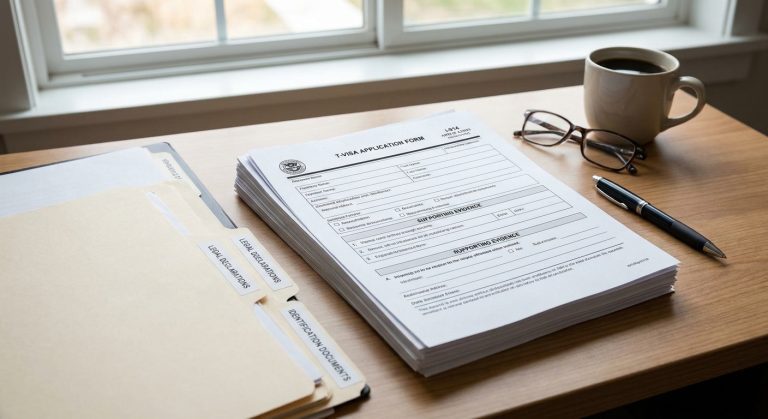
T Visa application step by step: eligibility, Form I-914 and Supplement B, supporting evidence, where to mail your petition and what happens after filing.

U.S. Citizenship and Immigration Services is implementing new internal directives aimed at streamlining the adjudication process for humanitarian-based petitions. This shift specifically targets the evidentiary standards for U visa and…

Correction: The earlier claim that the T visa rule removed the extreme-hardship requirement was incorrect and has been withdrawn.

T visa rules: initial eligibility and extensions are different questions. Do not confuse a request to extend existing T status with a first application for T-1 status.

T visa eligibility: extreme hardship remains a requirement. Under 8 CFR 214.202(d), the applicant must establish extreme hardship involving unusual and severe harm upon removal.

Correction: The earlier claim that the T visa rule removed the extreme-hardship requirement was incorrect and has been withdrawn.
T visa physical presence: the connection to trafficking matters. Section 214.207 addresses presence on account of trafficking.
Correction: The earlier claim that the T visa rule removed the extreme-hardship requirement was incorrect and has been withdrawn.

Updated October 20, 2026. This article concerns the rule USCIS announced on April 29, 2024. The earlier description of a rule taking effect later this year has been removed.

Correction: The earlier claim that the T visa rule removed the extreme-hardship requirement was incorrect and has been withdrawn.
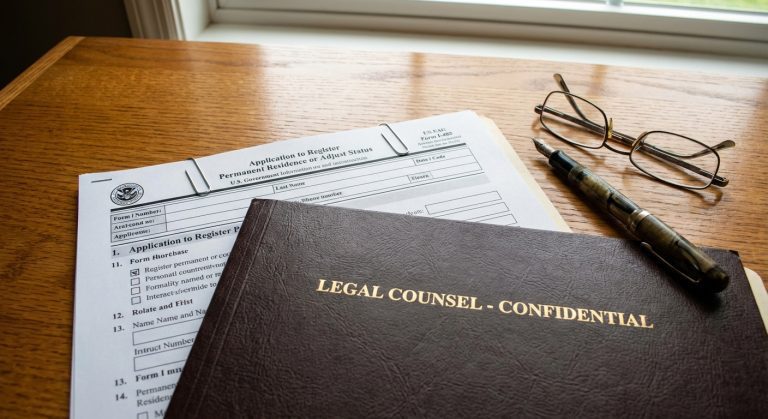
Learn when to file a t visa to green card case, how USCIS counts physical presence, which eligibility rules apply, and which Form I-485 records matter.

Learn about the T visa approval rate and what factors influence USCIS decisions. Discover how to build a strong case and protect your future.

Explore how to request a T visa waiver of inadmissibility, with trauma-informed steps, evidence tips, and USCIS priorities boost approvals.

T visa processing time updates reveal 1 to 3 year waits, learn what drives the backlog and how to plan your case today, for those waiting.

Explore T visa requirements and step-by-step eligibility updates with trauma-informed guidance to help you apply confidently today; click.
Explore how T visa benefits grant work permits, deportation protection, and a path to a green card for trafficking victims. Learn more.
The right immigration option depends on your circumstances. If your questions involve a different situation, these are other areas our firm handles. Each service has its own eligibility requirements.




Our office at 15915 Katy Fwy, Suite 160, in Houston provides legal help with T visa eligibility and application preparation. You can work with us in person here or through our virtual service for clients in Texas and other U.S. states.
15915 Katy Fwy Ste 160, Houston, TX 77094If you need help understanding whether a T visa may fit your circumstances, call our Houston office at (281) 606-0800. We can discuss the legal questions, the information you have and what preparing an application would involve.