
4 minute read
Waiting on a pending USCIS case feels urgent when a job offer, a medical emergency, or another pressing situation is on the line. A USCIS expedite request asks the agency to move your case ahead of the standard queue, based on strict, limited criteria.
According to USCIS Policy Manual Volume 1, Part A, Chapter 5, this is a discretionary benefit, so meeting the basic criteria never ensures approval. If you work with Green Card attorneys, they can help confirm which of the five categories fits your case.
Criteria for skipping the standard processing queue
USCIS does not grant faster processing simply because a case has been pending for a long time. Instead, the agency limits approvals to specific USCIS expedite criteria that justify moving one file ahead of the standard processing queue.
Severe financial loss
This category applies when a company or person would suffer substantial monetary harm without faster action. A frequent pitfall is describing general stress rather than the specific financial loss that would occur if the case follows standard timelines.
For an individual, this usually means proving an inability to pay for basic necessities or the loss of a specific job offer with a fixed start date.
Urgent humanitarian reasons
These requests often involve medical emergencies, safety concerns, or other pressing human needs. A parent’s serious illness, a documented threat to someone’s safety, or a similar urgent situation can support this category when the timing itself creates the harm.

Government interests and USCIS error
A USCIS expedite request might be granted if a federal agency confirms that your case is of interest to U.S. government programs, such as public safety or national security. Additionally, if the agency makes a clear administrative error, such as losing a file or misapplying a law, you can request that they fix the mistake on an accelerated timeline.
USCIS also allows a nonprofit organization designated by the IRS to request an expedite when the case supports the cultural or social interests of the United States, a category built for organizations rather than individual clients.
Once you identify your category, you must gather the specific evidence that proves your claim is real and immediate. A request without supporting documentation is often dismissed before an officer conducts a full review of the merits.
What documents support an expedite request to USCIS?
Submitting this type of request without evidence is almost certain to be denied without a second look. The agency needs to see physical proof that the harm will happen soon if they do not act. Below is the order we recommend when organizing your documentation.
- Medical records, doctor letters, or hospital bills with specific dates for humanitarian claims to prove the severity and timing of the medical emergency.
- Eviction notices, foreclosure warnings, or bank statements showing zero balances for financial loss claims to demonstrate an immediate threat to housing or survival.
- Job offer letters that list a specific start date and a signed statement from the employer that the position cannot be held open indefinitely while the petition is pending.
- Documentation from a U.S. government agency explaining why your case affects their specific programs or why your presence is required for a government interest.
Submitting the request to the USCIS Contact Center
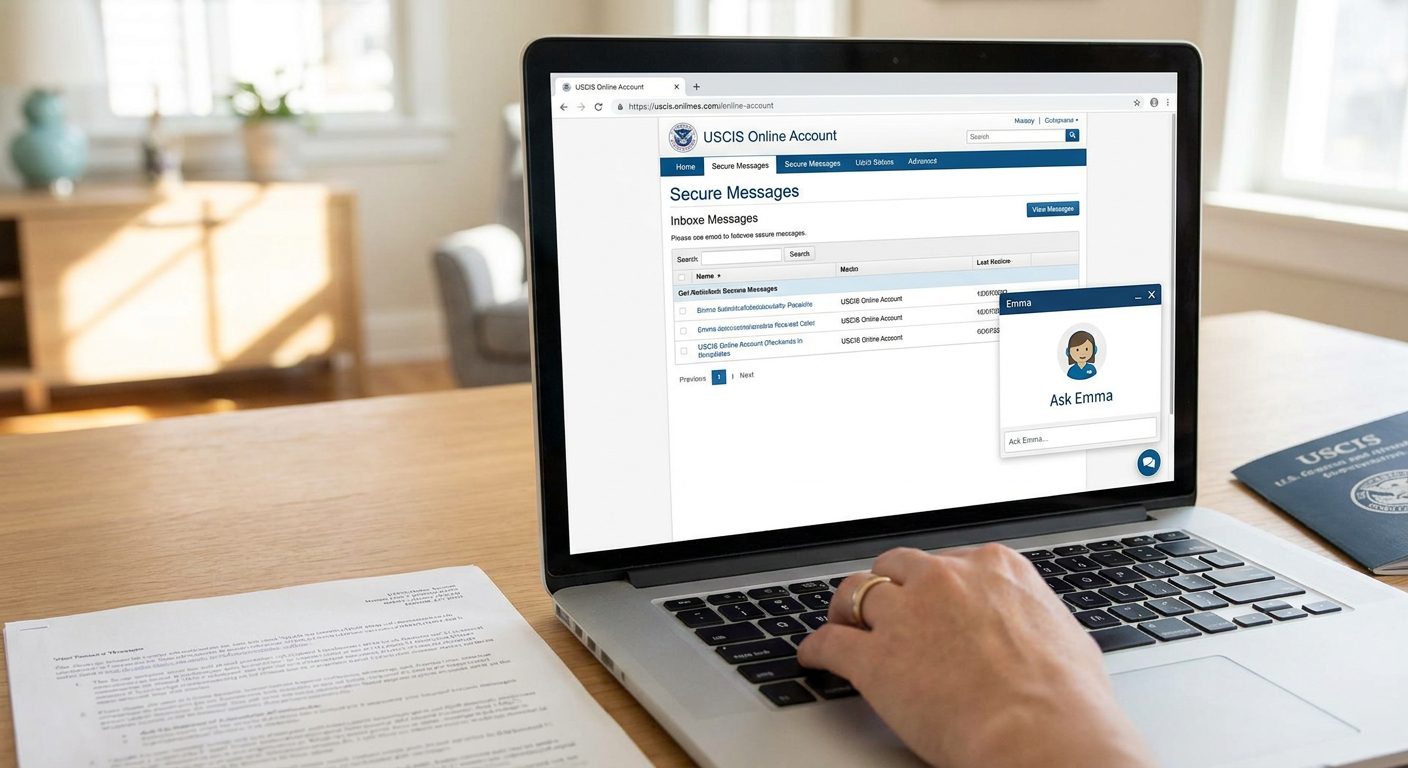
The submission of a USCIS expedite request happens primarily through digital or telephonic channels, not by mailing a new form. You can use the secure messaging tools within your USCIS online account to submit supporting documents quickly for a pending petition.
- Call 1-800-375-5283 to speak with a representative at the USCIS Contact Center. You will typically need to say “expedite” to bypass the automated menu system.
- Use the USCIS online account tool or the “Emma” chatbot if you have a pending form that allows for secure messaging to initiate the inquiry.
- Provide a clear, concise explanation of which expedite request criteria your case meets when the representative opens the inquiry for the reviewing officer.
- Keep a written record of the call, including the date and the representative’s name, and follow up through your USCIS online account if you do not see an update.
After the request is logged, the waiting period for a decision begins. Submitting the request is only the start of a secondary review by a field office or service center where an officer evaluates the claim based on the evidence provided.
What to expect after submitting your request
Response times vary widely from case to case, and USCIS does not publish a fixed timeframe for expedite decisions. If the agency needs more information before deciding, it will contact you through the same channel you used to submit your request, so check your USCIS online account and Contact Center messages regularly.
If USCIS sends a formal request for evidence, you must respond by the stated deadline to avoid a summary denial. It is important to remember that a denial of your USCIS expedite request does not mean your underlying application is in trouble. A denial simply means your case returns to the standard queue.
The agency generally does not provide an appeal process for these discretionary decisions. If your request is denied, you may need to look at other ways to check your case status or resolve errors that are preventing your file from moving forward.
What to do if your expedite request is denied
A denial of a USCIS expedite request is common, but it is not the end of your options for moving a case forward. If your emergency request fails, you can turn to standard procedural tools to verify your case is still being handled appropriately.
Checking case status and service requests
If your case is outside normal processing times, you can file a service request, which differs from an expedite because it addresses the agency’s own delays rather than a personal emergency. Checking your case status regularly also helps confirm that no notices were missed while you wait.
Contacting the CIS Ombudsman
For systemic issues or cases that are severely delayed without explanation, the CIS Ombudsman can sometimes intervene. Before going that route, it helps to know which of the common green card delays your case is actually facing, because a backlog that affects an entire category calls for a different response than an underlying government error.
If you are unsure whether your financial loss meets the severe threshold, whether your medical evidence supports a humanitarian claim, whether your case involves a genuine government interest, or whether a USCIS error requires a formal legal correction, our team can help you review the details. Contact us and we will look at your situation, help you gather the right supporting documents, and walk you through what a strong expedite request should include.
Frequently asked questions about USCIS expedite requests
Will my application be viewed negatively if my expedite request is denied?
A denial of an expedite request is an administrative decision based on your current urgency and does not impact the merits of your underlying case. It generally does not prejudice future requests if your situation worsens later. You may submit a new request if you gather stronger evidence or if a different emergency arises during your wait.
Does this request work for cases currently at the National Visa Center?
A USCIS expedite request only applies while the federal agency has jurisdiction over your file. Once your petition moves to the National Visa Center (NVC), you must follow different procedures specifically for the Department of State. While the criteria for emergencies are often similar, the contact methods and evidence submission portals are entirely separate systems.
Can I request an expedite if a family member abroad has a medical emergency?
Humanitarian grounds frequently cover medical emergencies involving close family members, especially if your presence or status is required to provide care or financial support. You typically need to provide translated medical reports and proof of the relationship. These situations often depend on showing how the standard processing delay causes specific harm to the family member.
Is requesting an expedite the same thing as paying for premium processing?
These are distinct options. Premium processing is a paid service available for specific employment-based forms that guarantees a response within a set timeframe. An expedite request is a free, discretionary benefit based on an emergency. Unlike the paid service, USCIS can deny an expedite request even if you provide significant documentation of your financial or medical crisis.
Can I submit an expedite request at the same time I mail my application?
Most expedite requests require a receipt number, which means the application must already be pending in the system. While you may include a cover letter explaining an emergency with your initial filing, the agency generally processes the request after the file is digitized and assigned a case number. Calling the Contact Center is usually the next logical step.