7 minute read
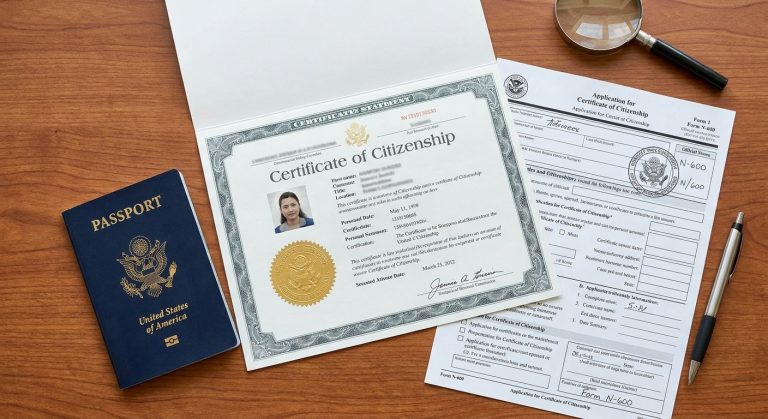
Applying for a Certificate of Citizenship (Form N-600) documents your existing U.S. citizenship — it does not grant it. This form is for individuals who already hold citizenship through birth abroad to a U.S. citizen parent or through derivation when a parent naturalized.
Knowing whether you qualify for an N-600 or need to naturalize instead prevents costly mistakes. Our naturalization and citizenship attorneys help clients determine the right path based on their specific situation.

Purpose of the Certificate of Citizenship
The N-600 certificate, obtained by filing Form N-600, is official proof of U.S. citizenship for individuals who are already citizens. This applies typically to those who acquired citizenship at birth outside the United States or derived it automatically through their parents’ naturalization before reaching 18 years of age.
N-600 versus N-400 — what each form actually does
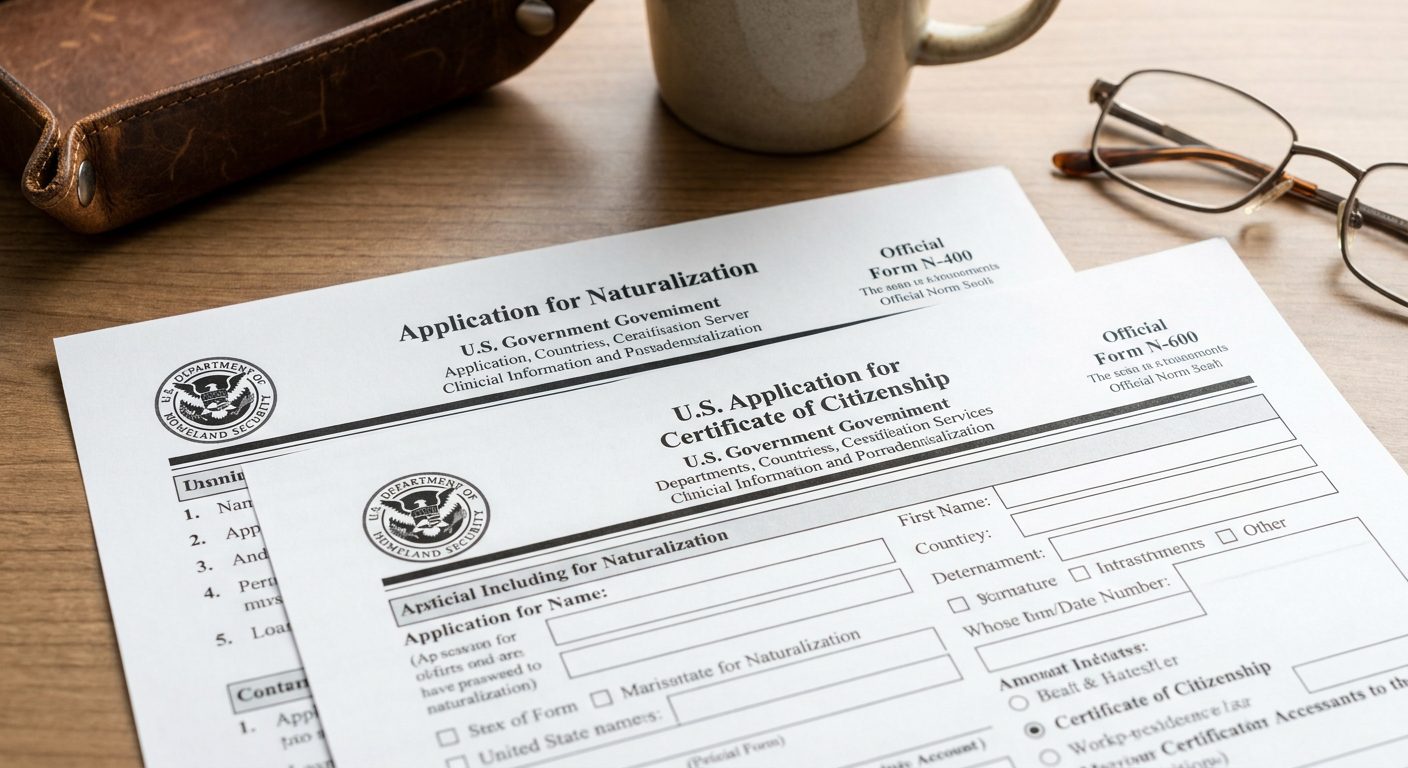
Unlike Form N-400, the Application for Naturalization, the N-600 does not grant citizenship; it simply documents a status you already hold. Form N-400, by contrast, is for Lawful Permanent Residents (Green Card holders) who wish to become U.S. citizens.
The N-400 process involves proving good moral character, passing a civics and English test, and taking an Oath of Allegiance. An N-600 generally costs less, is often faster, and does not require a citizenship test, civics exam, or an oath ceremony, because your citizenship is already established.
We often see individuals who believe they are citizens but face difficulties presenting their status to employers, government agencies, or for international travel. Missing clear documentation can cause delays and complications.
While a U.S. passport serves as evidence of citizenship, a Certificate of Citizenship offers the most authoritative documentation, particularly when a passport is insufficient or a detailed record of your citizenship’s legal basis is needed.
Recognizing Acquired and Derivative U.S. Citizenship
To determine if you should apply for an N-600, you must first confirm if you are already a U.S. citizen through either acquisition at birth or derivation through your parents’ actions. An N-600 confirms your pre-existing citizenship in these scenarios, providing the official documentation you need.
Citizenship by acquisition
You may be a U.S. citizen by acquisition if you were born outside the United States to at least one U.S. citizen parent. The applicable rules depend on your date of birth and your U.S. citizen parent’s prior U.S. residency. Our family immigration attorneys can review which rules apply to your situation.
For example, if you were born after November 13, 1986, to two U.S. citizen parents, you acquired citizenship if one parent had resided in the U.S. or its outlying possessions at any time before your birth.
If only one parent was a U.S. citizen, that parent generally needed to have resided in the U.S. for a cumulative period of five years, with at least two of those years after age 14, prior to your birth.
Citizenship by derivation
Citizenship by derivation means you automatically became a U.S. citizen after birth but before turning 18, typically through the naturalization of one or both of your parents. To derive citizenship, all of the following conditions generally must have been met before your 18th birthday:
- At least one parent was a U.S. citizen, either naturally or through naturalization.
- You were a Lawful Permanent Resident (Green Card holder).
- You were residing in the U.S. in the legal and physical custody of the U.S. citizen parent.
The laws for derivative citizenship have changed over time, particularly in 2001 with the Child Citizenship Act (CCA). If you met these conditions under the law in effect at the time you were under 18, you are likely already a citizen.
For instance, under the CCA, a child born outside the U.S. to non-U.S. citizen parents becomes a citizen automatically when their U.S. citizen parent naturalizes, provided the child is under 18, a lawful permanent resident, and residing in the U.S. in the legal and physical custody of the U.S. citizen parent.

The N-600 Application Process
If you have determined you are already a U.S. citizen through acquisition or derivation, applying for this documentation involves filing Form N-600, Application for Certificate of Citizenship. This process confirms your status with an official document.
Filing options and fees
You can file Form N-600 either online through a USCIS account or by mailing a paper application. As of April 1, 2024, the filing fee is $1,385 for paper and $1,335 for online filing.
Before submitting, verify the current fee at uscis.gov/g-1055 and confirm you are using the current edition — as of June 2026, the accepted edition is dated 01/20/25, available at uscis.gov/n-600.
Fee waivers are available for eligible applicants, which can significantly reduce the financial burden. If you are mailing a paper application, particularly from Texas, you should send it to the USCIS Phoenix Lockbox. We recommend confirming the current filing address at uscis.gov/n-600 before mailing, as USCIS occasionally updates lockbox assignments.
Residency and minor applicants
Generally, the applicant must be living in the U.S. to apply for an N-600. Those residing abroad who need evidence of their citizenship typically apply for a U.S. passport with the Department of State.
For minor children, a parent or legal guardian can file Form N-600 on their behalf. This helps ensure younger citizens have official documentation for school enrollment, travel, or future applications.

Processing times
Processing times for Form N-600 can vary significantly based on the USCIS service center. As of June 2026, current N-600 processing times range from 2.5 to 14.5 months, with a national average between 9.1 and 12.9 months as of May 2026.
These times are estimates and can fluctuate, making it difficult to predict your specific timeline. Our citizenship attorneys can help you understand current processing patterns and what to expect for your specific situation.
If you are unsure about whether you already possess U.S. citizenship, need to distinguish between Form N-600 and naturalization, or require assistance gathering the necessary documentation for your case, contact our team and we will look at it with you.
Frequently asked questions about Certificate of Citizenship
If I already have a U.S. passport, why would I still need a Certificate of Citizenship?
While a U.S. passport serves as evidence of citizenship for travel, a Certificate of Citizenship (N-600) offers definitive legal documentation detailing the basis of your citizenship. This matters for specific employment requirements, certain government benefits, or when a more authoritative, official record of your legal status is needed beyond a travel document.
How can I determine if I truly acquired or derived U.S. citizenship before applying for an N-600?
Determining if you are already a U.S. citizen through acquisition or derivation requires a careful review of specific immigration laws applicable at your time of birth or your parents’ naturalization. This assessment considers factors like your birth date, your parents’ citizenship status, and their physical presence in the U.S. Our team can help evaluate your unique situation.
What specific documents should I prepare for a Certificate of Citizenship application?
Generally, you will need documents proving your identity, your birth, your parents’ U.S. citizenship or lawful permanent residency, and your relationship to them. This typically includes your birth certificate, your parents’ marriage certificate, their naturalization certificate if applicable, and evidence of their U.S. physical presence before your birth. We assist in gathering the necessary evidence.
Can I still derive citizenship if my parents were divorced when one naturalized?
Derivative citizenship generally requires you to be under 18, a Lawful Permanent Resident, and residing in the legal and physical custody of the naturalizing U.S. citizen parent. Parental divorce can introduce complexities, making it important to demonstrate that the custody requirement was continuously met under the specific law in effect at that time.
What if I was born abroad to a U.S. citizen parent but never lived in the U.S.?
If you acquired citizenship at birth abroad but reside outside the United States, applying for an N-600 is generally not the pathway for proving your status. Individuals in this situation typically apply for a U.S. passport through the Department of State, which serves as official evidence of their citizenship for international travel and other needs.
Is there an age limit to apply for a Certificate of Citizenship?
No, there is generally no age limit to apply for a Certificate of Citizenship (Form N-600) if you are already a U.S. citizen through acquisition or derivation. While derivative citizenship typically occurs before age 18, you can apply for the N-600 at any age to obtain official documentation of that pre-existing status.