For many survivors of domestic abuse, immigration status can feel tied to the person who caused the harm. U.S. immigration law provides a pathway to independence through the Violence Against Women Act (VAWA), which allows certain survivors to apply for lawful permanent residence without relying on the abusive spouse, parent, or child.
Through this process, eligible applicants may ultimately obtain a VAWA green card, gaining stability and long-term protection in the United States.
Understanding how the process works, from the self-petition to permanent residence, can help you plan the next steps with more confidence. If you need guidance about eligibility, evidence, or timelines, speaking with VAWA immigration attorneys can help you evaluate your situation and determine the safest legal path.

Can you get a green card through VAWA?
Yes. If your VAWA self-petition is approved and you meet the immigration requirements, you may apply for lawful permanent residence in the United States. A survivor of abuse can obtain a green card through VAWA without the participation or knowledge of the abusive family member.
The process generally involves two main stages:
If columns extend beyond the view, swipe the table horizontally or focus it and use the arrow keys.
| Stage | Form | What it establishes or unlocks |
|---|---|---|
| Stage 1: Self-petition | Form I-360 | Establishes that you qualify as a survivor of abuse by a U.S. citizen or lawful permanent resident. Once approved, it may trigger a Prima Facie determination and deferred action. |
| Stage 2: Adjustment of status | Form I-485 | Once the self-petition is approved and a visa number is available, you apply to adjust your status and receive a VAWA green card. |
Obtaining a VAWA green card ultimately grants lawful permanent resident status. This allows you to live and work permanently in the United States and later apply for U.S. citizenship if you meet the naturalization requirements.
Understanding the VAWA green card stages from petition to residency
Now that we have established the purpose of this protection, let’s look at the actual steps to secure your status.
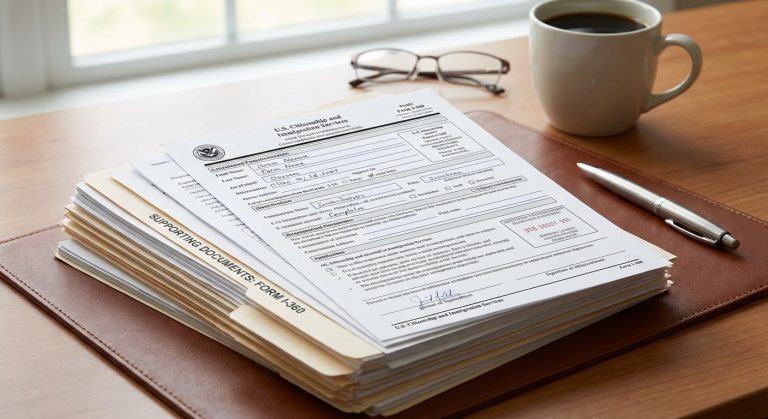
The journey begins with the Form I-360 self-petition, which establishes your eligibility as a survivor of abuse by a U.S. citizen or permanent resident. You will need to present the evidence VAWA requires to support your case.
Following approval of the self-petition, the next major milestone is the Form I-485 application for adjustment of status. The timing for this stage depends largely on the abuser’s legal status.
Spouses of U.S. citizens can often apply immediately, whereas spouses of Lawful Permanent Residents must wait for their priority date to become current. Understanding this sequence helps manage expectations as you move toward permanent residency.
What is a Prima Facie determination?
When USCIS receives your I-360 self-petition, the agency reviews it for a preliminary finding known as a Prima Facie determination. This is not a final approval, it is an initial assessment that suggests you appear to meet the basic requirements of the law.
Receiving a Prima Facie determination is significant because it can unlock access to certain public benefits while your case remains pending. These may include:
- Federal and state benefits: such as food assistance, housing programs, or healthcare, depending on your state’s rules.
- Refugee resettlement assistance: certain programs treat Prima Facie VAWA petitioners as qualified aliens for benefit eligibility purposes.
- Practical stability: it signals to benefit agencies that your case has met an initial legal threshold, even before final adjudication.
Not every case results in a Prima Facie notice, and receiving one does not guarantee final approval. We always recommend keeping your legal representative informed as your case progresses.
Can you file for a VAWA petition and a green card at the same time?
While the stages are distinct, some applicants can move through them simultaneously. Concurrent filing is a strategic option available primarily to immediate relatives of U.S. citizens, such as spouses or children.
This allows you to submit the I-360 and I-485 at the same time, which can significantly accelerate your access to auxiliary benefits. By filing these forms together, you can also request an Employment Authorization Document and Advance Parole travel document while your application is being processed.
However, this approach carries specific risks that should be weighed carefully with legal counsel. If the underlying I-360 self-petition is denied, the associated I-485 adjustment application will also be rejected automatically.
While this method offers a faster track to work authorization, it requires a solid foundation of evidence. Both the self-petition and the residency application must be robust enough to withstand USCIS scrutiny.
What happens immediately after your VAWA self-petition is approved?
Even before the green card is in your hand, an approved self-petition changes your legal standing in the U.S. An approved I-360 often results in deferred action, which means the government acknowledges your presence and has no immediate intention of pursuing deportation.
This status provides a profound sense of relief and physical safety, allowing you to live without the constant fear of removal. That approval serves as a protective bridge that maintains your legal presence while you wait for residency.
While the petition is still pending, protection is more limited, as we cover in our guide on whether a VAWA applicant can be deported.
Additionally, VAWA self-petitioners with an approved case are classified as qualified aliens for the purpose of certain federal and state benefits. Depending on the specific laws in your state, you may become eligible for housing assistance, healthcare, or other social safety nets.
You also gain the right to apply for or renew a work permit based specifically on your approved status, ensuring you can support yourself financially and independently as you move forward.

Your rights and benefits after receiving a VAWA green card
The final milestone is the arrival of the physical card, which opens a new chapter of freedom. Obtaining a VAWA green card grants you the full rights of a Lawful Permanent Resident, including the freedom to work for any employer without needing a separate work permit.
You no longer have to worry about expiring employment authorization cards or renewals, as your residency status is permanent. This stability allows you to build a career and pursue higher education without administrative barriers.
Residency also brings the significant right to travel internationally and return to the United States with much greater ease. While it is always wise to consult with a legal expert regarding past immigration history, LPR status generally replaces the need for Advance Parole.
Furthermore, you gain the ability to petition for certain family members, such as unmarried children, allowing you to reunite your family. These benefits include the following rights:
- Employment freedom: the ability to work for any employer in the United States without the need for a separate work authorization document or renewals.
- Travel opportunities: the right to travel abroad and re-enter the country as a lawful resident, facilitating visits to family and international professional opportunities.
- Family petitions: eligibility to file immigrant petitions for unmarried children, providing a legal pathway for your loved ones to join you in the United States.
Once you hold this status, you are protected from any further interference by the abuser regarding your legal standing. The law ensures that your permanent residency is yours alone, and no one can threaten your immigration status as a means of control.
This complete legal independence is the ultimate goal of the process, providing you with the foundation to live a life free from fear and full of possibility.

The timeline and verification of your application status
Because this process is a journey, knowing where you stand is vital for your planning. Monitoring your case status is done through the official USCIS online tool using the receipt numbers provided after filing.
It is important to remember that VAWA cases are now handled at the HART Service Center by officers who have received specialized training in humanitarian and domestic violence cases. This centralization ensures that your case is treated with the highest level of confidentiality and sensitivity.
Processing times for these applications are not fixed and can vary based on current government backlogs and individual case complexities. It is more realistic to check the current ranges in our guide to VAWA processing times, which under current USCIS data stretch close to four years for the I-360 stage.
Maintaining patience and staying in close contact with your legal representative will help you navigate these waiting periods with more confidence.
Does the VAWA green card require an interview, or can it be waived?
Under current USCIS policy, applicants filing Form I-485 for adjustment of status are generally subject to an interview. However, the VAWA adjustment of status interview can be waived at USCIS discretion on a case-by-case basis, and there is no automatic exemption for VAWA-based filings.
When an interview does take place, it focuses on your admissibility and eligibility for residency, not on re-proving the abuse. The self-petition already established the merits of your case. The abuser is never involved or present, and the process is conducted with strict confidentiality.
Whether or not an interview is scheduled, we recommend staying in close contact with your attorney as your I-485 is being processed. Requirements and practices can shift under current USCIS policy.
What can disqualify a VAWA green card application?
Many grounds of inadmissibility, such as unlawful presence or unauthorized work, are waived or treated with greater leniency for VAWA applicants through specific VAWA waivers of inadmissibility. That said, some issues can still put an application at risk. Under current USCIS policy, the most common concerns include:
- Good moral character issues: serious criminal history or failure to disclose relevant information can raise questions about moral character, which VAWA-based applicants must demonstrate.
- Credibility concerns: if USCIS is not satisfied that you qualify as a survivor of abuse, the agency may issue a Notice of Intent to Deny (NOID) with a deadline to submit additional evidence.
- Fraud or misrepresentation: knowingly providing false information in the application can result in a Statement of Finding and may lead to removal proceedings.
If you receive a NOID or have concerns about your immigration history, speaking with an attorney before responding is strongly advisable. Many situations that appear disqualifying have remedies available under the law.
The path from permanent residency to U.S. citizenship
A green card is not just an end; it is the foundation for full U.S. citizenship. One of the most significant advantages for survivors is the expedited timeline for naturalization.
While most green card holders must wait five years to apply for citizenship, those who obtained residency through VAWA may be eligible to apply after only three years. This accelerated path acknowledges the unique circumstances of survivors and provides a faster route to the full protections and voting rights afforded to U.S. citizens.
To successfully transition to citizenship, you must demonstrate good moral character and meet specific physical presence requirements within the country. Throughout the naturalization process, the underlying VAWA status continues to serve as a shield, ensuring that your journey to becoming a citizen remains protected from outside interference.
If you think you may be approaching that three-year window, our VAWA immigration attorneys can review your timeline and help you file when the moment is right.
Frequently asked questions about the VAWA green card
What should I expect during the interview for a VAWA-based adjustment of status?
Unlike standard marriage-based interviews, the VAWA green card interview focuses primarily on your eligibility for residency and admissibility factors rather than re-proving the abuse. Since the self-petition already established the merits of your case, the officer usually verifies your background and updates to your application. Most importantly, the abuser is never involved or present, and the interview is conducted with strict confidentiality. Having a legal representative present can provide additional peace of mind and ensure that your rights as a survivor are respected throughout this final procedural step.
Can I still obtain permanent residency if I divorce my abuser before the process is finished?
Yes, your eligibility for a VAWA green card remains intact even if you divorce your abuser, provided the legal action is finalized within two years of filing the self-petition or while the case is pending. The law is specifically designed to prevent abusers from using your immigration status as a tool of coercion or control. Once you have submitted your self-petition, your path to residency becomes independent, allowing you to finalize your legal separation and move forward with your life without jeopardizing your future status.
Does the public charge rule apply to survivors applying for residency through VAWA?
Many applicants worry that receiving government assistance will lead to a denial, but VAWA self-petitioners are generally exempt from the public charge ground of inadmissibility. This means that using certain public benefits, such as emergency healthcare or food assistance, while your case is pending should not negatively impact your ability to receive a green card. This exemption is a vital protection that ensures survivors can access the resources they need for safety and stability without fear of jeopardizing their legal standing or future in the country.
What steps should I take if I need to change my safe mailing address during the application process?
Maintaining a secure mailing address is paramount for your safety. If you move or need to update where you receive USCIS correspondence, you must notify the agency specifically through procedures meant for protected applicants. This often involves filing a specific change of address form and ensuring it is routed to the HART Service Center, which handles these sensitive cases. Updating your address correctly ensures that your residency card or work permit does not fall into the wrong hands or alert the abuser to your location.
Will previous unlawful presence or unauthorized work prevent me from getting a green card?
One of the most significant benefits of applying for residency through VAWA is that certain grounds of inadmissibility, such as unauthorized employment or periods of unlawful presence, can often be waived or are handled with greater leniency. Because the law recognizes the unique obstacles survivors face, there are specific protections available to ensure these issues do not automatically bar you from legal status. However, it is essential to have a professional review your specific immigration history to determine if additional waivers are required for your case.
Can the VAWA adjustment of status interview be waived?
Yes, it can. USCIS may waive the Form I-485 adjustment of status interview for VAWA self-petitioners on a case-by-case basis, but there is no automatic exemption, so some applicants are still scheduled for one. When an interview is held, it focuses on your eligibility and admissibility rather than re-proving the abuse, the abuser is never present, and it is handled with strict confidentiality at the HART Service Center. Because USCIS practices can change, staying in close contact with your attorney while your I-485 is pending is the best way to know what to expect.