If you are seeking safety and a clear path through complex immigration rules, you may be thinking about options for immigrant victims of domestic violence. Understanding how VAWA, U visas, and related protections work can help you plan the next step with confidence. This guide explains what protections exist, how to pursue them, and what changes in enforcement could mean for your case.
Together, we will walk through your options and what to expect, so you can make informed choices with care and planning. To learn more about how we can help through our immigration services, reach out for a confidential consultation that respects your safety and goals.

What protections exist for immigrant victims of domestic violence under VAWA and U visas?
Immigrant victims of domestic violence can explore two well-established relief routes: VAWA self-petitions and U visas. These options acknowledge that status can be used as a tool of coercive control, and they aim to separate safety from fear of removal.
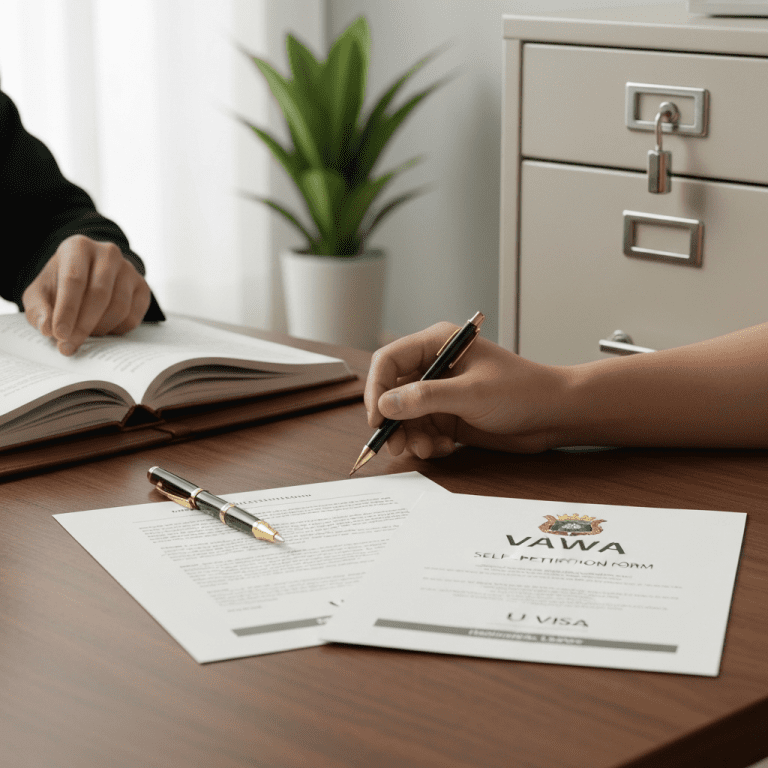
VAWA self-petitions are designed for abuse survivors connected to a qualifying U.S. citizen or LPR family member. You may seek lawful permanent residency based on abuse, domestic violence, or related harms, even if the abuser does not cooperate. This path often includes work authorization and potential pathways to a green card.
U visas offer nonimmigrant status to crime victims who assist law enforcement in investigating or prosecuting crimes, including domestic violence. The U visa provides a temporary status with an eventual path to possible adjustment, balancing safety with immigration outcomes.
VAWA self-petitions: eligibility and process
Eligibility hinges on proof of abuse, a qualifying relationship, and good moral character. If you pursue a VAWA self-petition, you may then obtain work authorization while the petition is processed, with the potential to transition to permanent residency.
The process requires careful documentation of the relationship and the abuse, along with evidence of the good-faith nature of the marriage or relationship. An experienced attorney can help assemble medical records, protective orders, and corroborating testimony to strengthen your case.
U visas: eligibility and path to green card
U visas require substantial cooperation with law enforcement and a demonstration that you suffered a qualifying crime. Victims who qualify can obtain temporary nonimmigrant status with a potential route to permanent residency under appropriate statutory provisions.
Because eligibility criteria are nuanced, seek guidance on gathering supporting evidence, including police reports, medical documentation, and credible statements. If you want to review policy context, you can explore the framework in H.R.30 on Congress.gov for additional protections.
How have enforcement changes affected reporting and protections for immigrant victims of domestic violence?
Enforcement changes have heightened fear among survivors and the broader community. When protections in sensitive locations are rolled back, many victims worry that seeking help at shelters, clinics, or courts could expose them to immigration enforcement. This fear can deter reporting and impede access to safety orders or protective measures.
Legislation and policy shifts can complicate relief options, especially where asylum standards are tightened or where confidentiality protections are tested by enforcement priorities. These dynamics can affect immigrant victims of domestic violence seeking shelter from abuse, protection orders, or legal relief.
In some contexts, statutes and policies favor detention or punitive approaches that may silence survivors or deter them from pursuing non-criminal remedies. As a result, survivors may face prolonged abuse and limited access to U visa or VAWA relief, compounding harm in communities that already face barriers to care.
Victims often rely on advocacy organizations and trusted counsel to navigate risks and identify safe, lawful options. While these conditions vary by jurisdiction, the core aim remains: protect survivors and preserve pathways to safety and status. For a broader policy view, review the existing framework in Congress.

What steps should you take next with professional guidance?
If you are an immigrant victims of domestic violence seeking relief, start with a confidential consultation to map a practical plan. A seasoned immigration attorney can assess whether VAWA self-petition, U visa, or other relief fits your circumstances.
Begin by gathering essential documentation: abuse records, proof of relationship, financial links, and any protective orders or medical records. This helps establish credibility, relationship context, and your intent to pursue relief in good faith.
Next, discuss safety and confidentiality with your attorney. Protecting your information is critical when confidentiality protections may be tested by enforcement trends. You will also learn about processing timelines, potential interviews, and the likelihood of success in your unique situation.
What should you discuss in your initial meeting?
During your confidential meeting, ask about eligibility for VAWA self-petitions and U visas, as well as any applicable waivers or alternatives. Clarify evidentiary requirements and expected timelines, and lay out a realistic plan for safety, status, and future residency.
Ask about how confidentiality is protected in practice, including steps to minimize disclosure of personal information during enforcement actions. Your attorney should outline a strategy that aligns with your safety needs and long-term immigration goals.
Finally, consider the role of ongoing support services, such as counseling, housing referrals, and legal aid networks, to sustain your well-being while pursuing relief. We are committed to guiding you through each step with care and respect for your circumstances.
For a tailored plan, contact our Houston firm for a confidential evaluation. Our team can coordinate among VAWA, U visa, and other protective avenues to fit your unique needs while prioritizing safety and stability.
Informed action now can reduce risk and open a path to safety and lawful status. If you are evaluating options, you deserve clear answers, compassionate guidance, and steady support from a trusted attorney who understands the immigration system and the realities of domestic violence.
We invite you to reach out for a confidential case review and to discuss how these protections may apply to your situation. Your safety and future matter, and you deserve a clear plan that protects both.
To explore the latest legislative framework and protections, you may review the framework described in H.R.30 on Congress.gov for a context of proposed improvements.
Remember, you do not have to navigate these options alone. Our team is here to help translate complex legal language into concrete steps toward safety and status.
Frequently asked questions for immigrant victims of domestic violence
What is the difference between a VAWA self-petition and a U visa for immigrant victims of domestic violence?
VAWA self-petition and U visa are two protections designed to help survivors stay safe and obtain status. A VAWA self-petition lets an abuse survivor with a qualifying family relationship to a U.S. citizen or permanent resident seek lawful permanent residency, even without the abuser’s cooperation. A U visa provides temporary nonimmigrant status for victims who assist law enforcement, with a potential path to permanent residency later.
What evidence do I need to start a VAWA self-petition?
To start a VAWA self-petition, you must show abuse and a qualifying relationship, plus good moral character. Gather medical records, police reports, protective orders, photos, messages, and testimony that demonstrate the abuse and the genuineness of your relationship. Documentation linking you to a qualifying relative is essential, as is evidence you entered the relationship in good faith and that you face an ongoing risk without relief.
What should I expect during the U visa process?
Expect a careful evaluation of your qualifying crime and your cooperation with law enforcement. After you file, you may need to provide crime details, police reports, medical records, and credible affidavits. The process includes security checks and possible interviews, with potential renewal periods. Processing timelines vary by jurisdiction, and you should discuss timelines and waivers with your attorney to plan for safety and status.
How do enforcement changes affect reporting and protections?
Enforcement shifts can raise fears about seeking help from shelters, clinics, or courts, even when you need safety. Confidentiality rules may be tested, and some policies may prioritize short-term detention or enforcement actions. This can deter reporting or pursuing VAWA or U visa relief. Stay connected with trusted advocates and lawyers who understand both safety needs and the evolving policy landscape to protect your options.
What should I do in my first consultation to get a practical plan?
In your first confidential meeting, ask about eligibility for VAWA and U visas, potential waivers, and other relief options. Bring documentation: abuse records, relationship proof, financial ties, and any protective orders. Discuss safety, confidentiality, timelines, and realistic steps. A compassionate attorney will translate legal language into a concrete plan, outlining short-term safety measures, filing steps, and how your status could progress toward stability.