8 minute read
Filing a VAWA application gives survivors of abuse a way to seek lawful immigration status without depending on the abuser who is a U.S. citizen or lawful permanent resident. The process runs through Form I-360 with USCIS, and what you submit at the start shapes how fast your case moves and what interim protections you can access while it is pending.
Most petitions stall not because of eligibility but because of how the evidence is put together. Our VAWA immigration attorneys help you map the right evidence for your situation, file Form I-360 with a complete record, and time concurrent filings so you can secure work authorization and a path to a Green Card as soon as the law allows.

Do you qualify for a VAWA self-petition?
Determining your eligibility is the first step that determines if your VAWA self-petition can move forward. This protection is available to abused spouses, children, and parents of U.S. citizens or lawful permanent residents. You must establish a qualifying relationship, demonstrate you experienced battery or extreme cruelty, and meet certain residency and character requirements.
For spouses, proving a good faith marriage to the abuser, entered into without the primary intent of circumventing immigration laws, is essential. Additionally, you typically must have resided with the abuser at some point in the United States. All genders are protected under VAWA, challenging common misconceptions.
Demonstrating good moral character is also part of the eligibility analysis. This usually involves showing you have not committed certain crimes and that your past actions align with community standards. Understanding these core VAWA eligibility requirements criteria from the outset helps determine the strength of your case.
What documents do you need for your VAWA application?
Once you confirm your eligibility, compiling the documentation for Form I-360 becomes the next step. This package supports your claims with concrete proof, which can be hard to gather in an abusive environment.
You will focus on gathering proof of identity, your abuser’s immigration status, the qualifying relationship, shared residence, the abuse itself, and your good moral character.
What goes in your personal declaration
Your personal declaration is a foundational piece of evidence, providing your firsthand account of the abuse and relationship. It is often the most comprehensive document in your entire VAWA application, and its clarity directly impacts the strength of your case. Include specific details, dates, and incidents to paint a clear picture for USCIS.
How to gather evidence of abuse safely
Collecting evidence of abuse often requires creativity and discretion. This can include police reports, medical records, therapist letters, affidavits from friends, family, or professionals who witnessed or were told about the abuse, photos, emails, or text messages.
If you lack direct access to the abuser’s immigration documents, affidavits from individuals who know their status or other indirect evidence can sometimes suffice. Our Green Card and permanent residence attorneys understand the difficulties in gathering evidence safely and can guide you through this process effectively.
Here is a VAWA requirements checklist of essential documents and evidence typically required:
- Your personal declaration: A detailed written statement describing the abuse and your relationship.
- Proof of identity: Your birth certificate, passport, or other government-issued ID.
- Proof of abuser’s status: Birth certificate, passport, Green Card, or naturalization certificate of your U.S. citizen or LPR abuser.
- Evidence of qualifying relationship: Marriage certificate (for spouses), birth certificates (for children/parents), and other records proving the familial tie.
- Proof of shared residence: Leases, utility bills, joint bank statements, or affidavits showing you lived together.
- Evidence of battery or extreme cruelty: Police reports, court records, medical documents, psychological evaluations, affidavits from witnesses, photos, emails, or texts.
- Evidence of good moral character: Criminal background checks, police clearances, and affidavits from people familiar with your character.

How to file Form I-360 for your VAWA self-petition
With your complete evidence package ready, the next step involves properly assembling and mailing your Form I-360. There is no filing fee for VAWA self-petitioners, which removes one financial barrier for survivors.
Form I-360 edition date and where to find it
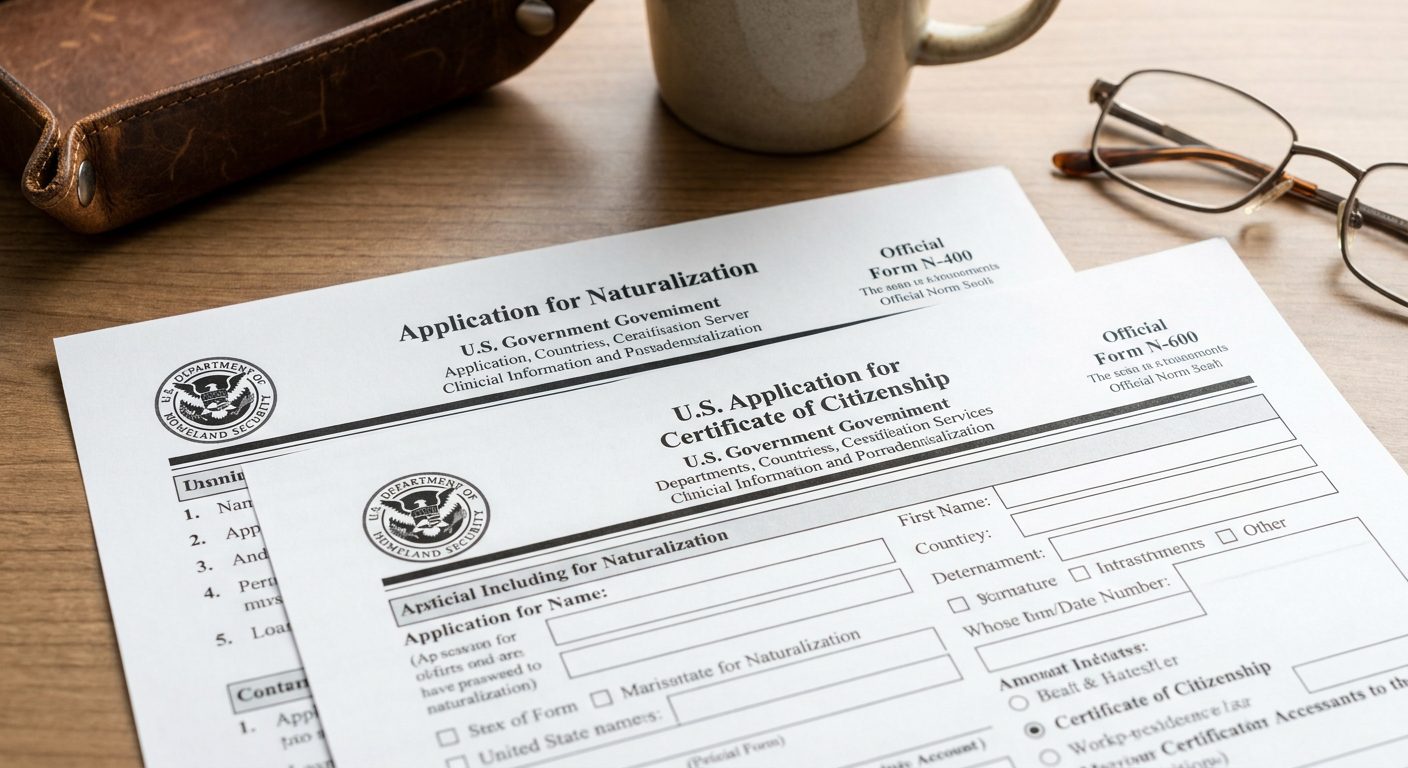
The current edition date for Form I-360 is 01/20/25, and USCIS only accepts this edition starting May 28, 2025. You must always verify you are using the correct and most recent form edition directly from the USCIS website before sending your application.
Where to mail your Form I-360
VAWA-based I-360 petitions are processed by the Humanitarian, Adjustment, Removing Conditions, and Travel Documents (HART) Service Center, a virtual unit. However, the mailing address depends on the state where you live and goes to either the USCIS Phoenix Lockbox or the USCIS Chicago Lockbox, depending on your jurisdiction.
This means you must always verify the most current filing address on the official USCIS website (uscis.gov/i-360) before mailing, as these addresses can change without much notice.
How to assemble the mailing package
Assemble the package neatly. Avoid tabs, which can interfere with USCIS scanning equipment, and use exhibit stickers or labels for each piece of evidence, clearly referencing them in your personal declaration or a cover letter.
Any document not in English must include a certified English translation. Always keep a complete copy of your entire submission before sending it. Filing your Form I-360 properly is what formally opens your petition with USCIS.
What benefits are available while your VAWA application is pending?
After USCIS issues your receipt notice, three interim benefits can become available while your Form I-360 is pending: an Employment Authorization Document, Advance Parole and a prima facie determination. Each has its own form and timing.
If columns extend beyond the view, swipe the table horizontally or focus it and use the arrow keys.
| Benefit Type | Form to File | Typical Timeline (if eligible for concurrent filing) | Description |
|---|---|---|---|
| Employment Authorization Document (EAD) | Form I-765 | 6-12 months | Allows you to legally work in the U.S. |
| Advance Parole | Form I-131 | 6-12 months (if filed with I-765) | Permits travel outside the U.S. and return without abandoning your application. |
| Prima Facie Determination | No form required (issued by USCIS) | Within a few months of I-360 filing | Indicates a strong VAWA case, potentially opening access to certain public benefits. |
Whether you can file these forms concurrently with your Form I-360 depends on your abuser’s immigration status. If your abuser is a U.S. citizen and a visa is immediately available, you can usually file all three together, which often delivers a work permit and EAD after filing your VAWA case within 6 to 12 months. If your abuser is a lawful permanent resident, you typically wait for I-360 approval and visa number availability before filing Form I-485 for adjustment.

How long does a VAWA application take to process?
The processing time for a VAWA self-petition, specifically Form I-360, can be a significant concern for applicants seeking stability. As of May 2026, USCIS published times for Form I-360 VAWA self-petitions indicate an average of 46.5 to 48.5 months (approximately 4 years) for 80% of cases.
This comprehensive timeline accounts for the initial I-360 adjudication and the subsequent adjustment of status, meaning the entire journey to obtaining a Green Card can realistically take between 4-5 years.
This timeline includes several stages. After filing, you will receive a receipt notice, followed by a potential prima facie determination. You will then typically attend a biometrics appointment to provide fingerprints and photos.
USCIS may issue a Request for Evidence (RFE) if more information is needed or, less commonly, schedule an interview. The HART Service Center, which specializes in humanitarian cases, handles the adjudication of these petitions, aiming for a consistent and empathetic approach.
Understanding current VAWA processing time helps manage expectations and allows for strategic planning, especially when you are considering applying for interim benefits like work permits to gain stability sooner.
The path to a Green Card after petition approval
Receiving approval for your VAWA self-petition is a significant milestone, as it opens the final pathway to lawful permanent residence, commonly known as a Green Card. This approval marks a critical step towards your independence, and the VAWA green card process follows clear steps after I-360 approval.
If your abuser is a U.S. citizen
If you were eligible and filed Form I-485 concurrently with your Form I-360, your case proceeds directly to the adjustment of status phase. Filing both forms together cuts months off the overall timeline because USCIS can review them in parallel.
If your abuser is a lawful permanent resident
If your abuser is an LPR, you usually wait for I-360 approval and visa number availability through the Visa Bulletin before filing Form I-485. Once a visa number is current for your category, you submit Form I-485 with supporting documents, complete a medical exam and attend any required interview.
In both paths, the Adjustment of Status process involves another biometrics appointment and may include an interview at a local USCIS field office, where an officer reviews your case before approval. Once approved, you receive your Green Card and lawful permanent resident status.
The steps after I-360 approval typically include:
- Filing Form I-485: If not filed concurrently, submit your Adjustment of Status application.
- Medical Examination: Complete a medical exam with a USCIS-approved civil surgeon.
- Biometrics Appointment: Attend another appointment for updated fingerprints and photos.
- Potential Interview: Be prepared for an interview at a USCIS field office, where an officer will review your case.
- Visa Availability Check: For those abused by LPRs, ensure a visa number is available in your category through the Visa Bulletin.
- Green Card Issuance: Upon approval of your I-485, your Green Card will be mailed to you.
If you have questions about eligibility, what evidence to gather, or how concurrent filings work in your case, contact our team and we will walk through your situation with you.
Frequently asked questions about VAWA self-petitions
Can I still apply for VAWA if I am already divorced from my abuser?
Yes, you may still qualify. Generally, if your divorce was related to the abuse and finalized within two years before filing your VAWA petition, you can still apply. You must demonstrate the good faith nature of your marriage, despite its dissolution. Our team can assess your specific situation.
What if I don’t have police reports or medical records to prove the abuse?
While formal reports are helpful, they are not the only evidence. Your personal declaration is essential, supported by affidavits from friends, family, or professionals who witnessed or knew about the abuse. Photos, emails, text messages, or even school records detailing a child’s abuse can also strengthen your case.
Does VAWA protect me if my abuser is no longer a U.S. citizen or Green Card holder?
Typically, the abuser must have been a U.S. citizen or lawful permanent resident when the abuse occurred or when you filed your petition. However, specific rules apply if your abuser lost their status or died. We can help clarify your eligibility based on these complex circumstances.
How soon after filing my VAWA petition can I apply for a work permit?
If you are an immediate relative of a U.S. citizen, you can often apply for an Employment Authorization Document (EAD) concurrently with your I-360 and I-485, potentially receiving it in 6-12 months. If your abuser is an LPR, you generally await I-360 approval before applying for the EAD and adjustment of status.
Can I travel outside the U.S. while my VAWA application is pending?
Traveling internationally while your VAWA petition is pending can risk abandoning your application unless you have an Advance Parole document. You apply for Advance Parole (Form I-131) to safely travel and return. We recommend discussing any travel plans with us before departure.
Will my abuser be notified that I am filing a VAWA self-petition?
No, USCIS is legally prohibited from notifying your abuser about your VAWA self-petition. These VAWA confidentiality protections ensure your safety and allow you to seek immigration benefits independently without fear of retaliation. Your petition remains private.
Is the Green Card I receive through VAWA conditional?
No, a Green Card obtained through a VAWA self-petition is typically not conditional. Unlike some marriage-based Green Cards, VAWA offers direct permanent residency, recognizing the unique circumstances of survivors. This provides a more stable and independent status from the outset.