8 minute read
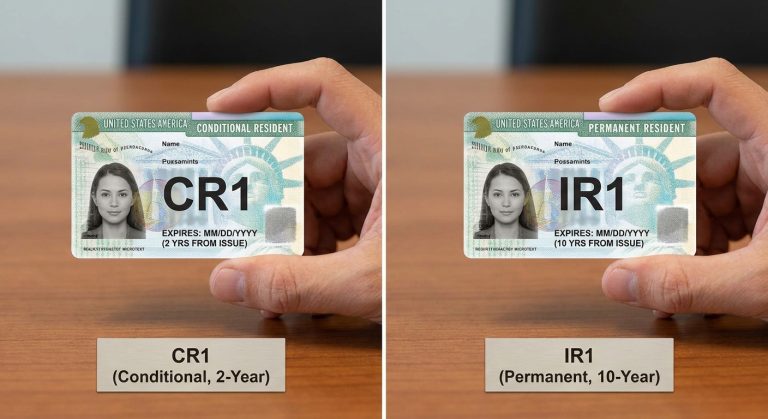
The difference between a CR1 visa and an IR1 visa for your spouse comes down to one date: how long you have been married the day their green card is approved. Under two years means a conditional CR1 green card valid for 2 years. Two years or more means a permanent IR1 green card valid for 10.
Same Form I-130, same petitioner, same eligibility — what changes is what happens after your spouse arrives. Our CR1 visa attorneys walk you through which classification will apply to your case based on your marriage timeline.

The single date that decides CR1 or IR1
USCIS measures your marriage at the moment your spouse’s immigrant visa is approved, not the day you file Form I-130. Many couples assume the filing date locks in the visa category. It does not.
If your marriage is under two years when the visa is issued, your spouse is a Conditional Resident (CR1). Once it hits two years or more, they are an Immediate Relative (IR1). The practical difference is meaningful: the CR1 path adds a second step (Form I-751) two years later. The IR1 path does not.
If you are filing close to the two-year mark, the timing of your case can shift the outcome. Cases that take 14 to 18 months from filing to interview will often cross the threshold mid-process, and the green card eventually issued ends up being the 10-year permanent one even if you filed expecting a CR1.
What a conditional resident visa means for your spouse
A CR1 visa gives your spouse a 2-year green card. The condition is built in: USCIS wants a second look at the marriage before committing to permanent residency. During those two years your spouse keeps full work authorization, can travel, and lives in the U.S. as a lawful resident.
The follow-up step is Form I-751, Petition to Remove Conditions on Residence. It must reach USCIS during the 90-day window immediately before the conditional card expires. Filing outside that window, early or late, creates problems we routinely have to fix for couples who come to us after the fact.
The supporting evidence is the same kind of life-record USCIS asked for at the I-130 stage, but two years deeper. The I-751 timeline and joint filing process walks through what USCIS expects and the windows you cannot miss.
If you do not file I-751 on time, your spouse’s conditional status terminates and removal proceedings can begin. That is the most consequential deadline in the CR1 path.

Why the IR1 path skips the second filing
An IR1 visa delivers a 10-year permanent green card the moment your spouse enters the U.S. No conditional period, no I-751, no second round of evidence two years later.
The reasoning is in the statute. Congress treats marriages of two years or more, at the time of visa issuance, as established enough to skip a second review. For couples who reach that threshold before the consulate finalizes the case, the administrative load drops significantly.
The same Form I-130 produces an IR1 instead of a CR1 automatically. There is no separate IR1 application: your marriage hitting the two-year mark before the visa is issued is what triggers the IR1 classification.
CR1 vs IR1 at a glance
If columns extend beyond the view, swipe the table horizontally or focus it and use the arrow keys.
| Feature | Conditional Resident (CR1) | IR1 (Immediate Relative) |
|---|---|---|
| Marriage Duration at Green Card Approval | Less than 2 years | 2 years or more |
| Green Card Validity Period | 2-year conditional green card | 10-year permanent green card |
| I-751 Petition Required | Yes, to remove conditions | No |
| Path to Permanent Residency | Conditional, then permanent after I-751 approval | Directly permanent |
The administrative weight sits on the CR1 side because of the I-751 round. The financial cost is similar at the front end, but the CR1 path adds USCIS fees and document gathering two years in.
Filing the I-130 and the path that follows it
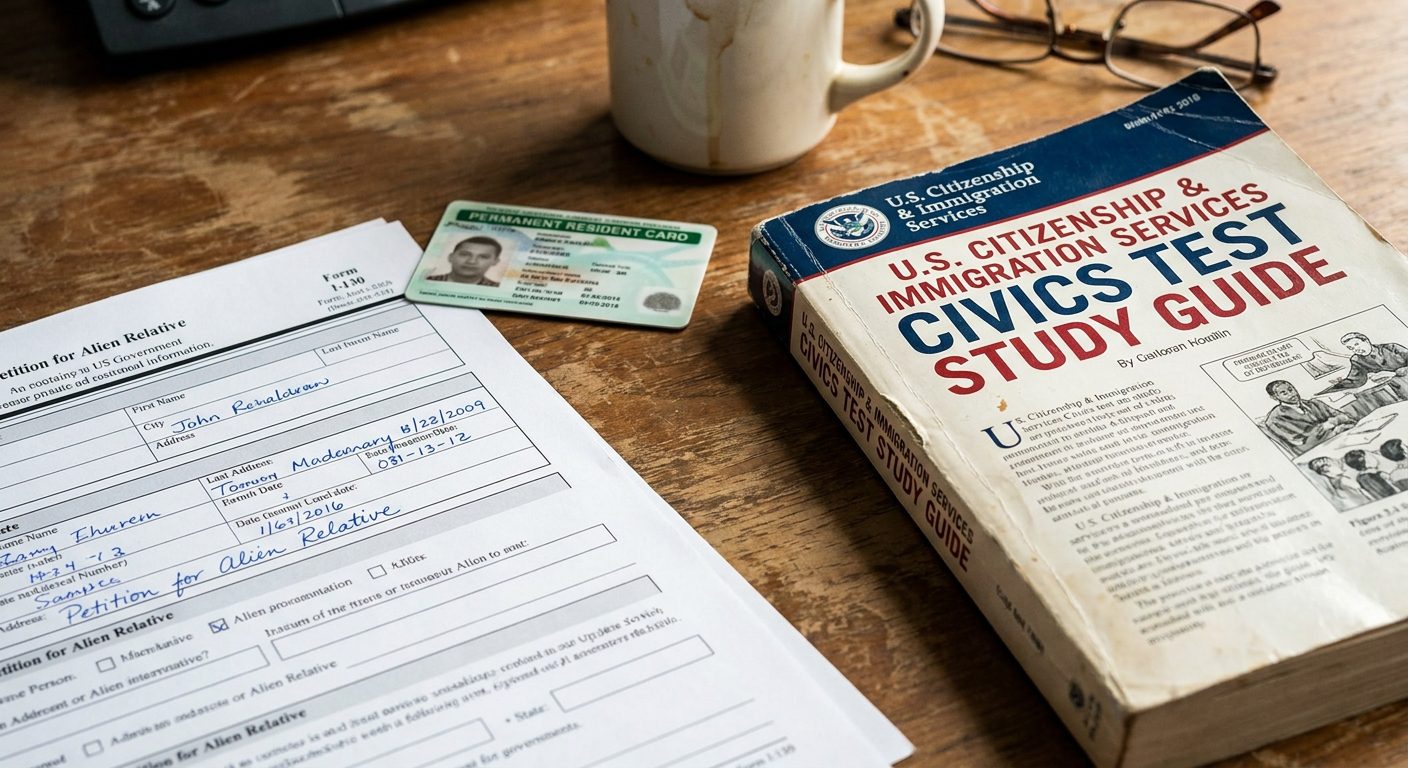
Whether your spouse ends up with a CR1 or IR1, the case starts the same way: filing Form I-130, Petition for Alien Relative, to bring your spouse to the United States. The I-130 establishes that you and your spouse are in a real marriage and that you are eligible to petition.
USCIS must approve the I-130 first. After that, where your case goes depends on your spouse’s location and, as of May 22, 2026, on a new USCIS policy that materially restricts one of the two paths that used to be available. The next step after I-130 approval for a spouse looks different from what it did yesterday.
Consular processing for spouses abroad and, now, for most spouses in the U.S.
If your spouse lives outside the U.S., the case proceeds through the National Visa Center and a U.S. embassy or consulate in their home country. After the interview, the immigrant visa (CR1 or IR1, depending on marriage duration at the time of issuance) goes into your spouse’s passport, and that visa lets them enter the U.S. as a permanent resident.
Under the new USCIS guidance, consular processing is the default path for nearly every spouse case, including most cases where the foreign spouse is already in the U.S. on a nonimmigrant visa.
Adjustment of status, now an exception under the May 2026 USCIS memo
On May 22, 2026, USCIS issued policy memo PM-602-0199 establishing that adjustment of status inside the United States will be granted only in extraordinary circumstances. Consular processing through the U.S. embassy in your spouse’s country of origin is now the default, even when your spouse is already in the U.S. with a valid nonimmigrant status.
If your spouse is in the U.S. and you believe their situation may warrant adjustment of status after marriage, USCIS officers will evaluate each case individually. The agency has signaled that nonimmigrant categories such as tourists, students, and temporary workers are not expected to use AOS as a routine path to a green card under the new guidance.
Under this policy shift, the choice between consular processing and adjustment of status no longer depends only on where your spouse lives. It depends on whether the case presents the extraordinary circumstances USCIS now requires. We recommend reviewing your specific situation with our team before deciding which path to pursue.
Living through the 2-year conditional period
If your spouse received a CR1, the two-year conditional period is not a holding pattern. It is a documentation window. USCIS will look at how you lived together during those two years and what evidence you can show when it is time to remove conditions through the green card through marriage requirements.
What evidence to gather and when
We tell our clients to open a shared folder the day the conditional card arrives. The point is not to scramble in month 22, it is to have two years of organic documentation when the I-751 window opens.
Useful evidence includes joint bank accounts, shared utility bills, joint leases or property deeds, insurance policies listing each other as beneficiaries, joint tax returns, and dated photographs of life together.

When the joint I-751 filing is not available
The rule is that both spouses file the I-751 together. The exceptions are real, though. If the marriage ended in divorce, if the U.S. citizen spouse passed away, or if the foreign spouse experienced abuse, a waiver of the joint filing requirement is available. Each waiver path has its own evidence standards.
The I-751 stage is where well-prepared couples move quickly and unprepared ones stall. Walking into the filing window with two years of organized records is what makes the difference.
If you are unsure whether your spouse qualifies for a CR1 or an IR1, whether the new USCIS guidance affects your route to a green card, or how to handle an I-751 waiver, contact our team and we will look at it with you.
Frequently asked questions about CR1 and IR1 spousal visas
What if our marriage approaches two years while the green card application is pending?
If your marriage reaches two years by the time your spouse’s green card is approved, they will receive an IR1 visa and a 10-year permanent green card, even if you filed expecting a CR1. The visa classification is set at the moment of final approval, not at I-130 filing.
Can my spouse travel internationally with a conditional green card?
Yes, generally your spouse can travel internationally with a conditional green card. For extended trips abroad, applying for a Reentry Permit (Form I-131) before leaving the U.S. helps prevent issues when re-entering, especially if the trip will last more than six months.
What if we get divorced before removing the conditions on my spouse’s green card?
If your marriage ends in divorce before conditions are removed, your spouse may still file Form I-751 with a waiver of the joint filing requirement. They will need to show the marriage was entered in good faith and has since been terminated, which usually means producing the same kind of evidence the joint filing would have required.
Is there a significant difference in processing time between CR1 and IR1 visa applications?
The initial processing time for Form I-130 and subsequent steps is similar for both CR1 and IR1 cases. The main difference comes after the green card is issued: the CR1 path adds Form I-751 two years later, extending the overall path to permanent status.
What types of evidence are best for proving a genuine marriage when removing conditions?
Strong evidence typically includes joint financial accounts, shared assets like property or car titles, and consistent utility bills in both names. Insurance policies naming each other, birth certificates of joint children, joint tax returns, and dated photographs of life together over the two years also carry weight with USCIS officers.