6 min read
The expiration date on a conditional green card can feel alarming, but your legal status does not disappear the moment the card expires. The real risk is failing to act within the required window. Understanding the current I-751 processing time helps you plan ahead and avoid gaps in documentation.
Working with an experienced marriage immigration attorney ensures your evidence meets USCIS standards. The law also protects those facing divorce or domestic hardship through specific eligibility waivers.
What is the current I-751 processing time?
The I-751 processing time is significantly longer than it was in previous years. Most applicants should expect a wait of over two years, with many service centers reporting timelines of 27 to 36 months or more depending on backlog.

Timelines change frequently and vary by service center. Always check the official USCIS website for the most current estimates for your specific location.
A long I-751 processing time does not mean your case is in trouble. As long as your petition was filed correctly, your legal status remains fully protected throughout the entire review process.
The 90-day window for removing conditions on your residency
The filing window is strictly defined. You must submit Form I-751 during the 90 days before the expiration date on your conditional green card. Filing even one day early triggers an automatic rejection.
Key rules to keep in mind:
- The window is based on your “Resident Since” date, not your wedding date
- Filing late requires a written explanation of good cause (medical emergency, extreme circumstances)
- USCIS may accept late filings, but relying on that leniency is risky
- Removal proceedings can follow if the deadline passes without action
Mark your calendar early and confirm your package arrives within the designated period to protect your right to live and work in the U.S. This 90-day deadline applies to your two-year conditional green card, not the ten-year card you receive once conditions are removed.
Essential evidence to prove your marriage is still bona fide
USCIS does not publish a fixed list of documents or a required minimum amount of evidence for the I-751. Officers look for consistent, “hard evidence” of a genuine, ongoing marriage across multiple categories, so more complete records tend to make a stronger case.
Based on what we typically recommend to clients preparing this evidence, focus on these four document types:
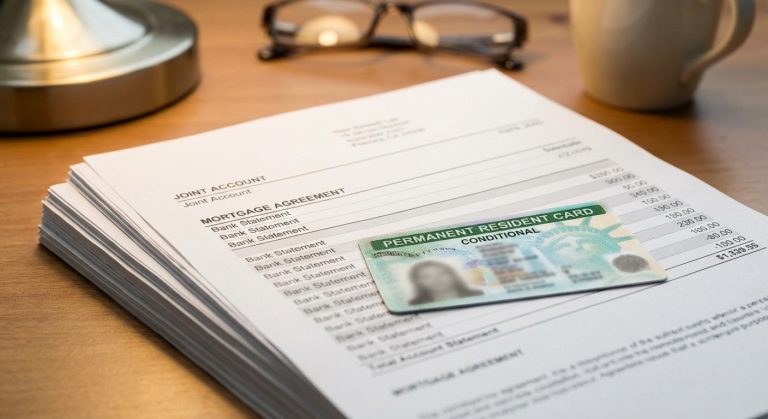
- Financial co-mingling: joint bank statements, ideally covering at least 12 months, showing regular deposits and shared household expenses.
- Joint assets: leases, mortgages, or property deeds listing both spouses as owners or tenants.
- Government records: joint federal and state tax returns, ideally from the last two years.
- Shared insurance: health, auto, or life policies where both spouses appear.
These timeframes reflect what we typically recommend based on experience, not a fixed USCIS requirement. Beyond financial records, birth certificates of children born during the marriage carry significant weight. Affidavits from friends or family members can supplement your case, though they are secondary to financial documents.

Working and traveling while your I-751 is pending
Filing your petition does not put your life on hold. Once USCIS receives it, you will get Form I-797: a receipt notice that automatically extends your status for up to 48 months beyond your card’s expiration date.
During that time, you retain full rights as a lawful permanent resident:
- Work: Present your I-797 + expired green card together for I-9 verification. Employers must accept this combination.
- Travel: You can leave and re-enter the U.S. with both documents. Keep them on you at all times.
- Live normally: All rights and responsibilities of permanent residency remain in place while your card shows an old date.
Keep your address current with USCIS so you receive every notice during this period. Missing a correspondence can have serious consequences for your case.

What happens if USCIS requires an interview?
Since 2018, USCIS policy has made the I-751 interview the standard step in most cases, not an exception. Officers waive it only when the record is strong, consistent, and free of red flags, so being called in does not automatically mean your case is in trouble.
The officer will focus on three things:
- Consistency in your shared history as a couple
- The current state of your domestic life
- Any changes that have occurred since your original residency application
Reviewing green card interview tips beforehand helps reduce stress. Bring updated evidence (recent utility bills, joint bank statements, new photos together) to show the relationship has remained genuine throughout the pending period.
Transparency and an organized record are your best preparation for this final step.
Securing your future as a permanent resident
Once your I-751 processing time ends and conditions are removed, you receive a 10-year green card. This marks the end of the most intensive scrutiny of your marriage and provides lasting legal security in the United States.
If you have been married to a U.S. citizen for three years, you may be eligible to apply for naturalization even while your I-751 is still pending. This can lead to a “combo interview” where both applications are resolved at the same appointment.
Staying organized and following filing rules is the best way to reach this stage smoothly. A green card attorney can ensure every detail is handled with the precision your future deserves.
If you have questions about your I-751 processing time or your specific case, our office is here to help.
FAQs about removing conditions on a green card
What should I do if my 48-month extension letter is about to expire?
You do not lose your legal status if your case is still pending. You can request an ADIT stamp (I-551 stamp) in your valid passport as temporary proof of permanent resident status for work and travel.
Contact USCIS to schedule an appointment several weeks before your extension letter expires. This ensures you have continuous proof of residency while awaiting a final decision.
Is it beneficial to apply for U.S. citizenship while my residency petition is still being reviewed?
Yes, in many cases. If you have been a permanent resident for three years and are still married to a U.S. citizen, you may file Form N-400 while your I-751 is pending. This can lead to a “combo interview” where a USCIS officer decides both applications at once, potentially accelerating your path to citizenship.
Should I continue gathering joint documents after my initial filing is submitted?
Yes. Because the wait can stretch years, USCIS may issue a Request for Evidence (RFE) or expect fresh documents at an interview. Continue collecting joint bank statements, tax returns, and lease agreements after your filing date.
Updated records demonstrate that your marriage remained genuine throughout the entire administrative process, strengthening your case for a final 10-year card.
How does changing my home address affect my pending immigration case?
You must notify USCIS within ten days of moving by filing Form AR-11 online. Failing to do so can mean missing interview notices or RFEs, and USCIS may consider your application abandoned.
Moving to a new state may also transfer your file to a different field office, which can slightly shift your timeline for a final decision.
What happens if my marital status changes while my joint petition is already pending?
If your marriage ends through divorce, notify USCIS promptly. You will likely need to convert your joint petition into a waiver filing based on a good faith marriage that has since ended.
You still bear the burden of proving the marriage was genuine from the start. Seeking legal counsel during this transition is essential for protecting your resident status.