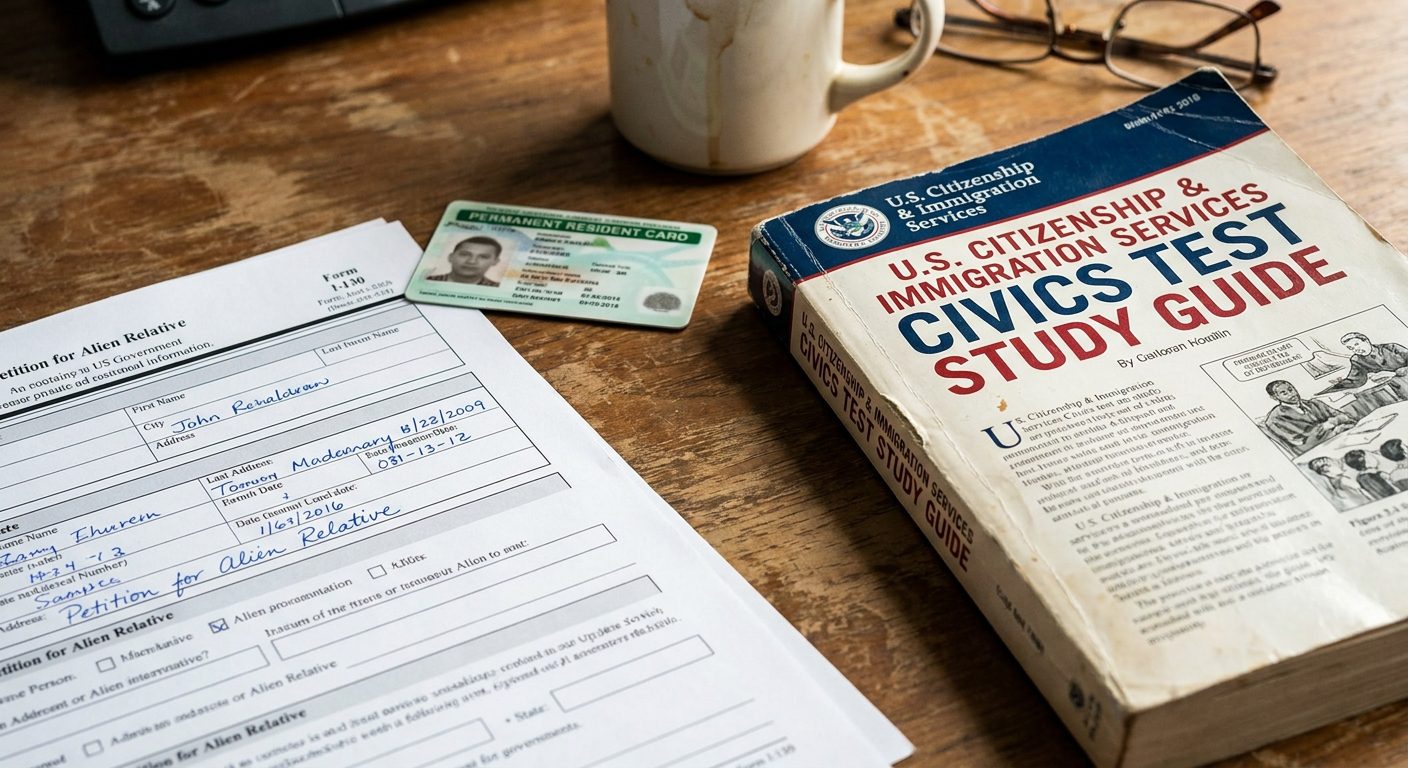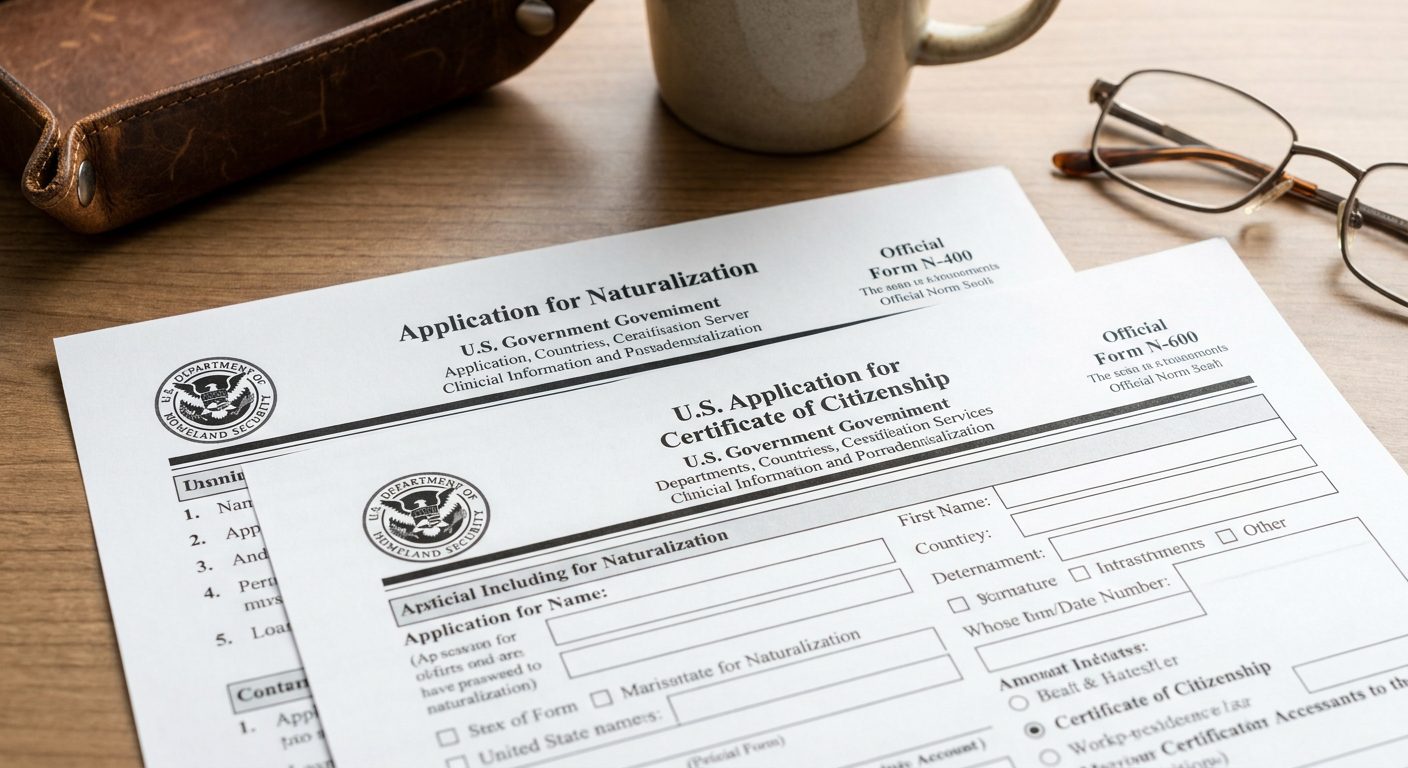

If you searched green card expired can I apply for citizenship, the short answer is yes. In most cases an expired green card does not stop you from filing the N-400, but there are specific rules and timing details you should know in 2026.
We’ve handled many naturalization cases where the green card was expired or about to expire. The short answer is that USCIS allows the application, but the practical question is whether you should renew first, file together, or wait.
When USCIS Lets You Apply With an Expired Green Card
The short answer to whether you can apply for citizenship with an expired green card is yes, USCIS accepts the N-400 in most cases. Your lawful permanent resident (LPR) status does not expire when your green card does.
The physical card is a document that proves your status, but your LPR status itself remains valid as long as you have not abandoned your residency or had it revoked.
USCIS updated its policy in 2024 to automatically extend the validity of green cards when an I-90 renewal application is received. This means that in many situations, even if your card shows an old expiration date, you may have documented proof of continued status during the wait.
What matters for the N-400 is your continuous residence, physical presence, and good moral character, not whether the card in your wallet is current.
That said, having a valid card makes the process smoother. USCIS will ask you to bring your green card to your naturalization interview. An expired card is not a bar, but it can raise questions that a current card avoids.
If your card expired recently and you are already filing the N-400, in most cases you can proceed without renewing first.
Conditional Green Cards (Two-Year Card) and Citizenship
If you received a two-year conditional green card (through marriage or through an investor visa), you cannot file the N-400 until you first remove the conditions. Conditional permanent resident status is not the same as permanent resident status, and USCIS will not accept your citizenship application while the conditions are still attached to your card.
Here is what you need to do before applying for citizenship with a conditional card:
- File Form I-751 (marriage-based GC): petition to remove conditions on residence. Must be filed within the 90-day window before your two-year card expires, or as late as possible with a good cause explanation.
- File Form I-829 (investor-based GC): petition to remove conditions for EB-5 investors. Filed within 90 days before the second anniversary of obtaining conditional status.
- Wait for approval: once USCIS approves your petition, it issues your 10-year permanent green card, but your five continuous years of residency were already counting from your original conditional admission date.
- Check your eligibility date: if you are married to a U.S. citizen, you may only need three years of residency. The clock starts from when you became a permanent resident, not from when your conditions were removed.
Do not attempt to skip the I-751 or I-829 step. An expired conditional green card combined with no removal of conditions is a serious immigration problem that goes beyond just renewing a card.
What Happens If Your Green Card Expires During the N-400 Process?
This is one of the most common situations we see: you file the N-400, and months pass while your green card reaches its expiration date during the wait. USCIS is aware this happens and has accommodations in place.
If you filed the N-400 on or after December 12, 2022, your N-400 receipt notice alone automatically extends your card’s validity for 24 months, no I-90 needed. Filing the I-90 as well currently extends it a full 36 months while that renewal is pending.
If your green card expires during your N-400 process, your N-400 receipt notice itself, not a Form N-14, serves as temporary proof of your status for employers, DMV offices, and other agencies. A Form N-14 is a request for evidence tied to your naturalization exam, not a status document.
Keep the receipt notice and your expired card accessible at all times while you wait for your interview.
You can also check your USCIS case status online at any time. If your card expires and you have no pending renewal or extension document, speak with an immigration attorney before your interview date to clarify how to document your status at the appointment.
Can You Still Work with an Expired Green Card?
Work authorization is one of the most immediate concerns when a green card expires. The answer depends on your specific situation and whether you have taken steps to maintain documented proof of your status. Here are the key points to understand:
- Form I-9 requirement: employers are legally required to verify work authorization documents. An expired green card alone is generally not an acceptable List A document for a new I-9 or re-verification, unless paired with valid extension proof.
- N-400 or I-90 receipt notice: your N-400 receipt notice, if filed on or after December 12, 2022, or your I-90 receipt notice for a pending renewal, together with your expired card, can serve as temporary proof of LPR status and work authorization.
- Automatic extension under current USCIS policy: filing the I-90 extends your card’s validity automatically for 36 months. The I-90 receipt notice combined with your expired card is the documentation your employer needs to accept under this extension policy.
- If you do nothing: employers cannot legally accept an expired green card alone once the documented extension period ends. Failing to renew or to obtain an extension notice creates real risk of losing employment authorization and potentially your job.
If you are in the naturalization process and your green card is expiring, our team recommends either filing the I-90 concurrently or immediately upon expiration so you have uninterrupted documentation of your work authorization.
How to Renew Your Green Card with Form I-90
Even if you plan to apply for citizenship, there are situations where renewing your green card first is the right move. Form I-90 is the application to replace or renew a permanent resident card. Here is what the process looks like:
- Online or paper filing: the I-90 can be filed online through your USCIS online account or by mailing a paper form to the appropriate USCIS lockbox. Online filing is faster and allows you to track your case.
- Biometrics appointment: after filing, you will typically receive a biometrics appointment notice. This appointment is required for most applicants and is scheduled at a USCIS Application Support Center near you.
- I-90 receipt notice as interim card: once USCIS receives your application, your receipt notice (Form I-797) combined with your expired green card serves as valid proof of LPR status for 36 months under the current extension policy. Consult USCIS for the current filing fee before submitting.
- Processing timeline: processing times vary. Check the USCIS website for current I-90 processing times at the office handling your case, as wait times change frequently.
If you are within two to three years of meeting your naturalization requirements, you may want to evaluate with your attorney whether filing the N-400 at the same time, or shortly after, makes more strategic sense than waiting for the I-90 to complete first.
Processing times affect this decision too, since our green card renewal processing time guide shows how long the I-90 alone typically takes before you would have a new card in hand.
Should You Renew Your Green Card or Apply for Citizenship?
This is one of the most common decisions we help clients think through. Many people ask us: can you apply for citizenship with an expired green card, or is it better to renew the card first? The right answer depends on where you are in your eligibility timeline and your short-term practical needs. Here are the typical cases:
- Apply for citizenship now, skip the renewal: best if you already meet all N-400 requirements (five years LPR, or three years if married to a U.S. citizen), your card is recently expired or about to expire, and you have a steady job with a current I-9 or pending I-90 receipt. Filing the N-400 first saves the I-90 fee and the renewal wait.
- Renew first, then apply for citizenship: best if you do not yet qualify for naturalization (you are short on residency years or physical presence) and you need a valid card for travel, employment, or identity documents in the near future.
- File both at the same time: a practical option when your card is expired or expiring and you are right at the edge of N-400 eligibility. The I-90 receipt keeps you protected while the N-400 is pending. You can always withdraw the I-90 if you become a citizen before it processes.
- Wait until conditions are removed (conditional GC only): if your card is conditional, renewing it is not possible without first filing I-751 or I-829. You must remove conditions before renewing or naturalizing.
For a full overview of what the citizenship application involves from start to finish, see your complete guide to the U.S. citizenship application. If you want to understand how to begin the naturalization process step by step, that guide covers the initial eligibility checklist in detail.
Common Mistakes to Avoid with an Expired Green Card
Over the years, our team has seen the same avoidable mistakes come up repeatedly. Being aware of these can save you time, money, and stress during an already complex process:
- Assuming you cannot file the N-400: many people believe an expired green card automatically disqualifies them from applying for citizenship. It does not. Your LPR status is independent of the card’s expiration date in most cases.
- Leaving the country without valid travel documents: traveling internationally with an expired green card without a valid reentry permit or advance parole can cause serious problems at the port of entry. If you need to travel while your N-400 or I-90 is pending, read about can I travel with an expired green card while my application is pending before booking any international travel.
- Ignoring your employer’s I-9 re-verification request: if your employer asks you to update your I-9 because your card expired, respond promptly with your I-90 receipt and expired card under the automatic extension policy. Delays can trigger unnecessary employment issues.
- Forgetting the conditional card exception: if you have a two-year conditional green card, the rules above do not apply to you the same way. You must first remove conditions before applying for citizenship, and your “expired conditional card” situation requires its own strategy.
- Letting both the card and the N-400 window lapse without action: if you delay renewing and delay applying for citizenship, you can end up with an expired card, no pending applications, and no documented proof of status. Act before the card expires, or immediately after, so you always have a receipt notice or pending application in hand.
None of these mistakes carries as much weight as staying documented. A citizenship denial does not automatically cancel your green card; what happens to your green card if your citizenship is denied depends on the reason behind the denial itself. An expired card with no receipt notice on file is what actually leaves you exposed.
Talk to a Citizenship Attorney Before You Decide
Whether your green card expired last month or years ago, the decision to renew, apply for citizenship, or do both at once is not one-size-fits-all. Our team has guided hundreds of clients through this exact situation.
If you want a clear answer for your specific case, reach out to our Houston citizenship attorney team today. We’ll review your timeline, your card status, and your eligibility and help you choose the path that makes the most sense.
Frequently Asked Questions about Expired Green Cards and Citizenship
Do I need a valid green card to apply for citizenship?
No. USCIS does not require your green card to be currently valid in order to file Form N-400. You need to have maintained your lawful permanent resident status continuously. An expired card does not cancel your LPR status.
You will, however, need to bring your green card (expired or not) to your naturalization interview, and USCIS may ask how you have been documenting your status since expiration.
What happens if my green card expired 10 years ago?
If your green card expired 10 years ago and you never renewed it, your LPR status may still be intact if you never abandoned your residency or had it legally terminated. However, you have been living without proof of status for a decade, which can raise questions about your continuous residence for naturalization purposes.
Consulting with an immigration attorney before filing the N-400 is strongly recommended in this situation, since an attorney can assess whether any periods of extended absence or other factors affected your residency record.
Is it better to renew my green card or apply for citizenship?
It depends on your eligibility. If you already meet the five-year (or three-year) residency requirement and all other N-400 conditions, applying for citizenship is often the more efficient choice. Naturalization makes the green card irrelevant.
If you are still short on years or have practical needs like international travel in the near future, renewing the card first (or simultaneously) may be the better option. An attorney can help you evaluate the trade-offs for your specific situation.
My green card expires in 3 months. Can I still apply for citizenship?
Yes. If you meet all the N-400 eligibility requirements, you can file before your card expires and you do not need to wait. In fact, filing before expiration means your card is still valid when you submit, which is cleaner.
If your card expires while your N-400 is pending and you filed on or after December 12, 2022, your N-400 receipt notice alone extends your card 24 months. Filing an I-90 as well currently extends your card a full 36 months.
Many clients in this situation file both the N-400 and an I-90 at the same time to maintain full documentation throughout the process.
Do I need to renew my green card if I have already applied for citizenship?
Not necessarily. If you filed your N-400 on or after December 12, 2022, your N-400 receipt notice alone automatically extends your green card’s validity for 24 months for official purposes.
Many applicants do choose to file an I-90 alongside the N-400 as a precaution, especially if they expect the naturalization process to take more than a year and they need continuous documented proof of status for employers or travel. Your attorney can help you decide based on your timeline and practical needs.
How long does the USCIS automatic extension last in 2026?
Under USCIS’s current policy, filing the I-90 (green card renewal application) automatically extends the validity of your green card for 36 months from the expiration date shown on the card. Filing the N-400 alone, if submitted on or after December 12, 2022, extends it separately for 24 months, and the two extensions do not depend on each other.
Your I-90 or N-400 receipt notice, combined with your expired green card, serves as the official proof of the extension that applies to your filing. Always consult the USCIS website for the current extension duration, as the policy may be updated.