5 minute read
After your biometrics appointment, it is natural to wonder what comes next in your case. Your file moves from identity verification into background review, and the pace of that review depends on your local field office and the type of application you filed.
Most cases go through fingerprint clearance, a status update, and possibly an interview before a final decision. Our green card immigration lawyers help clients prepare for each stage, from background checks to the interview that some cases still require.
The three-pronged FBI security screening
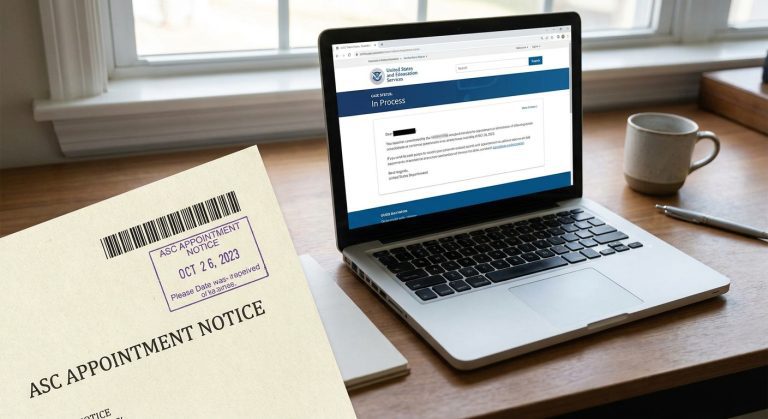
The stamped notice from your biometrics appointment marks the start of a digital verification process. Within minutes, your fingerprints are uploaded into the FBI Fingerprint Identification Records System (FIRS), which checks them against records of criminal history and past immigration encounters. In most cases, the FBI returns these results to USCIS in a short window, though the exact timing varies.
However, the process involves more than just a search for criminal convictions. USCIS background checks are comprised of three distinct parts: the FBI fingerprint check, the FBI name check, and a screening against the TECS database. The name check looks for your name and known aliases in FBI investigative files.
Finally, the TECS screening looks for matches in a multi-agency database used by Customs and Border Protection. This identifies individuals who may be inadmissible for security or law enforcement reasons. Once these security clearances are uploaded to your profile, the USCIS online system usually triggers a status change. This digital handoff marks the end of the identity verification phase.
What actively reviewed status means after your biometrics appointment
Many applicants see their online portal update within a day or two of their fingerprints being scanned. For most cases we handle, the next steps involve interpreting digital status codes that can be misleading and cause unnecessary anxiety during the wait.
The automated status trigger
The update stating your “Case is Being Actively Reviewed” is often an automated trigger. This happens when the FBI successfully returns the background check results and the system acknowledges they have been attached to your digital file. It does not necessarily mean a human officer is looking at your forms or evidence at that exact moment.
Manual review versus automated updates
We often see the portal update within hours of the appointment, which can create a false sense of an imminent approval. It is common for a case to sit in this status for months. The “active” label mainly means the background check is current, not that a decision is close; the pace still depends on the specific office’s workload.
Checking your filing status online
We recommend using a USCIS case status check to understand what the different system responses mean for your specific timeline. Monitoring these updates regularly helps you identify if a notice was mailed but never received at your address.
If you need to mail an inquiry or a response to a notice, always check the specific form page on USCIS.gov for the current filing address or service center contact info, as these addresses change frequently. Our experience with local Houston processing shows that administrative errors are often the cause of long-term silence.
Interview waivers and next steps for family cases
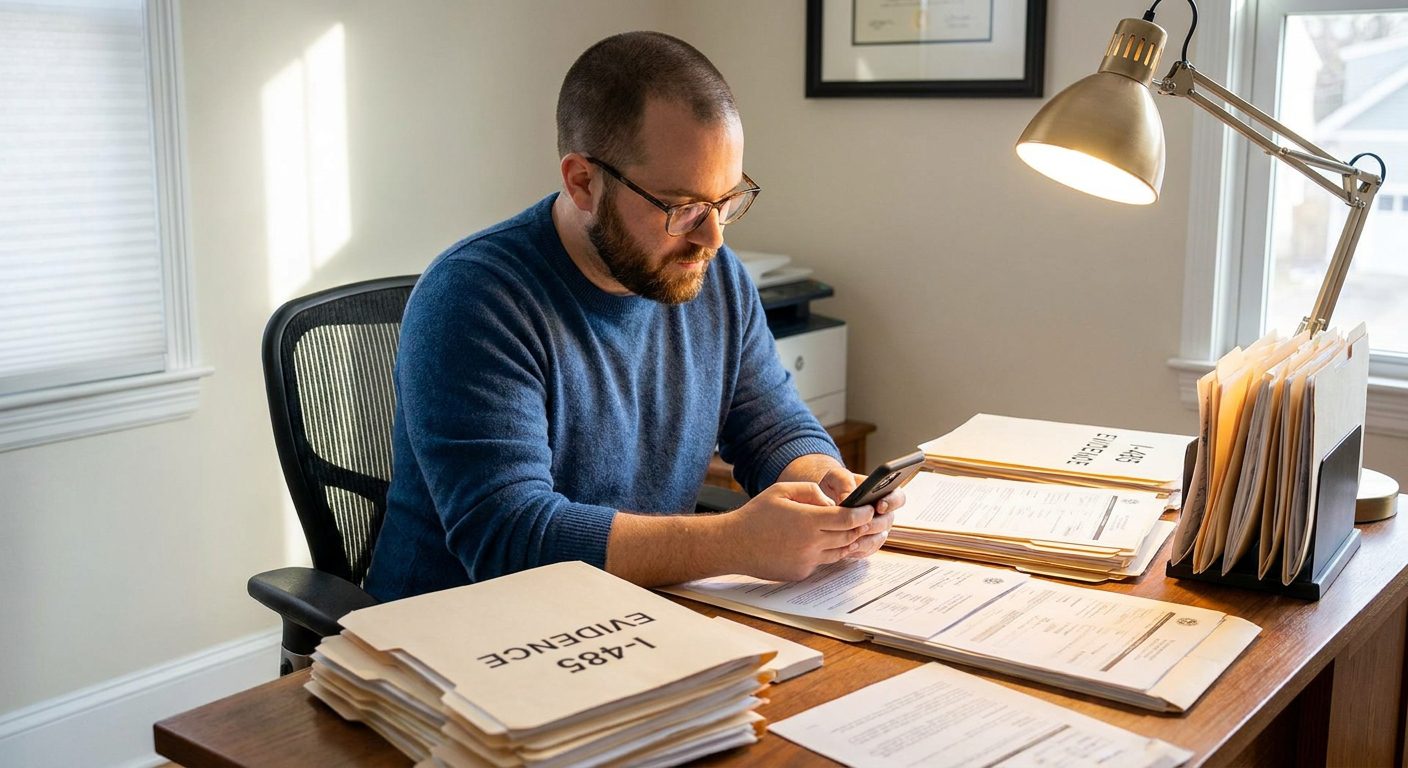
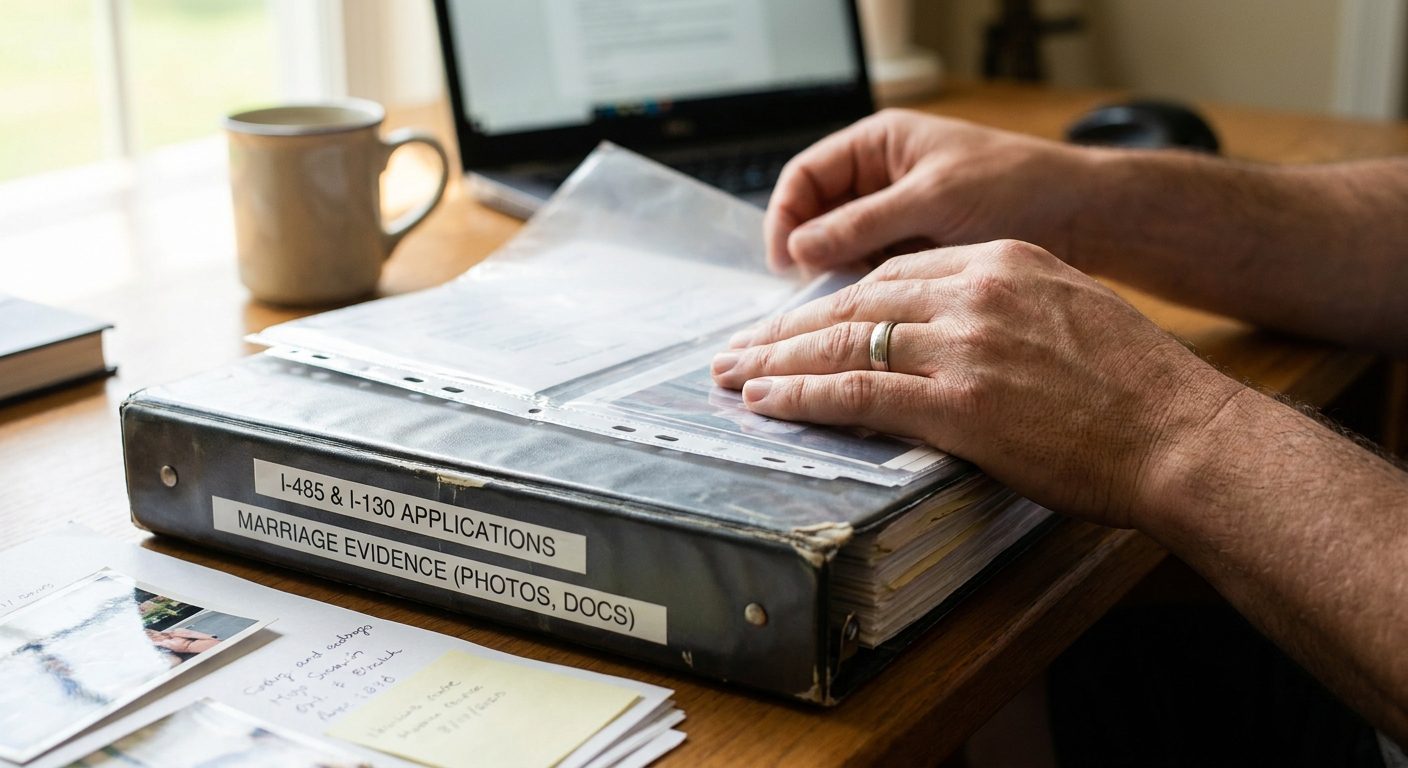
After the security checks clear, your file moves to a field office, where an officer decides whether you must appear in person. In family-based cases, including marriage green card cases, an interview is the expected step and both spouses should plan to attend. Under current practice USCIS may waive the interview in some categories, but spouses are not among them.
For other family petitioners, whether a waiver or a notice to appear arrives depends largely on the filing and the field office. We help clients compile enough relationship evidence to support their case either way. If an interview is required, you will receive a formal notice with a date and time, generally 30 to 45 days in advance.
Typical timelines for work permits and travel documents
For many, the biometrics appointment brings the fastest visible progress: the work permit. Interim documents like the EAD often arrive well before the Green Card itself, because they are issued while the case is still pending. For the case overall, how long adjustment of status takes depends on your field office and the type of case.
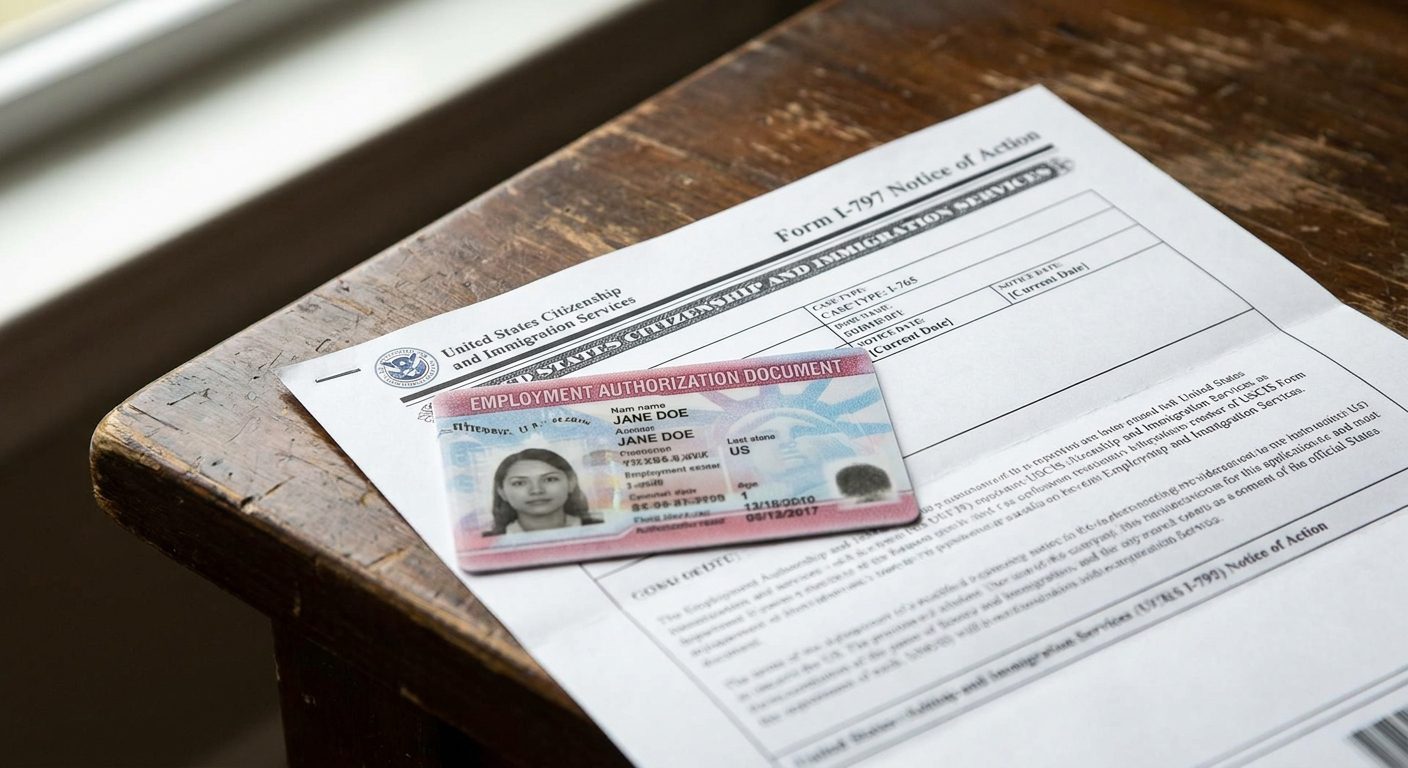
- I-765 Employment Authorization Document: processing times vary widely by service center and change over time, so check the current times directly on USCIS.gov rather than relying on a fixed estimate.
- I-131 Travel Document: advance parole for travel often takes longer than the work permit. USCIS sometimes issues a combo card that serves both purposes, though in some cases it has been decoupling these forms.
If these documents do not arrive within the expected window for your specific service center, you may need to check for administrative delays. The timing varies significantly based on whether your case was filed as a standalone application or as part of a concurrent adjustment of status package.
What to do if you hear nothing for several months
Silence for three to six months after your biometrics appointment is fairly common, but there is a point where action helps. If your case runs past the processing times posted on the USCIS website, a USCIS service request prompts a clerk to check where your file sits.
We do not recommend filing this too early, since it rarely speeds up a case within the normal window. Also, since August 2026 USCIS has discretion to deny a case without first issuing a Request for Evidence, so a complete filing matters more than ever; in practice, an RFE is still the more common outcome.
If your case has gone quiet, if you are not sure whether to expect an interview, or if you simply want a second set of eyes on your file, we are here to help. Our team reviews where your case stands, explains what the current status actually means, and outlines the next steps you can take with confidence.
Frequently asked questions about post-biometrics processing
What happens if my case status does not update to actively reviewed within a week?
Delays in the online portal usually stem from data synchronization issues between the FBI and USCIS. Portal updates do not follow a fixed timeline, so a short delay does not necessarily mean your background check failed. Watch your mail closely, since USCIS may follow up with a Request for Evidence, a second appointment notice if your prints were unreadable, or, in some cases, a decision without further notice.
Can I travel outside the United States once my fingerprints are in the system?
Completing your biometrics appointment does not grant travel authorization. Leaving the country before your I-131 Advance Parole document is approved generally results in the abandonment of your adjustment of status application. You must wait for the physical travel card to arrive or for your Green Card approval before departing the U.S. to avoid legal consequences.
What should I do if I receive a notice saying my fingerprints were rejected?
Fingerprint rejections typically occur due to poor image quality or specific skin conditions. You will receive a second appointment notice to retake them at the same center. If the second attempt fails, USCIS may require you to provide police clearances from every city where you have lived for the past five years to satisfy the background check requirements.
Is it better to upload more evidence to the portal while my case is under review?
Submitting unsolicited evidence after your biometrics can sometimes complicate the review process or cause administrative delays. In most cases, it is best to wait until the interview, until a Request for Evidence arrives, or until a specific deficiency is identified, since USCIS can also deny a case directly if the initial filing was incomplete. If your case qualifies for an interview waiver, the officer decides based on the evidence already on file.
What happens if I move to a new address shortly after finishing my biometrics?
Changing your address requires filing Form AR-11 with USCIS within ten days of your move. This is a necessary step because your file may be transferred to a different local field office based on your new jurisdiction. Failure to update your address promptly can lead to missed interview notices or the loss of your work permit.
How much time will I have to prepare once an interview is actually scheduled?
USCIS generally mails the interview notice about 30 to 45 days before the scheduled date. This window allows you to gather updated documents, such as recent tax returns or medical exams, and arrange for an interpreter if necessary. Because dates are assigned based on field office availability, it is difficult to predict the exact month your notice arrives.