5 minute read
VAWA for men allows male victims of abuse by a U.S. citizen or lawful permanent resident (LPR) spouse, child, or parent to self-petition for a green card, just like all genders, and gain lawful status independent of the abuser.
Proving a case requires understanding the broad definition of abuse and documenting it effectively, particularly when physical violence is not present. Our VAWA attorneys are experienced in assisting petitioners meet these requirements and build a strong case with USCIS.

Eligibility for male VAWA petitioners
Building on the understanding that VAWA is gender-neutral, this section clarifies the specific criteria that apply to all petitioners, including men, underscoring that VAWA makes immigration relief available for all victims of domestic violence, irrespective of their gender.
VAWA is gender-neutral in practice
The Violence Against Women Act, despite its name, has always applied to all genders. This means male victims of abuse by a U.S. citizen or lawful permanent resident (LPR) spouse, parent, or child are equally eligible to self-petition for immigration benefits.
USCIS policy guidance, updated as of December 22, 2025, specifically confirms this gender neutrality. Our family-based immigration attorneys frequently help individuals assess how these qualifying relationships apply in their specific circumstances.
Who qualifies for VAWA as a male petitioner?
To qualify for VAWA for men, you must meet several core requirements. First, you must demonstrate a qualifying relationship with a U.S. citizen or LPR: as a spouse, child (under 21, or 25 if the abuse caused a filing delay), or parent of the abuser. You must have resided with the abuser at some point.
Second, you must have experienced battery or extreme cruelty, broadly defined beyond physical harm. Third, you must establish good moral character. For spouse petitioners, the marriage must have been entered into in good faith, not solely for immigration purposes.
USCIS has increased scrutiny on all VAWA petitions, with a 259% increase in male self-petitioners from fiscal years 2020 to 2024. This change means USCIS requires even clearer evidence of all eligibility factors to prevent fraud and maintain the program’s integrity.
What counts as abuse under VAWA for men?
Once you understand the eligibility requirements, the next step is to clarify the legal definition of abuse under VAWA. This understanding helps you identify and present evidence, extending beyond common perceptions to include less visible forms of harm.
Male victims often face unique challenges in identifying and documenting abuse due to societal expectations and stigma, so thoroughly understanding VAWA’s broad definition of abuse is key to preparing a strong case.
Recognizing extreme cruelty beyond physical harm
USCIS broadly defines abuse for VAWA purposes to include not only physical violence, but also threats of harm, coercive or controlling conduct, psychological abuse, emotional abuse, and financial abuse. This broad definition means USCIS considers all forms of harm.
Recognizing that abuse does not always leave visible marks or result in police reports, USCIS accepts credible and consistent documentation or affidavits to prove such abuse.
What types of abuse do male victims face?
For VAWA for men, recognizing non-physical abuse is especially important, as it is often overlooked or misunderstood. This can manifest in ways tied to societal expectations of masculinity or specific cultural contexts:
- Psychological and Emotional Abuse: This includes constant belittlement, accusations, manipulation, gaslighting, or isolating you from friends and family. An abuser might repeatedly question your masculinity, make derogatory comments about your ability to provide, or control your social interactions.
- Financial Abuse: This involves controlling all household finances, withholding money, preventing you from working, sabotaging your employment, or racking up debt in your name. For instance, an abuser might confiscate your paychecks, refuse to let you access joint accounts, or threaten to expose your financial status to your family.
- Coercive Control and Threats: This encompasses threats related to your immigration status (e.g., “I will call ICE and have you deported”), threats against your family abroad, controlling your movement, or constant monitoring. An abuser might dictate where you can go, who you can speak to, or threaten to harm themselves or others if you leave.
- Sexual Abuse: This includes any non-consensual sexual acts or coercion into sexual activities.
- Physical Violence: While often underreported by men due to stigma, any physical assault, battery, or injury counts as abuse.

Proving your VAWA for men case: Essential evidence for male victims
After identifying the types of abuse recognized by VAWA, the focus shifts to compiling a strong body of evidence that USCIS will consider.
This often requires creative approaches for less tangible forms of abuse. USCIS accepts “any credible evidence,” meaning you do not need police reports or medical records to prove your case, especially when documenting non-physical forms of abuse.
What evidence strengthens a male VAWA petition?
Gathering evidence strategically strengthens a male victim’s petition, especially when unique hurdles exist in documenting their experiences. Our attorneys specializing in Green Card and permanent residence emphasize building a narrative with consistent documentation. These types of evidence are required to prove your claim:
- Your Personal Affidavit: A detailed, sworn statement from you describing the abuse, its impact, and why you are seeking VAWA protection is fundamental. This is your chance to tell your story in your own words.
- Witness Statements: Affidavits from friends, family, coworkers, therapists, or religious leaders who observed signs of abuse or heard your accounts. These corroborate your story and provide external validation.
- Medical and Counseling Records: If available, documentation of physical injuries, stress-related ailments, or mental health treatment (e.g., for anxiety, depression, PTSD) can support your claims, even if not directly linking to specific abusive incidents.
- Police Reports or Court Documents: Any record of police intervention, restraining orders, or family court proceedings related to the abuser, though not always present, can be powerful evidence.
- Photos, Emails, Text Messages, Call Records: Screenshots of abusive texts, emails, or social media posts, recordings of calls (if legal in your state), and photos of injuries or property damage directly illustrate the abuse. These can be particularly effective for demonstrating emotional or coercive control.
- Financial Records: Bank statements, tax returns, pay stubs, or evidence of restricted access to funds can prove financial abuse. This might include documents showing the abuser controlled your wages, prevented you from working, or ran up joint debts without your consent.
- Proof of Shared Residence: Leases, utility bills, mail addressed to both you and the abuser at the same address, or joint property titles establish that you lived together, a critical VAWA requirement.
- Evidence of Abuser’s Status: Documents proving your abuser’s U.S. citizen or LPR status, such as copies of their green card, naturalization certificate, or U.S. passport.
- Good Faith Marriage Evidence: For spouse petitioners, documents showing a genuine marital relationship, such as children’s birth certificates, joint bank accounts, joint insurance policies, photos of your relationship, and letters from mutual friends or family members.
Remember that USCIS focuses on the totality of the evidence. Even if you lack one type of evidence, a strong collection of other credible materials can still build a solid case for male VAWA petitioners.
Filing your Form I-360 VAWA petition and key considerations
After preparing your evidence, the next phase is the accurate and timely submission of your petition to USCIS. This process involves specific instructions that require careful attention, as correctly filing Form I-360, Petition for Amerasian, Widow(er), or Special Immigrant, is essential for your male VAWA petition.
These steps help you submit your VAWA self-petition correctly:
- Complete and Sign Form I-360: Fill out every section of the form completely and accurately. Ensure you sign all necessary parts. Using an outdated form edition can lead to rejection, so always download the current version directly from uscis.gov before you begin.
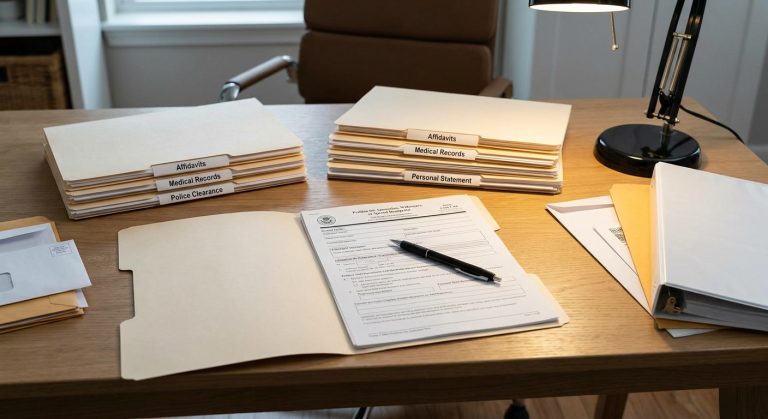
- Gather All Supporting Documentation: Compile all the evidence you have collected, as detailed in the previous section. Organize it clearly with cover sheets and tabs. This includes your affidavit, witness statements, and all corroborating documents.
- Prepare Photos and Copies: Submit copies of all supporting documents. Keep original documents unless specifically requested by USCIS. Ensure photographs are clearly labeled.
- No Filing Fee Required: Unlike many other immigration petitions, there is no filing fee for the I-360 VAWA self-petition. Do not include payment with your submission.
- Verify the Correct Filing Address:
This step is essential to avoid delays or rejection. While Form I-360 is generally filed at a USCIS Lockbox, filing addresses can change. Petitioners must always check the “Direct Filing Addresses for Form I-360” page on the uscis.gov website for the most current instructions.
Your specific location and whether you are concurrently filing Form I-485 will determine the correct address. An incorrect address can significantly delay your case or lead to rejection.
Our team of immigration attorneys helps ensure your petition meets all USCIS requirements and is submitted correctly, reducing unnecessary delays. We guide you through accurately completing Form I-360, gathering all necessary supporting documents, and verifying the correct filing address to prevent rejections or processing delays.
What happens after filing your VAWA petition?
Submitting your petition is a major step, but it marks the beginning of the USCIS review process, which has several distinct phases that require continued engagement and understanding. The time it takes for USCIS to process male VAWA petitions varies, and staying proactive throughout the process is important to address any USCIS inquiries promptly.
Receipt notices and initial review
Once you file, USCIS will send you a Form I-797C, Notice of Action, confirming receipt of your I-360 petition. This notice will include your case number, which you can use to track your petition’s status online.
Subsequently, USCIS reviews your petition for “prima facie” eligibility. If approved, you will receive a prima facie determination notice, which offers some temporary protections and may allow you to apply for an Employment Authorization Document (EAD).
Requests for evidence (RFEs) and interviews
It is common for USCIS to issue a Request for Evidence (RFE) if they require additional information or clarification. Due to recent USCIS policy updates and increased scrutiny on all VAWA petitions, including those from male petitioners, RFEs are a real possibility.
Timely and thorough responses help your case proceed efficiently. While VAWA self-petitioners are generally not required to attend an interview, USCIS reserves the right to request one, particularly if there are concerns about the veracity of the claims or the good faith of the marriage.

Addressing increased scrutiny
With the significant increase in male VAWA self-petitioners, USCIS has updated policy guidance to prevent fraud and ensure genuine cases are approved.
Proactively addressing potential concerns and preparing for possible RFEs or interviews strengthens your petition. If inadmissibility issues arise during your case, our attorneys specializing in VAWA waivers can help you understand your options and prepare the necessary waivers.
If you are unsure about documenting non-physical abuse, how to handle potential increased scrutiny from USCIS, or if your abuser’s status changes mid-process affects your eligibility, contact our team and we will look at it with you.
Frequently asked questions about VAWA for men
Can a man apply for VAWA if his abuser isn’t a U.S. citizen or LPR?
For male victims to be eligible for VAWA, the abuser must be a U.S. citizen or lawful permanent resident (LPR). This qualifying relationship with a spouse, parent, or child is a foundational requirement set by USCIS. If your abuser does not hold one of these statuses, you would typically not qualify for VAWA protection.
What if I don’t have police reports or visible injuries to prove abuse for my VAWA case?
USCIS accepts ‘any credible evidence’ for VAWA cases, so police reports or visible injuries are not strictly required. You can strengthen your petition with a detailed personal affidavit, witness statements, mental health records, emails, texts, or financial documents. Our team helps you build a compelling case using the totality of your evidence.
What if my abuser’s immigration status changes while my VAWA petition is pending?
If your abuser’s immigration status changes during your VAWA petition, it can impact your case. This requires careful review, as some changes might affect your continued eligibility. It’s important to consult with an immigration attorney promptly to understand the specific implications and adjust your strategy, if necessary, to protect your petition.
How does USCIS determine if my marriage was entered in good faith for a male VAWA petition?
USCIS assesses good faith marriage for male VAWA petitioners by examining evidence showing you did not marry solely for immigration benefits. They look for shared life aspects like joint bank accounts, children’s birth certificates, shared property, and affidavits from friends or family. This documentation helps prove your marriage was genuine, even without an interview.
How long does it typically take for USCIS to process VAWA petitions for men?
The processing time for male VAWA petitions can vary significantly based on USCIS caseloads and the complexity of your case. While an exact timeline is difficult to predict, many petitioners experience several months to a few years for a final decision. USCIS provides estimated processing times on their website for general guidance, but individual cases differ.
Can I include my children in my VAWA self-petition, even if they weren’t directly abused?
Yes, as a male VAWA self-petitioner, you can typically include your unmarried children under 21 as derivative beneficiaries, even if they were not directly abused. This allows them to obtain immigration benefits alongside you. They must usually be living in the U.S. and prove a qualifying relationship to you. Our attorneys can clarify their eligibility.