7 minute read
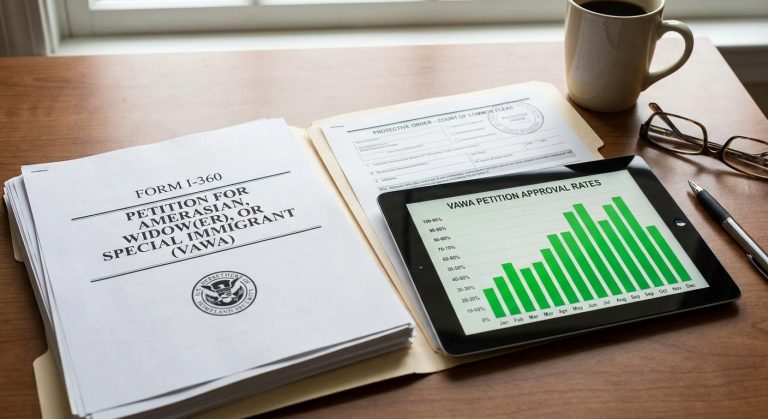
The true likelihood of VAWA approval stands high, with USCIS approving 87.3% of VAWA self-petitions according to Form I-360 performance data for fiscal year 2025. This significant VAWA approval rate demonstrates the program’s effectiveness in protecting survivors of abuse.
Your specific chances depend on the evidence you gather and how well your petition addresses USCIS requirements. Our VAWA attorneys work through these factors with each client to build the strongest possible case.

VAWA approval rates by petitioner category
Overall VAWA approval statistics show a consistent trend of high success. According to USCIS Form I-360 performance data for fiscal year 2025, 87.3% of VAWA self-petitions received approval. This strong performance indicates that petitions meeting legal criteria have a high probability of success.
However, the specific approval rate can vary slightly depending on the relationship between the petitioner and the abuser. These distinctions highlight the importance of understanding the precise requirements for your category.
Approval rates for spouses
Spouse-based VAWA petitions consistently show the highest approval rates. In fiscal year 2025, approximately 88% of these petitions were approved. This reflects the program’s primary focus on spouses subjected to battery or extreme cruelty by a U.S. citizen or lawful permanent resident.
Approval rates for children
For children who have been abused by a U.S. citizen or lawful permanent resident parent, the VAWA approval rate was approximately 82% in fiscal year 2025. While slightly lower than spouse-based petitions, this remains a strong indicator of success for eligible child petitioners.
Approval rates for parents
Parents who have been abused by a U.S. citizen son or daughter can also self-petition under VAWA. In fiscal year 2025, parent-based VAWA petitions had an approval rate of 79%. This category is typically less common but can provide a path toward safety and legal status for eligible petitioners.
Factors that strengthen your VAWA petition
Beyond the general VAWA approval rate statistics, specific elements within your petition can increase your odds of approval. USCIS evaluates VAWA petitions based on an “any credible evidence” standard, meaning no single piece of evidence is strictly required, but gathering various forms of support strengthens your chances of approval.
We often observe that petitioners tend to overemphasize certain aspects of their abuse while overlooking key details about their abuser’s status or the specific type of evidence USCIS values most for corroboration. Focusing on these key areas can improve your approval odds.
Corroborating evidence and its impact
The strength and variety of your supporting evidence directly correlate with higher approval rates. Petitions that combine police reports, medical records, protective orders, and affidavits from third parties — such as friends, family, therapists, or shelter workers — consistently perform better. Multiple independent sources of evidence strengthen credibility on every element USCIS evaluates.
This data underscores that while your personal declaration is foundational, external evidence provides essential objective support for your claims of battery or extreme cruelty, as well as your good moral character. The more varied and consistent your evidence, the stronger your petition becomes.
Detailed personal statements
Your personal statement is perhaps the most important piece of evidence you submit. It must provide a detailed narrative of the abuse you experienced, including specific dates, locations, and descriptions of incidents. Insufficient detail in personal statements is, in our experience, the most common trigger for a Request for Evidence (RFE) from USCIS.
A well-crafted statement articulates not only the abuse but also your good faith marriage or relationship, the abuser’s U.S. citizenship or lawful permanent resident status, and why you meet the specific eligibility criteria for VAWA.

Common pitfalls and reasons for VAWA denials
While the overall VAWA approval rate is high, denials do occur, often due to specific deficiencies in the petition. Denial rates correlate directly with the completeness and persuasive quality of the submitted evidence. Addressing these issues early also helps keep your VAWA case timeline on track, since RFEs can add months to processing.
Failing to establish a qualifying relationship
One primary reason for denial is the failure to adequately prove a bona fide (“good faith”) marriage or relationship to the abuser. USCIS must be convinced that the marriage was entered into for love and not solely for immigration benefits.
Our marriage-based immigration attorneys can help document this relationship alongside your VAWA case. Even if the abuse is clear, if the relationship itself is not convincingly established, the petition may be denied.
Insufficient documentation of abuse
Although the “any credible evidence” standard is flexible, a lack of documentation or weak evidence of battery or extreme cruelty can lead to denial. This often happens when petitioners rely solely on their own testimony without any corroborating evidence, or when their testimony lacks the necessary detail and consistency that USCIS expects.
Weak witness statements and undocumented immigration violations
Unconvincing or vague witness statements from others can also weaken a case. Furthermore, failing to address any prior immigration violations, such as entering the U.S. without inspection or previous deportation orders, is a common mistake.
While these do not automatically disqualify a VAWA petitioner, they must be properly documented and often require the help of immigration waivers attorneys to address properly.
Good moral character and its impact on approval
A core requirement for VAWA eligibility is demonstrating good moral character. This criterion assesses your overall conduct and adherence to the law. Understanding how USCIS evaluates this directly impacts your VAWA approval rate, especially if you have a complex personal history.
Automatic disqualifiers
Certain criminal convictions can automatically disqualify a petitioner from showing good moral character, making it extremely difficult to demonstrate good moral character. These include serious offenses like aggravated felonies, drug trafficking, or murder. If you have such convictions, we recommend seeking legal counsel to determine if any other immigration pathways are available to you.

Immigration violations and other issues
Unlike certain criminal convictions, prior immigration violations, such as entering the U.S. without inspection or previous deportation orders, do not automatically disqualify a VAWA petitioner. However, these issues must be clearly documented and addressed within the petition, often requiring the filing of specific waivers.
Our team understands how to present a nuanced picture of your past, explaining the context of any violations and demonstrating that you otherwise meet the good moral character requirement. The goal is to show that any past issues do not reflect your current character and are outweighed by the qualifying abuse.
If you are unsure about the strength of your evidence, whether your relationship qualifies, or how past immigration violations might affect your VAWA petition, contact our team and we will look at it with you.
Frequently asked questions about VAWA approval rates
What if I don’t have police reports or medical records for my VAWA case?
Not having police reports or medical records does not automatically lead to denial. USCIS operates on an “any credible evidence” standard. We help petitioners gather alternative corroborating evidence, such as affidavits from friends, family, or therapists, school records, work evaluations, or detailed personal declarations that consistently describe the abuse and its impact.
Can I still get VAWA if I have a past immigration violation like an old deportation order?
Prior immigration violations, including an old deportation order or entering without inspection, do not automatically disqualify a VAWA petitioner. These issues must be thoroughly documented within your petition and often require specific waivers. Our team works to present these situations within context, demonstrating your good moral character despite past violations.
How does USCIS assess “extreme cruelty” if there’s no physical violence?
USCIS recognizes that extreme cruelty extends beyond physical battery, encompassing severe psychological abuse, emotional manipulation, financial control, or isolation. Documenting such abuse requires a very detailed personal statement, supported by evidence like therapy records, emails, text messages, or affidavits from individuals who witnessed the emotional impact or controlling behavior.
Does my abuser’s criminal history affect my VAWA approval chances?
Your abuser’s criminal history primarily serves to help corroborate the abuse you experienced or establish their U.S. citizen or lawful permanent resident status, if applicable. Their record typically does not impact your eligibility or good moral character requirements directly, as the petition focuses on your experience as the survivor.
What happens if my abuser denies the abuse when USCIS contacts them?
USCIS generally does not contact abusers directly for VAWA petitions to avoid placing the petitioner in further danger. The agency evaluates your case based on the comprehensive evidence and declarations you submit. Therefore, the strength of your own documentation and testimony matters most, not anticipating their denial.
Can I file for VAWA if I was never legally married to my abuser?
VAWA eligibility extends beyond legal spouses. Children abused by a U.S. citizen or lawful permanent resident parent, and parents abused by a U.S. citizen adult child, can also self-petition. In some cases, individuals in a good faith but potentially invalid marriage may also qualify if they meet all other criteria.