
Estimated reading time: 5 minutes
U.S. Citizenship and Immigration Services proposed a major expansion of Form AR-11 to collect employment, education, and public benefits histories from noncitizens residing in the United States, transforming the administrative card into an active law enforcement screening tool.
According to the published agency notice, the revised form would require noncitizens to disclose sensitive details about their employers, school enrollment, and public assistance programs. The USCIS Form AR-11 proposal has drawn sharp opposition from state attorneys general and advocacy groups who warn of severe compliance risks, arguing the agency is converting a routine recordkeeping card into an unauthorized surveillance mechanism.

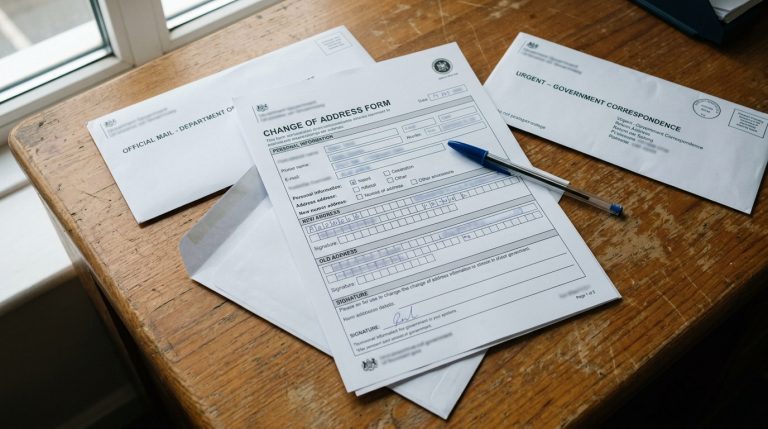
Proposed expansion of the change of address form
Historically, the change of address card has been a simple administrative tool, as detailed in the proposal. Under the USCIS policy manual address change guidelines, almost all residing noncitizens must report relocations within ten days of moving to maintain recordkeeping registry accuracy.
Under the existing system, the address form requests only basic details such as the filer’s name, Alien Registration Number, and physical addresses, according to the published agency notice. This has been a straightforward compliance process completed online or by mail, typically without needing formal legal representation.
The proposed changes would significantly alter this process by adding expansive information collection sections, as detailed in the proposal. The new form would require respondents to report their active employment status, employer details, and schooling history, representing an unprecedented level of mandatory disclosure for a routine update.
The proposal also introduces a detailed section requesting information on whether the applicant has ever received means-tested public benefits, according to the federal registry information collection notice. The draft form lists federal and local welfare programs, requiring applicants to declare if they have accessed social assistance.
As detailed in the proposal, the form specifically targets benefits such as Medicaid, Supplemental Nutrition Assistance Program, and Supplemental Security Income. It also covers Temporary Assistance for Needy Families, the Children’s Health Insurance Program, and the Special Supplemental Nutrition Program for Women, Infants, and Children.
Under the proposed terms, applicants must declare Section 8 housing assistance and any other cash or non-cash benefits, as detailed in the proposal. Disclosures must include precise start and end dates, monthly payment amounts, and the specific government agencies that granted the assistance.
According to the published agency notice, federal authorities intend to use this collected data to enforce immigration laws. Specifically, the government plans to use the information to enforce public charge grounds of deportability and to identify potential violations of federal public benefit restrictions.
The agency notice also states that federal officers may contact benefit-granting agencies directly to verify the accuracy of the disclosures. This active verification process would turn the address update into an ongoing investigation of financial histories.
Impact on vulnerable populations and state agencies

The proposed changes would create compliance challenges for lawful permanent residents and other residing noncitizens, according to the published agency notice. Because federal law mandates reporting address changes within ten days of moving, applicants must provide sensitive financial data.
If individuals fear disclosing their public benefit history, they may choose not to file the required form, as detailed in the proposal. Legal advocates warn that failing to file exposes noncitizens to technical violations, including criminal penalties.
Advocacy organizations also express deep concern for immigrant survivors of domestic violence, human trafficking, and sexual assault who seek protection under federal law, as detailed in the proposal. These vulnerable individuals often experience housing instability and must rely on specialized shelters to escape abuse.
The proposed form contains no safe provisions or special instructions to protect the confidentiality of these shelter locations, according to the published agency notice. Advocacy groups argue that forcing survivors to declare their exact physical locations on a public document violates federal confidentiality mandates.
According to a joint advocacy group comment letter, forcing survivors to disclose precise shelter addresses compromises physical safety. The organization stated that the proposed revisions vastly exceed the original intent of the form, forcing survivors to choose between legal compliance and personal safety.
State and local benefit agencies would also face significant operational burdens under the new system, as detailed in the proposal. Because the federal government intends to verify benefit records, local welfare administrators would have to dedicate substantial administrative staff to respond to federal inquiries.
A coalition of state attorneys general warned that this constant verification process would strain local resources, as stated by the coalition of state attorneys general. They emphasized that because address changes occur continuously, local agencies would face an ongoing burden to cross-reference benefit databases.
According to a press release from the Maryland Office of the Attorney General, a coalition of twenty state attorneys general formally opposed the proposed expansion, arguing the draft form transforms a routine recordkeeping card into an unauthorized surveillance tool.
The attorneys general urged the federal government to immediately withdraw the proposal, as stated by the coalition of state attorneys general. They argued that the federal agency lacks the statutory authority under Section 265 of the Immigration and Nationality Act to demand unrelated financial histories.
Opponents also argue the proposal violates the Paperwork Reduction Act, as stated by the coalition of state attorneys general. Under this federal law, agencies must demonstrate that information collections are necessary and not unnecessarily burdensome.
Advocacy groups warn that the proposed changes would cause a severe chilling effect on community health, according to the National Immigration Law Center policy alert. If noncitizens believe that accessing basic social services will lead to immigration investigation, they may withdraw their families from public health and nutrition programs.
This avoidance of public services could lead to long-term consequences for local healthcare systems, as detailed in the proposal. Public health advocates state that local systems would bear the burden of untreated illnesses if families avoid preventative care.
Impact of the proposed address reporting changes
The proposed changes would alter the way noncitizens interact with the address reporting system, according to the published agency notice. This proposal affects all residing noncitizens, including lawful permanent residents and vulnerable survivors of abuse.

Filing procedures under the existing rules
Because the proposed changes are not yet finalized, no action is required from applicants at this stage, according to the published agency notice. Noncitizens should continue to use the existing version of Form AR-11 to report address changes within ten days of moving.
Applicants should keep their contact information updated using the existing online tools or paper cards, according to the USCIS policy manual. Maintaining an accurate address ensures that applicants receive official notices regarding pending petitions and avoid technical violations of federal registration laws.
If the federal government approves the revised form, the changes would only take effect upon the final approval and implementation of the revised form. At that point, noncitizens would need to follow the new disclosure requirements.
Individuals concerned about how the proposed revisions might affect their residency status or benefit eligibility can consult legal resources to understand their reporting obligations, as detailed in the proposal. Compliance with the reporting rule remains mandatory.