If you have built up unlawful presence in the United States and worry about being barred when you leave, the unlawful presence waiver, filed on Form I-601A, can clear that bar before you travel to your immigrant visa interview abroad.
It is designed for people who will get their green card through consular processing, letting them resolve inadmissibility for past unlawful presence without a long separation from family.
The requirements are strict and the steps must be followed in order. Our immigration waiver attorneys help applicants confirm eligibility and build a strong application.

Unlawful presence and the re-entry bars
Unlawful presence builds up when you stay in the United States without authorization after your admission period expires, or after USCIS or an immigration judge finds you in violation of your status.
The bar itself is triggered when you leave the U.S., not while you are still here. That timing is what makes the waiver so important.
The three-year bar
If you accrue more than 180 days but less than one year of unlawful presence and then leave the country, you face a three-year bar from re-entering, counted from your departure date.
The ten-year bar
If you accrue one year or more of unlawful presence, continuously or added together, and then leave, you face a ten-year bar from your departure date. The I-601A waiver is what overcomes these specific bars so you can return after your visa interview abroad.
What the I-601A provisional waiver is
The I-601A lets certain people ask USCIS to forgive their unlawful presence before they leave for their immigrant visa interview. Unlike the traditional I-601 waiver, which is filed and decided after a consular officer finds you inadmissible abroad, the I-601A is decided while you are still in the U.S.
That means you stay with your family during processing, and if it is approved, you travel for your consular interview already holding the waiver. It shortens the time apart and lowers the risk of being stuck abroad.
One limit matters: the I-601A only waives the three- and ten-year bars based on unlawful presence. It does not cover other grounds of inadmissibility.

Who qualifies for the waiver
To qualify for an I-601A unlawful presence waiver, you must meet several strict requirements and clearly document each one.
Age and physical presence
You must be at least 17 years old when you file Form I-601A, and you must be physically present in the U.S. to file and remain here until you depart for your immigrant visa interview.
An approved petition and consular processing
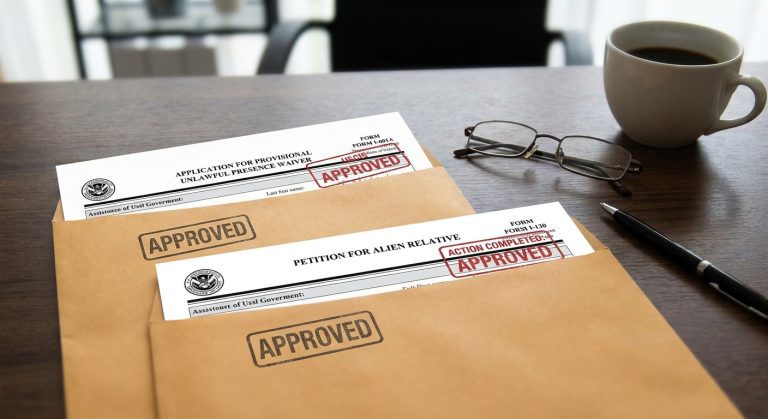
You must be the beneficiary of an approved immigrant visa petition, such as a Form I-130 filed by a relative; our family immigration attorneys can confirm your petition qualifies. Your case must be pending with the Department of State, and you must be getting your visa through consular processing abroad, the same path used to bring a spouse to the United States from overseas.
Proving extreme hardship
The hardest requirement is showing that your U.S. citizen or lawful permanent resident spouse or parent, the “qualifying relative,” would suffer “extreme hardship” if you were kept out of the country.
This bar is high. It means much more than the normal sadness or difficulty of family separation. USCIS weighs factors like medical conditions, financial impact, educational disruption, and psychological effects on the qualifying relative, and we advise gathering thorough documentation of each. The hardship must fall on the qualifying relative, not mainly on you.

What can make you ineligible
Some conditions rule out an I-601A even if you meet everything else:
- Being subject to other grounds of inadmissibility, such as certain criminal offenses, misrepresentation to immigration officials, or prior removal orders, unless a separate waiver for those grounds is approved or available.
- Having a final order of removal, deportation, or exclusion, unless you have already been granted permission to reapply for admission.
The I-601A only waives unlawful presence. In our experience, other inadmissibility issues often surface and must be handled separately, with a different waiver if one exists.
The I-601A application step by step
The process runs in a set order, and much of it happens before the waiver itself is filed:
- Approved immigrant petition: a U.S. citizen or permanent resident files an immigrant petition (usually Form I-130) for you, and USCIS must approve it before you file the I-601A. The case then moves to the National Visa Center.
- Pay fees and submit the visa application: the NVC has you pay the processing fees and file the immigrant visa application (Form DS-260), where you indicate you are using consular processing.
- File Form I-601A: with the case pending at the NVC and fees paid, you file the I-601A with USCIS, including detailed evidence of the extreme hardship to your qualifying relative, such as affidavits, medical records, financial statements, and psychological evaluations.
- Attend the biometrics appointment: USCIS schedules you at an Application Support Center to collect your fingerprints, photograph, and signature.
- Receive the decision: USCIS decides the I-601A while you are still in the U.S. Processing times vary, so check uscis.gov for current estimates before making travel plans.
- Depart for the consular interview: with the waiver approved, you attend your immigrant visa interview abroad. Leaving triggers the unlawful presence bar, but your approved waiver is already in place to overcome it.
- Interview and visa issuance: the consular officer reviews your full case, including the approved waiver. If no other inadmissibility applies, your immigrant visa is issued and you return as a lawful permanent resident.
After your I-601A is approved
Approval is a major step, but it does not guarantee your visa. It clears only the unlawful presence bar, and your case still depends on the consular interview abroad.
The National Visa Center schedules your interview at the U.S. embassy or consulate. The officer reviews your full application, medical exam, and other documents, and confirms that no other ground of inadmissibility applies.
If you have other issues, such as certain criminal convictions, past immigration fraud, or a previous removal order, the I-601A does not waive them. You would need a separate waiver, if one is available, for those.
If you are unsure about the requirements, how to prove extreme hardship, or whether other inadmissibility grounds affect your return, contact our team and we will look at it with you.
Frequently asked questions about provisional unlawful presence waivers
What is the main difference between the I-601 and I-601A waivers?
The I-601A provisional waiver is filed and decided while you are still in the U.S., before you leave for your immigrant visa interview abroad. The traditional I-601 waiver is filed and decided after a consular officer finds you inadmissible during an interview outside the United States, which can mean longer separation from family.
What kind of documentation best proves extreme hardship for an I-601A?
Extreme hardship needs substantial evidence, well beyond the normal distress of separation. Strong files include medical records, financial statements, proof of educational disruption, and psychological evaluations of your qualifying relative. Affidavits from family, friends, and professionals describing the specific hardships round out a complete case.
Can I travel internationally while my I-601A provisional waiver is processing?
No. You must stay physically present in the United States while your I-601A is pending. The whole point of the waiver is to resolve unlawful presence before you depart for your interview abroad, so leaving before approval can cause serious complications or even a denial.
If I have a prior deportation order, can I still apply for an I-601A waiver?
Usually a final order of removal, deportation, or exclusion makes you ineligible for an I-601A. There is an exception if you have already applied for and been granted permission to reapply for admission. A careful review of your record can confirm whether this or another inadmissibility applies.
How long does it typically take for USCIS to process an I-601A waiver?
Processing times vary with USCIS caseloads and other factors, and decisions commonly take several months or longer. Check the official USCIS website for current processing estimates, since those figures change regularly and affect your travel planning.
What happens if USCIS approves my I-601A but the consular officer still denies my visa?
An approved I-601A clears only the unlawful presence bar. If the consular officer finds other grounds of inadmissibility during the interview, such as certain criminal convictions or past immigration fraud, the visa can still be denied. Those issues would need a separate waiver, if one is available.