
Estimated reading time: 5 minutes
U.S. Citizenship and Immigration Services established a comprehensive administrative reorganization of its policy guidelines to standardize how legal representatives practice before the agency. This structural transition formally incorporates new standards of conduct, practitioner qualifications, and representation procedures directly into the centralized agency handbook. The federal agency designed this system to ensure that both legal professionals and applicants navigate a highly structured process when establishing or terminating representation during benefit requests.
This consolidated guidance replaces legacy operational manuals and scattered policy memoranda with a single, unified reference. By clarifying these administrative rules under the new attorney representation guidelines update, the government aims to protect applicants from fraud while maintaining the integrity of the administrative system. Representatives must align their daily operations with these highly specific standards.

Transitioning to a unified policy manual
For many years, the administrative guidelines governing immigration attorneys and accredited representatives remained scattered across several agency databases. Legal professionals often had to consult Chapter 12 of the legacy Adjudicator’s Field Manual alongside multiple stand-alone policy memos to understand basic procedural rules.
This fragmentation caused persistent confusion regarding filing mandates, signature requirements, and communication protocols. Both agency officers and legal representatives struggled to find consistent answers within the decentralized framework.
To address these administrative challenges, the agency initiated a systematic effort to retire legacy manuals. The publication of the new guidelines completes a major phase of this transition by moving all active policies into the centralized USCIS Policy Manual.
This transition provides a single point of reference for administrative rules. The agency seeks to establish a predictable environment for applicants navigating complex petition processes.
Centralization also serves as a defensive measure against fraudulent actors. By defining the exact boundaries of legal representation, the government aims to combat unlicensed consultants who exploit vulnerable applicants.
The update builds upon previous structural directives, such as the requirement for representatives to attend covered in-person interviews physically. These guidelines reinforce the strict standards of presence and participation required during official proceedings.
Defining authorized practice and preparation

The guidelines in Chapter 1 draw a clear distinction between the practice of law and the preparation of documents. Under the guidelines, practice involves formally appearing before the agency either in person or by submitting legal briefs and official forms.
Preparation includes studying case facts, analyzing relevant statutes, and offering legal advice regarding eligibility. The agency clarifies that anyone performing these tasks must possess formal authorization to do so.
Under Chapter 2, the policy manual designates specific categories of professionals authorized to manage cases. Licensed attorneys in active standing and representatives accredited by the Department of Justice are the primary authorized practitioners.
Under strict supervision, law students and law graduates may also provide representation. These individuals must utilize standardized templates to request permission from presiding officers before appearing at interviews.
The guidelines also address the limited role of reputable individuals, such as family members or religious figures. These individuals may assist applicants during in-person interviews under narrow parameters defined in Chapter 3 of the manual.
Reputable individuals cannot file representation forms, cannot engage in the preparation of legal documents, and cannot receive any compensation. Their role is strictly supportive and subject to officer approval.
Establishing and withdrawing representation
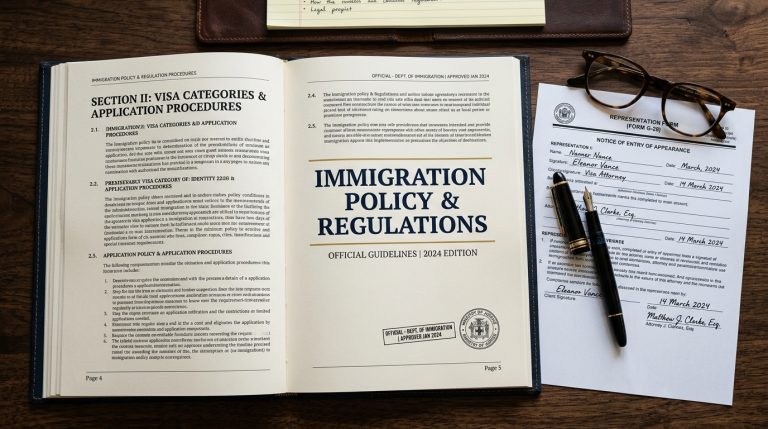
To establish formal representation, a practitioner must file a valid Notice of Entry of Appearance as Attorney or Accredited Representative under the rules outlined in Chapter 4 of the guidelines. This is typically done using Form G-28 or Form G-28I for international matters.
The agency enforces a strict rule allowing only one active Form G-28 per case. If an applicant chooses to change representatives, the filing of a new form by an incoming practitioner automatically terminates the previous representation.
A separate Form G-28 is required when filing an appeal with the Administrative Appeals Office. Practitioners cannot rely on a previously submitted form to represent a client during the appeals process.
The update also outlines standard procedures for ending a professional relationship. A representative or a client may withdraw from a case by submitting a written notice directly to the office adjudicating the petition.
If a representative fails to appear at a scheduled in-person interview, the applicant faces immediate procedural choices. The applicant must sign a formal waiver to proceed alone or request to reschedule the appointment.
Regulatory foundations of the policy update
This policy integration is anchored in existing federal regulations governing representation. The updated manual references Title 8 of the Code of Federal Regulations to define who may practice before the agency.
These regulations establish the standard procedures for submitting and recognizing representation notices. They also outline the formal disciplinary process for practitioners who fail to meet professional standards.
By aligning the manual with federal rules, the agency ensures a consistent legal standard. This alignment helps clarify the boundaries of authorized practice across all regional offices.
Standards of professional conduct and disciplinary actions
The updated manual outlines explicit expectations for professional conduct and details the consequences of non-compliance. These rules apply to all authorized practitioners appearing before the agency.
The rules in Chapter 5 of the manual establish several grounds for formal disciplinary action. Practitioners must provide competent representation, act with reasonable diligence, and maintain regular communication with their clients.
The guidelines identify specific behaviors that can trigger administrative sanctions. Charging grossly excessive fees or engaging in obstructive conduct during interviews can lead to disciplinary reviews.
Sanctions for violating these ethical standards are severe. Practitioners may face public censure, temporary suspension, or permanent disbarment from practicing before the federal government.
Agency adjudicators are instructed to verify the licensing status of attorneys through state bar registries. Officers may request to see physical bar cards during in-person appearances to confirm active standing.
Adjudicators also have the authority to report suspected misconduct or fraudulent activity. This reporting mechanism is designed to maintain high ethical standards across all field offices.

Balancing advocacy and administrative oversight
Legal commentators and professional organizations have analyzed the potential impact of these updated guidelines. While many welcome the consolidation of rules as a tool against fraud, some express concern over subjective disciplinary terms.
Experts suggest that terms like grossly excessive fees or obstructive conduct could be interpreted differently by individual officers. This potential inconsistency requires practitioners to keep meticulous records of their services and billing hours.
The updated framework represents a broader trend toward increased administrative scrutiny. Legal representatives must adapt to these strict physical and operational requirements to ensure effective client advocacy.
Applicants navigating the immigration system must ensure their selected representatives comply fully with these updated standards. Working with authorized, compliant professionals remains a necessary factor in navigating complex federal benefit processes.