8 minute read
If you filed for a K-3 visa to reunite with your spouse sooner, you may be wondering: what is the real K-3 visa processing time today? There is no single official total, and the path may end when the I-130 reaches the NVC.
The K3 visa processing time depends on which petition moves first and how long the consular stage takes in your case. Our K3 visa attorneys can help you assess whether filing Form I-129F fits your circumstances.
K3 visa processing time in 2026 depends on each stage
K3 visa processing time varies because USCIS, the NVC, and the consulate handle separate stages. No agency publishes one total that applies from the first filing through admission to the United States.
As of June 30, 2026, USCIS national historical processing data reported an 8.0-month median for Form I-129F across all classifications and a 12.9-month median for immediate-relative Form I-130 cases. Those figures frame K3 visa processing time in 2026, but they describe past national performance rather than your complete timeline.
USCIS updates its data, and the consular portion varies by post, case circumstances, interview availability, and any administrative processing. A separate K-1 visa processing time analysis applies to fiancé cases, so it should not be used to estimate a K-3 case.

K-3 visa processing time and filing steps
The K-3 process begins only after a U.S. citizen files Form I-130 for a foreign-citizen spouse. From there, the sequence normally includes these stages:
- File Form I-130: the U.S. citizen petitioner files the immigrant petition for the spouse.
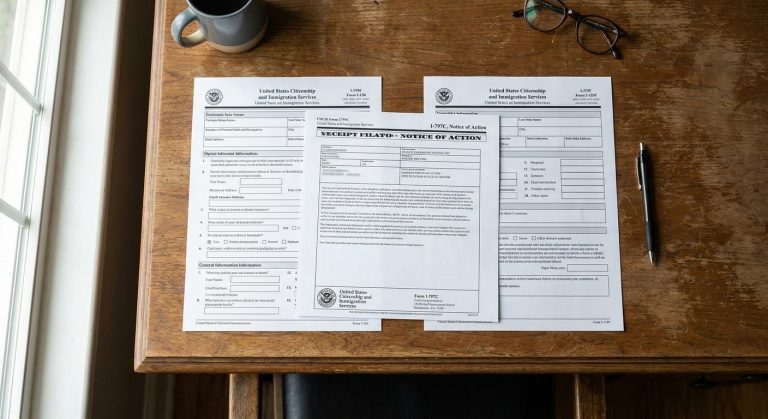
- Receive the I-797 notice: the petitioner waits for the USCIS receipt notice before filing Form I-129F for K-3 classification.
- File Form I-129F: USCIS processes the K-3 petition while the I-130 remains pending.
- Complete the NVC stage: an approved petition goes to the National Visa Center, where the order of arrival determines whether the K-3 case continues.
- Follow consular instructions: if the K-3 case continues, the applicant completes Form DS-160 and submits the required documents.
- Attend the interview: the applicant completes the medical examination and appears for the consular interview.
- Seek admission: after visa issuance, U.S. Customs and Border Protection makes the admission decision at the port of entry.
Checking USCIS case status can help you notice an agency message or an action deadline, but it does not accelerate adjudication. Current K3 visa processing time information can change, and an individual case may move differently from national historical medians.
Why the NVC may close a K-3 case
The order in which the approved petitions reach the NVC controls what happens next. If the NVC receives the approved I-129F first, it processes the K-3 case and sends it to the appropriate U.S. embassy or consulate under the Department of State instructions for K-3 applicants.
If the NVC receives both approved petitions together, or receives the approved I-130 first, it administratively closes the K-3 case. The spouse then continues through the immigrant visa process. Our CR-1 visa attorneys can explain the next steps when the case moves to the CR-1 or IR-1 path.
K-3 visas are still issued, but the case closes if the approved I-130 reaches the NVC first or together with the approved I-129F. This distinction is central to K3 visa processing time because filing Form I-129F does not ensure that the route will remain open through the interview.

Is the K-3 actually faster than a CR-1 visa?
A K-3 can reach the consular stage first when its approved I-129F reaches the NVC before the approved I-130. Whether that produces a practical time advantage depends on both petition timelines and the consulate. After K-3 admission, a marriage-based immigration attorney can help evaluate the separate adjustment process.
If columns extend beyond the view, swipe the table horizontally or focus it and use the arrow keys.
| Feature | K-3 visa | CR-1 visa |
|---|---|---|
| Status upon admission | K-3 nonimmigrant status | Lawful permanent resident status |
| Employment | Employment authorized incident to K-3 status, with Form I-765 used to obtain an EAD as evidence; a pending adjustment application may provide a separate EAD basis | Employment authorized incident to permanent resident status |
| Travel with Form I-485 pending | A regulatory exception may apply when the person remains eligible for K-3 status and returns with a valid K-3 visa | Travel is governed by permanent resident rules |
| Social Security | May request an SSN through Form I-765 or apply through the Social Security Administration | May request an SSN during the immigrant visa process |
| Next immigration step | Generally must pursue adjustment of status to become a permanent resident | Enters as a permanent resident if admitted |
A person with a pending Form I-485 should not assume that Advance Parole is always required or that departure is risk-free. The federal adjustment of status travel rule contains an exception for certain K-3 travelers who remain eligible for K-3 status and return with a valid K-3 visa. Admission still depends on the facts and the inspection decision.
The K-3 and CR-1 paths also handle work and Social Security differently. Questions about k1 visa ssn before or after marriage belong to the separate fiancé visa process and do not determine what a K-3 spouse should do.
Likewise, the rules discussed in k1 visa marriage after 90 days apply to a different classification. K3 visa processing time alone does not determine the better path. The choice depends on which petitions are pending, where each case stands, and the status available after admission.
What K-3 applicants should prepare before the interview
Before collecting interview documents, confirm the basic eligibility. The applicant must be the foreign-citizen spouse of a U.S. citizen, the U.S. citizen must have filed Form I-130, and the applicant generally seeks to enter while waiting for the immigrant petition process.
If the K-3 case continues to the consulate, the applicant should follow the instructions for that post and prepare the applicable items:
- Online application: the Form DS-160 confirmation page.
- Identity and civil records: a valid passport, birth certificate, marriage certificate, and proof that prior marriages ended.
- Case-specific records: police certificates when required and any documents requested by the consulate.
- Interview materials: photographs, medical examination results, and evidence of the marital relationship.
USCIS may issue a Request for Evidence while adjudicating a petition. The NVC instead may reject a submitted document or request a correction, which can require another review. Keeping those agency roles separate helps you respond to the notice that was actually issued.

An eligible unmarried child under 21 may seek K-4 classification and may be listed on Form I-129F. However, the spouse’s I-130 does not give the child permanent residence. The U.S. citizen petitioner must file a separate I-130 for each child who will pursue permanent residence, subject to the applicable family relationship requirements.
If your goal is to bring your spouse to the United States, the timing of both petitions matters more than a national median alone. We can review the notices already issued, identify which route remains open, and help you prepare the next family-based filing. Our family immigration attorneys can assess the process in light of your specific case history.
Frequently asked questions about K-3 visa timing
Is the K-3 visa processing time actually faster than the CR-1?
It can be faster only if the approved I-129F reaches the NVC before the approved I-130 and the K-3 case continues through consular processing.
If the approved I-130 arrives first or both arrive together, the NVC administratively closes the K-3 case. The result therefore depends on the order and timing of separate stages.
How does the NVC administrative closure policy affect my case?
The NVC administratively closes the K-3 case if it receives the approved I-130 before the approved I-129F or receives both together.
The spouse then continues through the immigrant visa process. If the approved I-129F arrives first, the NVC processes the K-3 case and forwards it to the appropriate consular post.
Can my children come with me under the K-3 path?
An eligible unmarried child under 21 may seek K-4 classification and may be listed on the I-129F. K-4 status does not provide permanent residence through the spouse’s I-130.
A separate I-130 is required for each child pursuing permanent residence, and other family relationship rules may apply.
Who is eligible for a K-3 visa?
A K-3 applicant must be the foreign-citizen spouse of a U.S. citizen. The U.S. citizen spouse must first file Form I-130 and then file Form I-129F after receiving the I-130 receipt notice.
The K-3 route is no longer needed if USCIS approves the I-130 before the I-129F.
Can my spouse travel outside the U.S. while on a K-3 visa?
A pending Form I-485 does not mean every K-3 traveler automatically needs Advance Parole. A regulatory exception may apply when the person remains eligible for K-3 status and returns with a valid K-3 visa.
Travel and admission consequences depend on the person’s documents, eligibility, and case history.
What if my I-130 is approved before I file the K-3 paperwork?
If USCIS approves the I-130 before the I-129F is filed or approved, the need for the K-3 process ends. The spouse generally proceeds through the immigrant visa process instead.
The next steps depend on the case status and the instructions issued by the responsible agency.