
Estimated reading time: 5 minutes
DHS waives laws to fast-track Texas border barriers
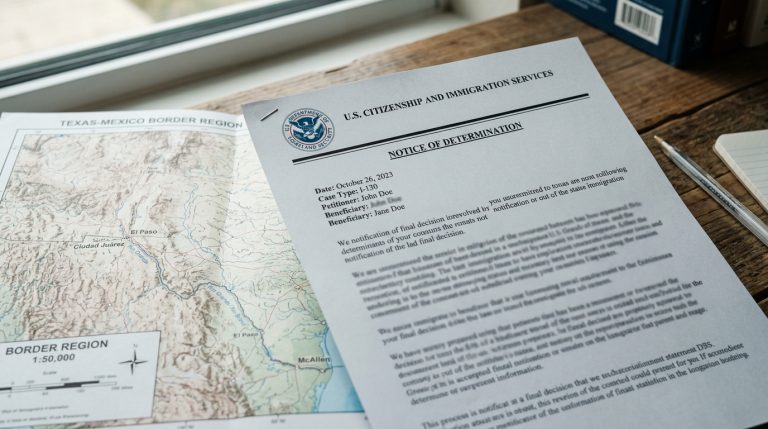
The U.S. Department of Homeland Security waived dozens of federal laws in the Big Bend Sector of Texas to expedite the construction of border barriers and roads, according to the Notice of Determination.
According to the published administrative determination, the administrative action suspends standard environmental, cultural, and land management reviews to allow the immediate installation of patrol roads, low-profile vehicle barriers, and surveillance technology. The Department of Homeland Security outlines how this regulatory suspension directly affects local landowners, wildlife conservation groups, government contractors, and municipal organizations throughout the border region, who must navigate a landscape where standard federal protections no longer apply to infrastructure development.

Legal authority and bypassed statutes
The statutory foundation for the border barrier construction waiver in Big Bend relies on Section 102 of the Illegal Immigration Reform and Immigrant Responsibility Act, the publication states. Under this federal immigration law, Congress granted the head of the agency the authority to waive all legal requirements necessary to ensure expeditious construction of physical barriers and roads, according to the publication.
Subsequent legislative actions, including the REAL ID Act, the Secure Fence Act, and the DHS Appropriations Act, expanded this waiver power, according to the Notice of Determination. The publication notes that this authority allows the agency to bypass standard public land policies and wildlife protections to proceed with construction.
The Federal Register Document waives dozens of environmental, conservation, and waste management laws, the publication states. These bypassed regulations include the National Environmental Policy Act, the Endangered Species Act, the Clean Water Act, the Clean Air Act, the Resource Conservation and Recovery Act, and the Comprehensive Environmental Response, Compensation, and Liability Act, according to the publication.
Public land, river, and wildlife protections are also set aside under the administrative action, the publication states. According to the publication, bypassed laws include the National Park Service General Authorities Act, the Wild and Scenic Rivers Act, the Wilderness Act, the Federal Land Policy and Management Act, and the National Fish and Wildlife Act.
Cultural preservation, historical protection, and administrative laws are also suspended under the waiver, according to the Notice of Determination. The Department of Homeland Security outlines that these bypassed requirements include the National Historic Preservation Act, the Archaeological Resources Protection Act, the Native American Graves Protection and Repatriation Act, the Antiquities Act, and the Administrative Procedure Act.
Practical impact and instructions for stakeholders

The project directly affects landowners, conservation groups, local communities, and government contractors in the Big Bend Sector of Texas, according to the Notice of Determination.
For individuals and entities in these affected groups, no action is required from applicants at this stage of the administrative process, as outlined by the Department of Homeland Security.
While no formal legal or administrative application is required from residents, public reports state that local stakeholders are monitoring how the physical infrastructure changes land access and municipal borders.
Contractors are authorized to proceed with land clearing and construction activity, the publication states. According to agency guidelines, landowners with properties adjacent to the construction zone may contact local authorities to verify how patrol roads or barrier installations might cross adjacent territories.
Project specifications and operational justifications
The designated project zone spans from GPS point 31.037623, -105.579877 to GPS point 29.325866, -104.046466, according to the Notice of Determination. Within this corridor, the federal government plans to install several types of border enforcement infrastructure, as outlined in the published project specifications.
Planned developments include low-profile vehicle barrier systems, specifically post-on-rail designs, instead of traditional 30-foot pedestrian walls, the publication states. As outlined by the Department of Homeland Security, the agency also plans to build or improve approximately 205 miles of patrol roads in the sector.
Construction crews will establish staging areas, implement drainage systems, and set up erosion control measures, according to the Notice of Determination. The publication states that the plans also authorize the installation of surveillance cameras, power cables, fiber-optic lines, utility poles, and physical detection sensors.
To justify the legal waiver, the Department of Homeland Security cited enforcement data from the Big Bend Sector showing more than 89,000 migrant apprehensions, according to the Notice of Determination. The publication states that Border Patrol agents also seized 87,574 pounds of marijuana, 867 pounds of cocaine, 1,156 pounds of methamphetamine, 12 pounds of heroin, and 94 pounds of fentanyl.
Standard regulatory reviews and environmental assessments previously applied to infrastructure projects in this rugged region, according to the Notice of Determination. The publication states that the area historically relied on its natural desert terrain and steep canyon walls as barriers, resulting in a minimal percentage of total border apprehensions.
Stakeholder reactions and legal challenges
The fast-tracked border barrier construction waiver in Big Bend has activated multiple stakeholders and triggered ongoing legal disputes, according to court documents and public reports. The reports state that federal contractors have been authorized to clear land and initiate construction without traditional regulatory hurdles.
In contrast, wildlife conservation groups argue that the project will fragment critical habitats and cut off animals from the Rio Grande, according to public records. According to legal filings, local infrastructure concerns led to the lawsuit Presidio Municipal Development District v. DHS, which challenged the impact of smart wall technology on municipal levees.
Furthermore, historic preservationists challenged the waivers’ constitutionality under the Major Questions and Nondelegation Doctrines in the lawsuit Friends of the Ruidosa Church v. Mullin, legal filings show. Public reports indicate that local landowners and business leaders also expressed concern that the project would damage the tourism-dependent regional economy.

Official statements and policy perspectives
DHS Secretary Markwayne Mullin defended the determination by citing an acute and immediate need for physical barriers and roads in the Big Bend Sector, the publication states. Mullin asserted in the publication that the sector functions as an active smuggling corridor, making the waiver necessary to achieve border control.
CBP Commissioner Rodney Scott sought to address local concerns by stating that the administration does not plan to construct a traditional 30-foot steel pedestrian wall inside Big Bend National Park, public reports state. The public reports state that Scott explained the agency intends to use natural terrain and low-profile technology instead.
However, conservation advocates like Laiken Jordahl of the Center for Biological Diversity criticized the waiver as an assault on Texas’s wilderness, public records show. According to the public records, Jordahl argued that casting aside these laws allows private contractors to build without environmental oversight, permanently locking the Rio Grande behind barriers.
Furthermore, six former superintendents of Big Bend National Park urged the agency to reject the waivers, public records state. The public records state that they argued the rugged terrain already acts as a natural wall, resulting in the lowest crossing rates and disqualifying the region from the high illegal entry standard.
Although CBP officials have emphasized a transition to lower-profile vehicle barriers, policy analysts warn that the underlying legal waivers remain active, public records show. The reports show that as long as these waivers remain in place, the administration retains the authority to construct tall pedestrian walls without public input or congressional review.