
# INPUT TITLE
Department of Homeland Security corrects proposed naturalization fee rule to restore omitted waiver details
Estimated reading time: 6 minutes
The U.S. Department of Homeland Security corrected its proposed naturalization fee rule to restore omitted procedures for permanent residents requesting fee waivers, ensuring regulatory transparency during the ongoing rulemaking and public comment period.
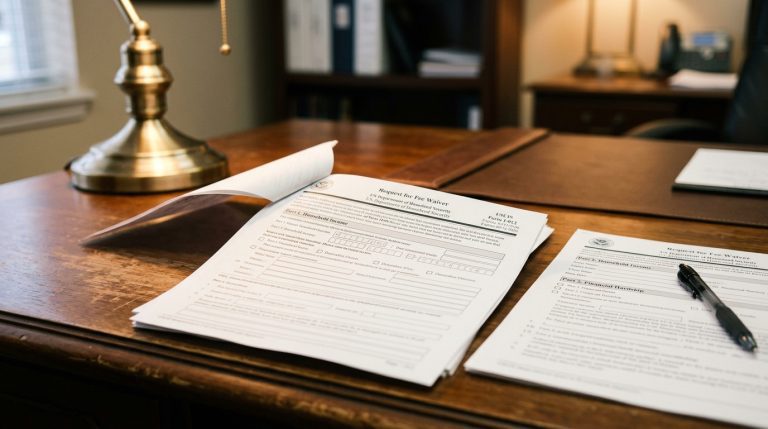
According to the published administrative correction, the federal agency inserted specific details regarding how U.S. Citizenship and Immigration Services collects, standardizes, and evaluates financial data submitted on Form I-912. This technical update resolves previous omissions concerning public cost estimates and standardized guidelines. By addressing these procedural gaps, the government ensures that the proposed administrative framework remains fully transparent and compliant with national regulatory standards while the broader fee adjustment package undergoes public review.

Administrative changes to the proposed fee rule
The U.S. Department of Homeland Security published an official amendment to its active notice of proposed rulemaking. This update directly modifies the regulatory text to reintroduce administrative guidelines for processing fee waivers.
The published update inserts a missing section on page 37547 of the original proposal. This specific insertion provides a formal administrative abstract describing the purpose, utility, and exact operational pathway of Form I-912.
The reinserted text clarifies that the agency uses Form I-912 to verify whether an applicant is genuinely unable to pay the required fees. This standardized form organizes financial evidence to streamline the evaluation process.
The revised guidelines clarify that officers must evaluate each fee waiver request on a case-by-case basis. Adjudicating officers rely on this structured format to make swift, consistent, and legally defensible decisions based on the unique merits of each request.
The updated text outlines the protocol for denials, noting that if a waiver is rejected, the applicant must submit a new application with the full fee. The agency will notify the applicant and instruct them to submit a new application package.
As documented in the Federal Register correction, the adjustment also introduces mandatory public burden estimates required under federal law. The estimated annual cost burden for processing Form I-912 is 2,601,265 dollars, representing a total annual burden of 12,882 hours.
The update includes specific respondent metrics for other related forms, showing that the agency projects 3,788 paper-filed respondents and 1,263 online-filed respondents for Form N-336. Paper-filed respondents take an average of 2.567 hours per response, while online-filed respondents average 2.5 hours.
Impact on permanent residents and required actions

The administrative changes primarily affect lawful permanent residents who plan to apply for U.S. citizenship and intend to request a waiver. Under the existing framework, eligible low-income applicants rely on Form I-912 to obtain full fee waivers.
The standardized evaluation guidelines provide legal practitioners and community clinics with clear instructions on how the agency reviews financial evidence, helping representatives prepare accurate submissions for permanent residents seeking naturalization.
For permanent residents seeking to avoid the proposed fee increases, the primary recommended action is to submit citizenship applications under the existing fee rules. Legal practitioners advise applicants to file their forms before any final administrative adjustments are officially enacted by the government.
Submitting applications under the existing structure allows eligible individuals to secure existing schedules and utilize fee-waiver protections before the proposed restrictions take effect.
Legal background and Paperwork Reduction Act compliance
The original notice of proposed rulemaking, published under DHS Docket RIN 1615-AD08, proposed a major overhaul of the naturalization fee structure. This correction was necessary to comply with the Paperwork Reduction Act, which requires detailed public disclosures regarding information collection.
Under federal guidelines, agencies must publish precise estimates of public burden before implementing new data collection procedures. The omission of the Form I-912 details in the initial publication created a procedural vulnerability that this correction resolves.
According to the published administrative correction, the legal authority for establishing fee waivers is governed by 8 CFR 106.3. This specific section of the Code of Federal Regulations establishes the exact legal authority and eligibility criteria that USCIS utilizes to grant or deny fee waivers.
The correction ensures that the administrative record for this regulatory section is complete and legally defensible during the ongoing public review. The updated record now contains all necessary disclosures for these forms, protecting the proposed regulatory package from future legal challenges based on procedural rulemaking omissions.
Perspectives on the proposed fee increases
Under the broader proposed regulation, the filing fee for Form N-400 is slated to rise to 1,330 dollars for paper filing and 1,280 dollars for online filing. This represents an approximate 75 percent increase from the existing 760 dollar fee for paper submissions and 710 dollars for online submissions.
The proposed adjustments also affect Form N-336, which is used to request an administrative appeal of a citizenship denial. Under the new package, filing fees for Form N-336 are set to rise to 1,475 dollars for paper filings and 1,425 dollars for online filings. Additionally, the proposal aims to eliminate most income-based fee waivers and reduced-fee options.
In the preamble of the proposed rule, government officials state that the fee adjustments are necessary to fully recover agency operating costs. The government analysis describes naturalization as an inelastic good, asserting that applicants will prioritize paying the fees due to the immense benefits of citizenship.
Conversely, immigration advocates have strongly criticized the proposed fee hikes, arguing that treating citizenship as an inelastic good ignores the severe financial realities of low-income immigrants.
Advocacy groups state that raising the filing fees by approximately 75 percent will establish a wealth barrier, effectively pricing low-wage immigrants out of naturalization.
Legal commentators note that while the correction is a technical procedural fix, it indicates that the government is actively advancing its restrictive policies.

Recommended steps for naturalization applicants
Immigrant advocacy organizations are actively encouraging eligible permanent residents to file their citizenship applications without delay to avoid the proposed financial increases and secure existing waiver eligibility.
The proposed changes are not yet finalized and remain subject to the ongoing rulemaking process. Permanent residents can access the official rulemaking documents through the proposed naturalization fee adjustments notice and the associated administrative rule correction document published in the Federal Register.
The ongoing administrative process allows the public to submit formal comments on the proposed rule. This feedback window allows individuals and organizations to voice concerns regarding the financial impact on low-income applicants.
Eligible green card holders should consult with qualified practitioners to ensure their applications are processed under the more favorable existing guidelines.